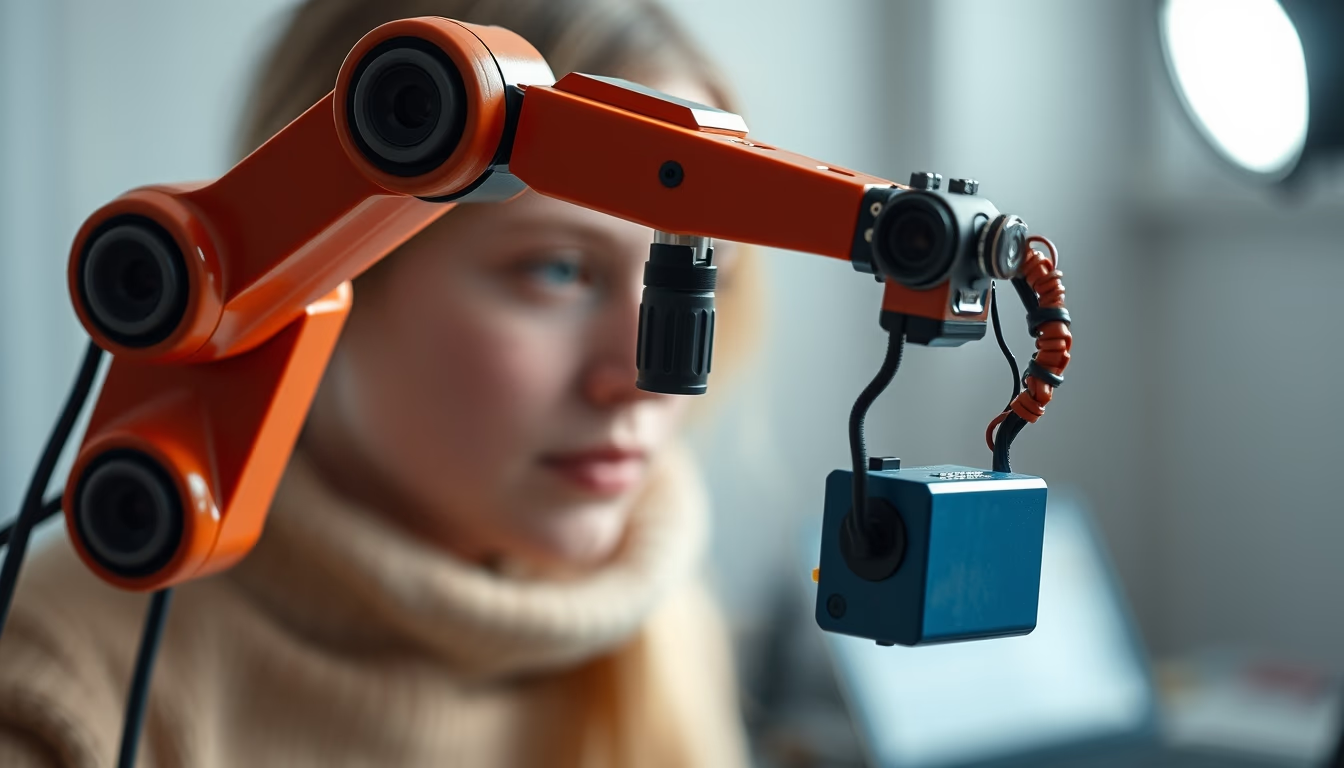
Robotic prosthesis hand
1344×768 · AVIF · CC BY 4.0
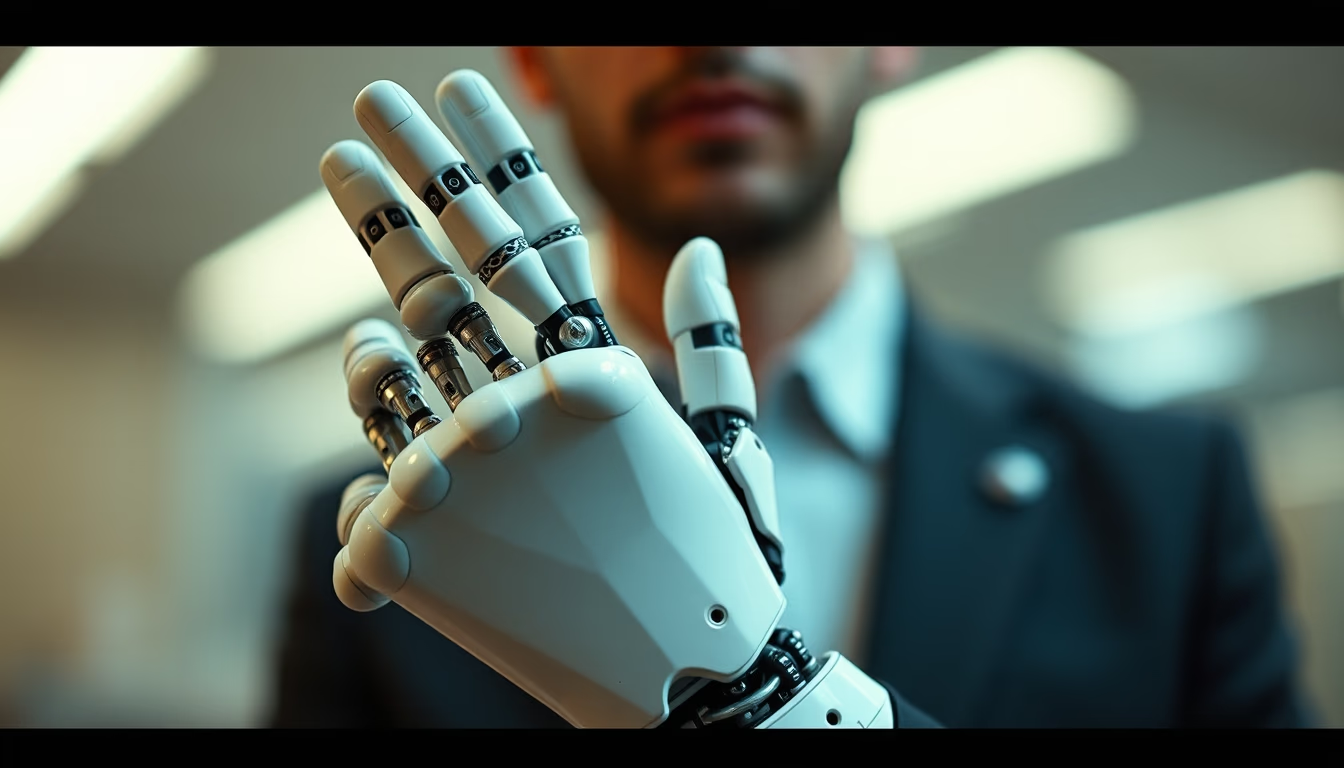
Robotic prosthetic hands combine biomechatronic engineering with neural control to restore fine motor movements in amputees.
About this subject
Robotic prosthetic hands are one of the most significant advances in biomechatronics. Unlike passive mechanical models, these devices use myoelectric sensors, actuators, and machine learning algorithms to interpret electrical signals from the user's residual muscles, enabling individual finger movements and precise pinch. Development accelerated in the 2010s with projects like the LIMP and notably the LUKE arm (Dean Kamen), funded by DARPA, offering 10 degrees of freedom and tactile sensory feedback.
A milestone was the FDA approval of the Michelangelo hand (Otto Bock) in 2013, featuring motorized fingers and wrist rotation. More recently, osseointegrated prostheses, anchored directly to bone, eliminate socket fit issues and provide greater control. Swedish company Integrum pioneered this technique, and studies show patients report significant quality-of-life improvements. In Brazil, the Robotics Technology Center at USP researches 3D-printed prostheses to reduce costs for the public system.
Another frontier is integration with augmented reality and the Internet of Things. Academic projects like the Vanderbilt Multi-Grasp Hand use force sensors to automatically adjust grip strength based on the object, avoiding damage. Despite progress, challenges remain: high cost (a myoelectric hand costs USD 10,000, 20,000), complex maintenance, and intensive patient training. However, open-source initiatives like e-NABLE allow production of functional prosthetic hands at low cost for children.
Notably, the evolution of robotic prostheses also drives neurotechnology. Research at the University of Chicago with neural bypass systems shows that tactile sensations can be transmitted directly to the brain, making the hand feel real. This field, called haptics, promises prostheses with temperature and texture sensations in the coming years.
Frequently Asked Questions
How do robotic prosthetic hands work?
They capture electrical signals from the user's residual muscles via surface electrodes, process them in a microcontroller, and activate motors to move individual fingers.
What is the average cost of a myoelectric hand in the US?
Advanced myoelectric hands cost between $10,000 and $20,000, but open-source options like e-NABLE can be produced for under $500.
Is it possible to feel with a robotic hand?
Yes, tactile sensory feedback systems, such as those developed by DARPA and the University of Chicago, transmit sensations of touch, pressure, and even temperature directly to the user's brain.
Direct URL
https://pub-c7d6a6ea828543ac903a74a341ccb2e1.r2.dev/imagens/robotic-prosthesis-hand-film-grain-authentic-p2.avifHow to credit
Include a visible link back to UtilizAí. Copy one of the snippets below:
<a href="https://xn--utiliza-eza.com/en/midia/imagens/robotic-prosthesis-hand-film-grain-authentic-p2">Robotic prosthesis hand</a> by <a href="https://xn--utiliza-eza.com">UtilizAí</a>, licensed under <a href="https://creativecommons.org/licenses/by/4.0/">CC BY 4.0</a>.
[Robotic prosthesis hand](https://xn--utiliza-eza.com/en/midia/imagens/robotic-prosthesis-hand-film-grain-authentic-p2) by [UtilizAí](https://xn--utiliza-eza.com), CC BY 4.0
License: CC-BY-4.0