Robotic prosthesis hand
1344×768 · AVIF · CC BY 4.0
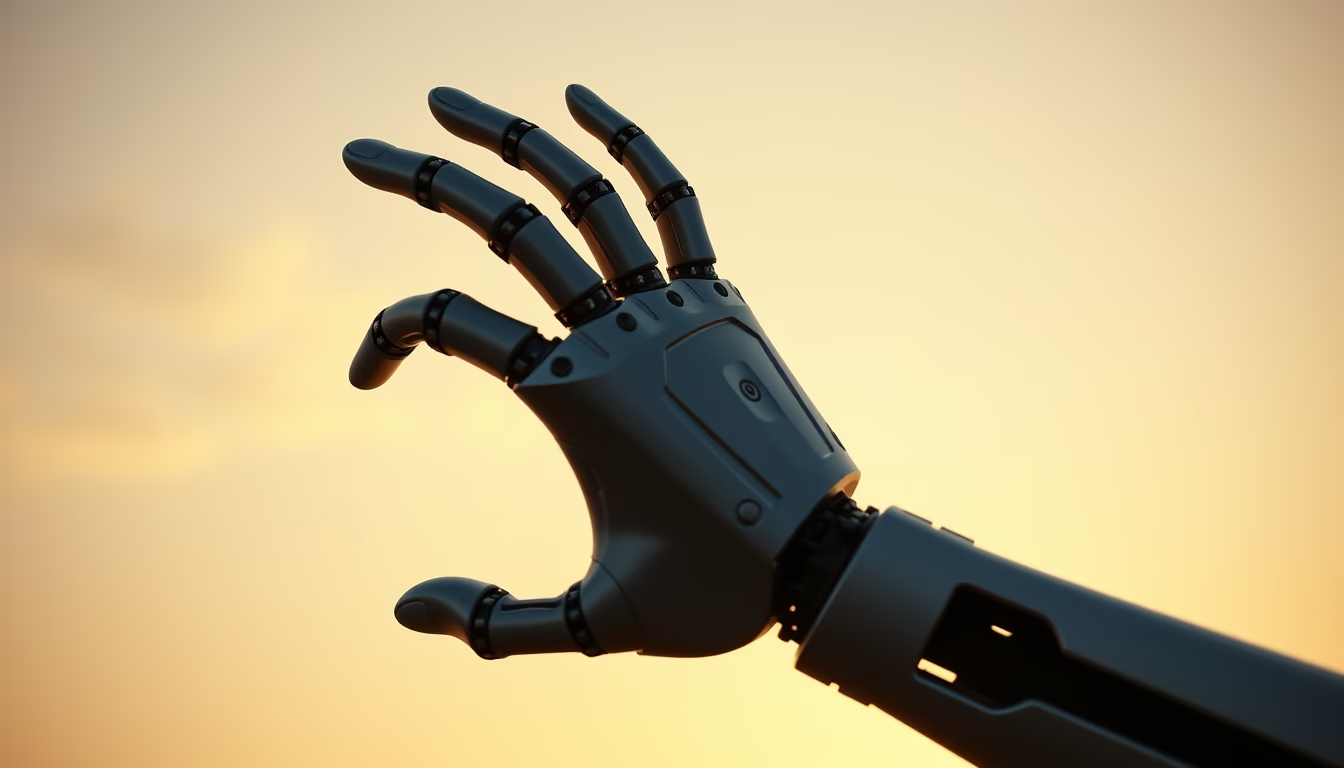
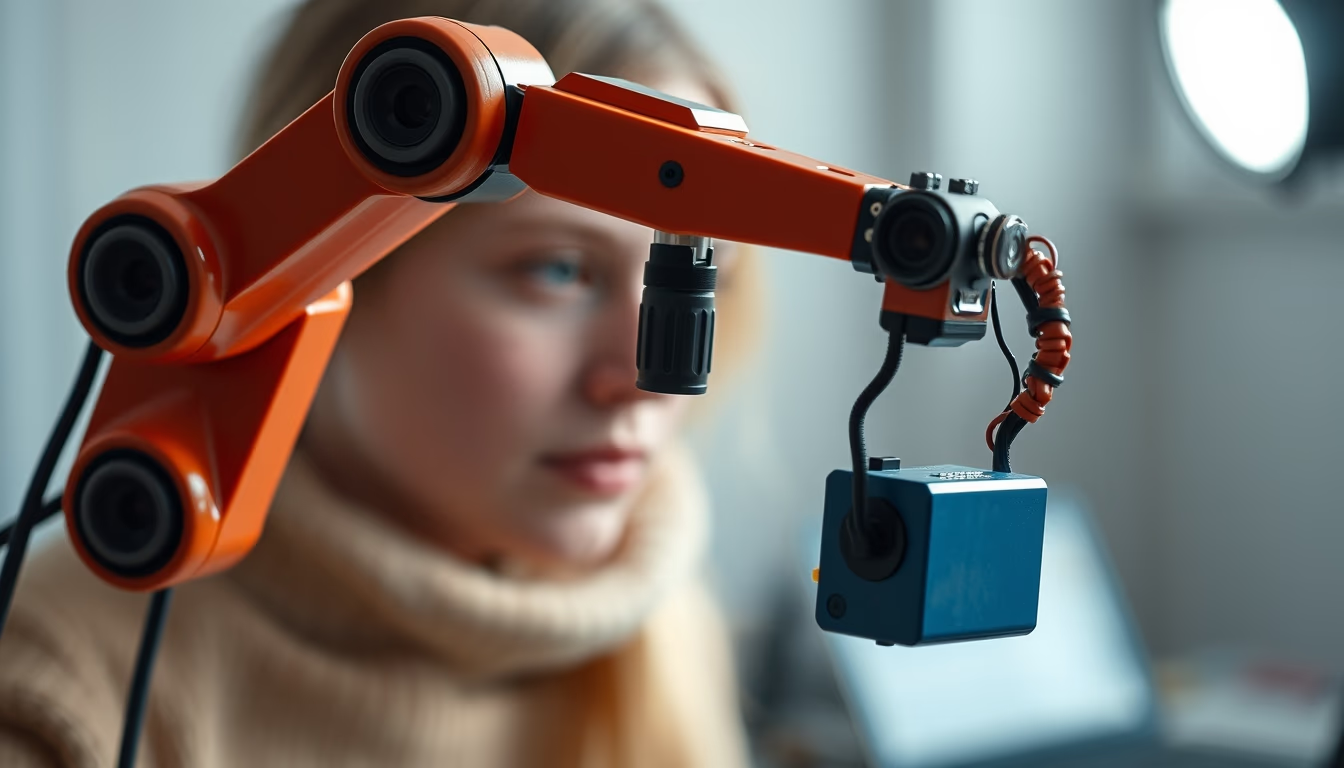
Robotic prosthetic hands restore movement and independence, combining sensors, actuators, and artificial intelligence.
About this subject
Robotic prosthetic hands are bionic devices designed to replace an amputated hand, restoring motor and sensory functions. They use electrodes that capture electrical signals from the user's residual muscles, converting these impulses into precise movements of fingers and wrist joints. Miniaturized motors and transmission systems allow the robotic hand to perform tasks such as grasping objects, writing, or playing musical instruments.
The development of these prostheses has advanced significantly in recent decades. Models like the i-Limb from Touch Bionics and the Bebionic from Ottobock offer individually motorized fingers, while the Michelangelo Hand takes a more naturalistic approach. In Brazil, the public health system SUS provides basic mechanical prostheses, but high-cost robotic ones remain rare, driven by initiatives such as the Biomedical Engineering Lab at USP.
Integration with artificial intelligence allows algorithms to learn the user's movement patterns, improving accuracy over time. Pressure and touch sensors provide haptic feedback, creating a sense of touch. Research into brain-computer interfaces promises direct thought control, as demonstrated by DARPA's LUKE robotic arm.
Culturally, these prostheses challenge stigmas and empower people with disabilities, gaining visibility at events like the Paralympics. The cinematic aesthetic of some prostheses, as seen in science fiction films, inspires more futuristic designs. However, high costs and the need for specialized maintenance still limit global access.
Frequently Asked Questions
How do robotic prosthetic hands work?
They capture electrical signals from the user's muscles via electrodes, which are interpreted by a microcontroller to activate motors that move fingers and wrist, enabling natural and precise movements.
How much does a robotic prosthetic hand cost?
Costs range from $2,000 to $100,000 depending on technology and materials. In Brazil, the public health system covers only basic mechanical prostheses, with most patients relying on private insurance or donations.
What are the latest advances in robotic prosthetics?
Advances include AI-driven control, haptic sensory feedback, brain-computer interfaces, and low-cost 3D-printed prostheses like those developed by the e-NABLE organization.
Direct URL
https://pub-c7d6a6ea828543ac903a74a341ccb2e1.r2.dev/imagens/robotic-prosthesis-hand-cinematic-wide-shot-p10.avifHow to credit
Include a visible link back to UtilizAí. Copy one of the snippets below:
<a href="https://xn--utiliza-eza.com/en/midia/imagens/robotic-prosthesis-hand-cinematic-wide-shot-p10">Robotic prosthesis hand</a> by <a href="https://xn--utiliza-eza.com">UtilizAí</a>, licensed under <a href="https://creativecommons.org/licenses/by/4.0/">CC BY 4.0</a>.
[Robotic prosthesis hand](https://xn--utiliza-eza.com/en/midia/imagens/robotic-prosthesis-hand-cinematic-wide-shot-p10) by [UtilizAí](https://xn--utiliza-eza.com), CC BY 4.0
License: CC-BY-4.0