Robotic prosthesis hand
1344×768 · AVIF · CC BY 4.0
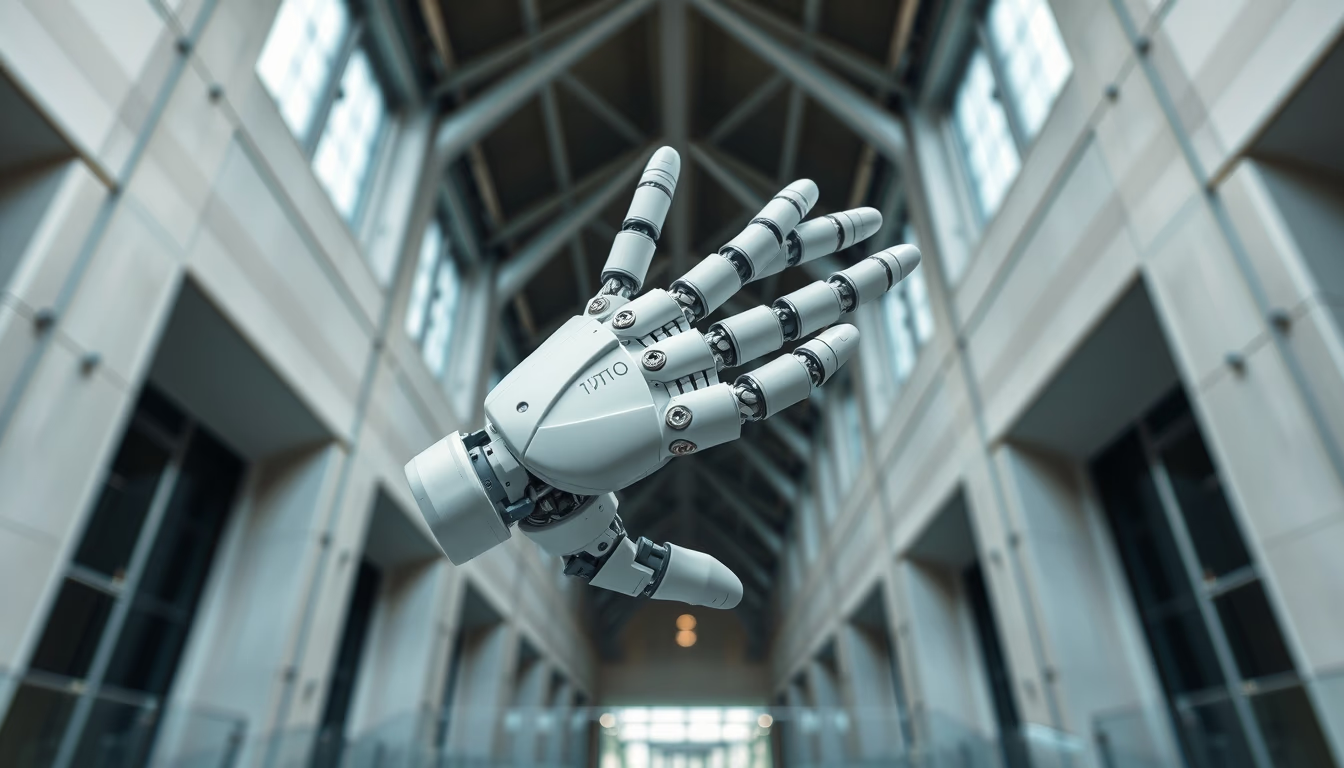
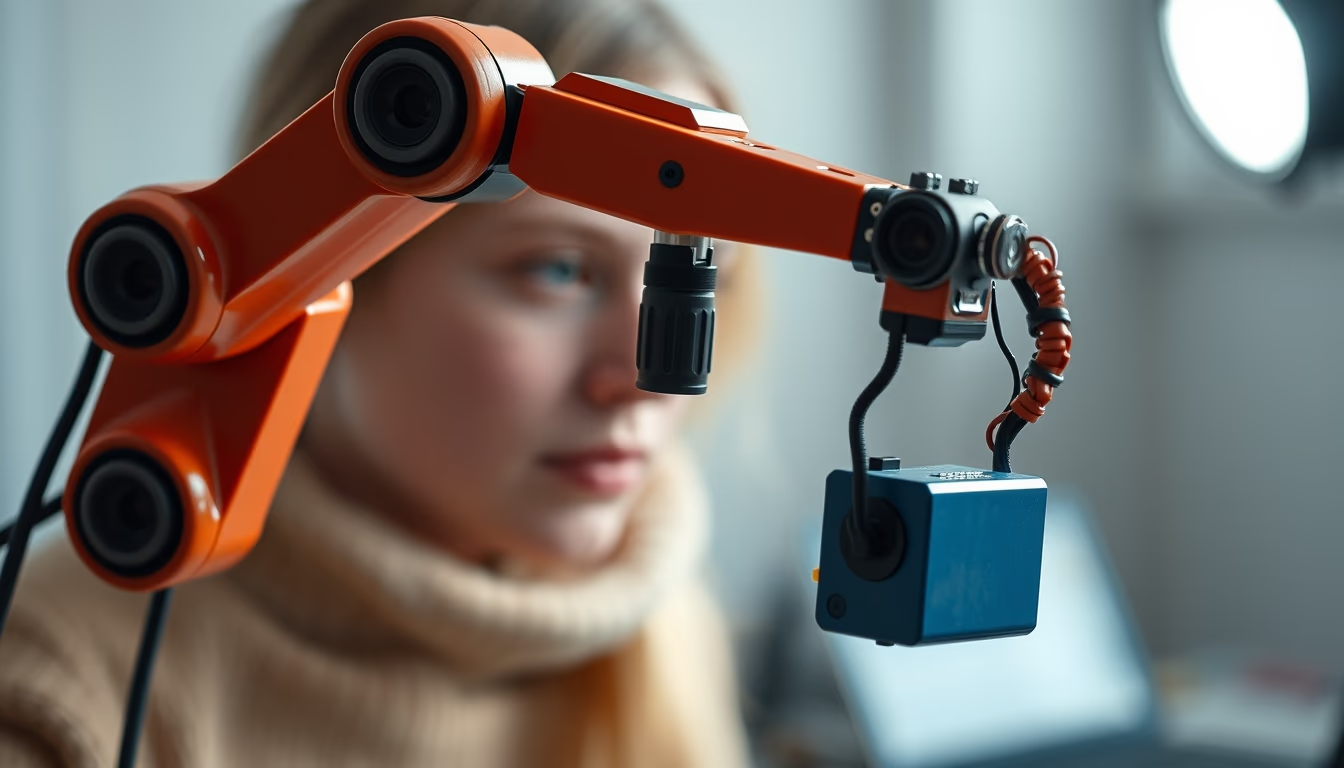
Robotic prosthetic hands combine biomedical engineering and artificial intelligence to restore natural movements for amputees.
About this subject
Robotic prosthetic hands represent one of the most significant advances in modern medicine, restoring not only functionality but also self-esteem to individuals who have lost upper limbs. Unlike traditional mechanical prostheses that require cables and body movements, robotic models use myoelectric sensors to capture electrical signals generated by remaining muscles. These signals are processed by microcontrollers that activate precise motors, enabling movements such as grasping objects, writing, or even playing musical instruments.
The development of these prostheses gained momentum in recent decades with advances in artificial intelligence and additive manufacturing. Companies such as Össur and Touch Bionics create hands that automatically adapt to the shape of objects using machine learning algorithms. A milestone was the i-Limb hand, launched in 2007, which featured individually articulated fingers. Today, prostheses like the Hero Arm allow users to perform delicate tasks, such as picking up an egg without breaking it, thanks to force sensors.
Despite progress, challenges remain. High cost limits access: a robotic prosthesis can cost tens of thousands of dollars. Additionally, the neural interface, though improved, still suffers from noise and muscle fatigue. Research into materials like light polymers and long-lasting batteries aims to make devices more affordable and comfortable. Open-source projects, such as the e-NABLE robotic hand, democratize the technology by enabling 3D printing by volunteers in underserved communities.
Culturally, robotic prostheses are reshaping perceptions of disability. Series like 'Black Mirror' and athlete Oscar Pistorius (with robotic legs) popularized the idea that technology can overcome biological limitations. However, experts warn of the need for regulation and psychological support, as adapting to an intelligent prosthesis involves not only motor training but also emotional acceptance of a new identity.
Frequently Asked Questions
How does a robotic prosthetic hand work?
It uses myoelectric sensors to detect electrical signals from the remaining muscles. These signals are processed by a microcontroller that activates motors in the fingers, allowing movements controlled by muscle contraction.
How much does a robotic hand prosthesis cost?
Prices range from $10,000 to $50,000, depending on complexity and customization. Simpler 3D-printed models may cost a few thousand dollars.
What are the main challenges to popularizing these prostheses?
High cost, need for intensive training, battery life, and sensor robustness. Additionally, the user's psychological acceptance is crucial for success.
Direct URL
https://pub-c7d6a6ea828543ac903a74a341ccb2e1.r2.dev/imagens/robotic-prosthesis-hand-architectural-photography-p1.avifHow to credit
Include a visible link back to UtilizAí. Copy one of the snippets below:
<a href="https://xn--utiliza-eza.com/en/midia/imagens/robotic-prosthesis-hand-architectural-photography-p1">Robotic prosthesis hand</a> by <a href="https://xn--utiliza-eza.com">UtilizAí</a>, licensed under <a href="https://creativecommons.org/licenses/by/4.0/">CC BY 4.0</a>.
[Robotic prosthesis hand](https://xn--utiliza-eza.com/en/midia/imagens/robotic-prosthesis-hand-architectural-photography-p1) by [UtilizAí](https://xn--utiliza-eza.com), CC BY 4.0
License: CC-BY-4.0