Robotic exoskeleton
1344×768 · AVIF · CC BY 4.0
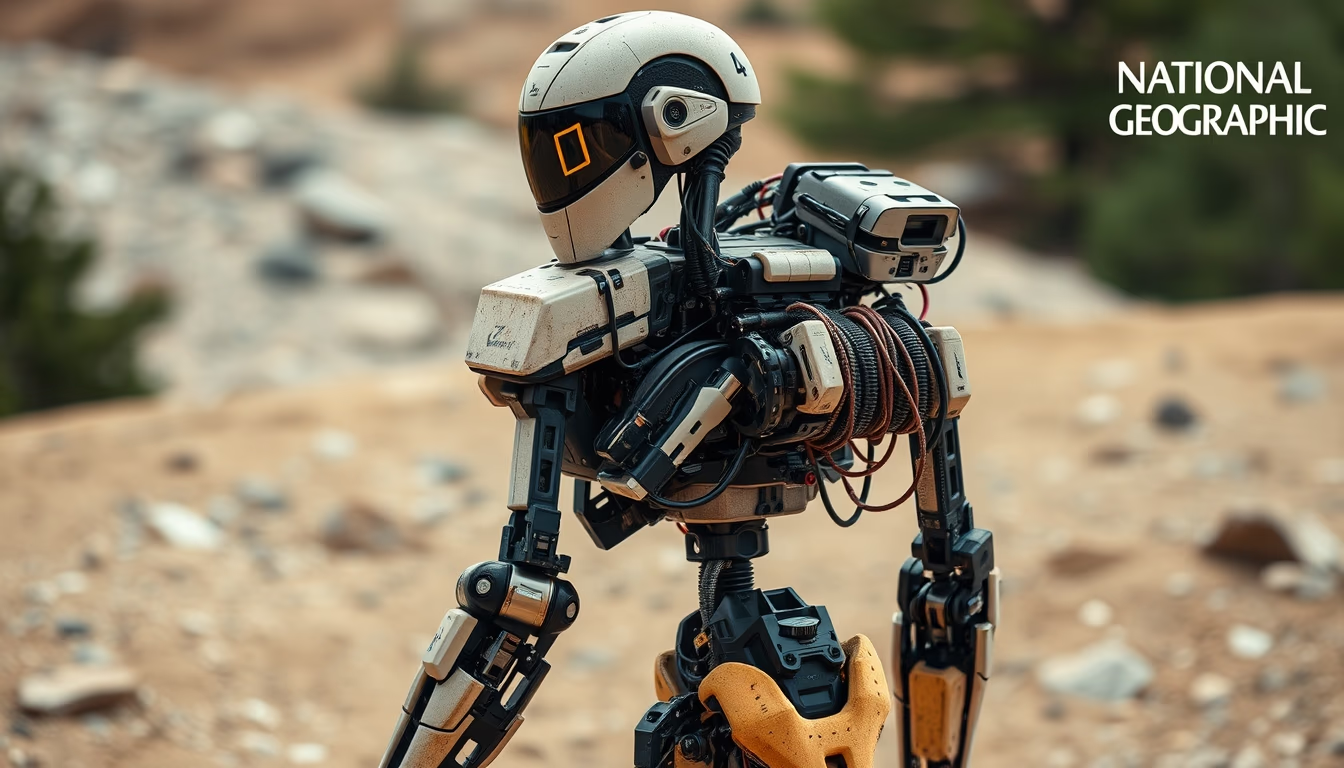
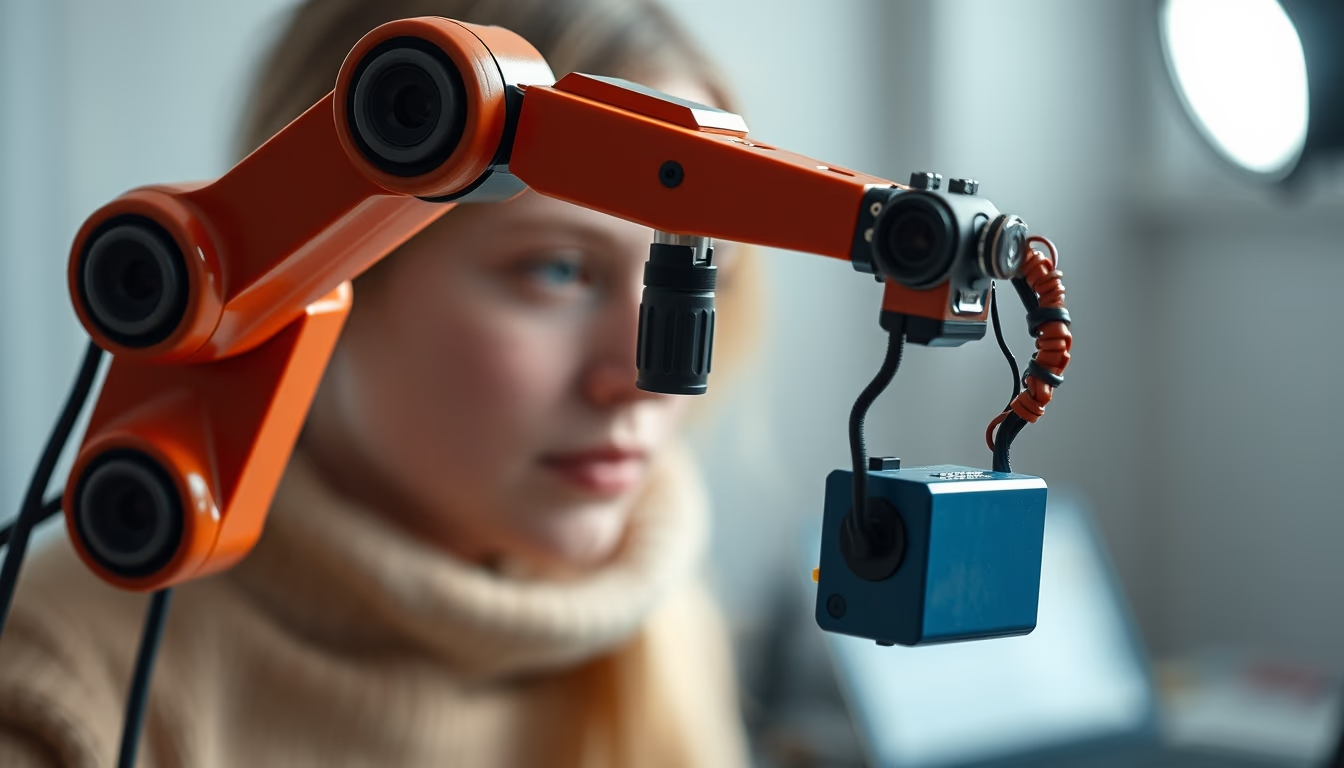
Robotic exoskeletons are wearable devices that enhance human strength, revolutionizing rehabilitation and industry.
About this subject
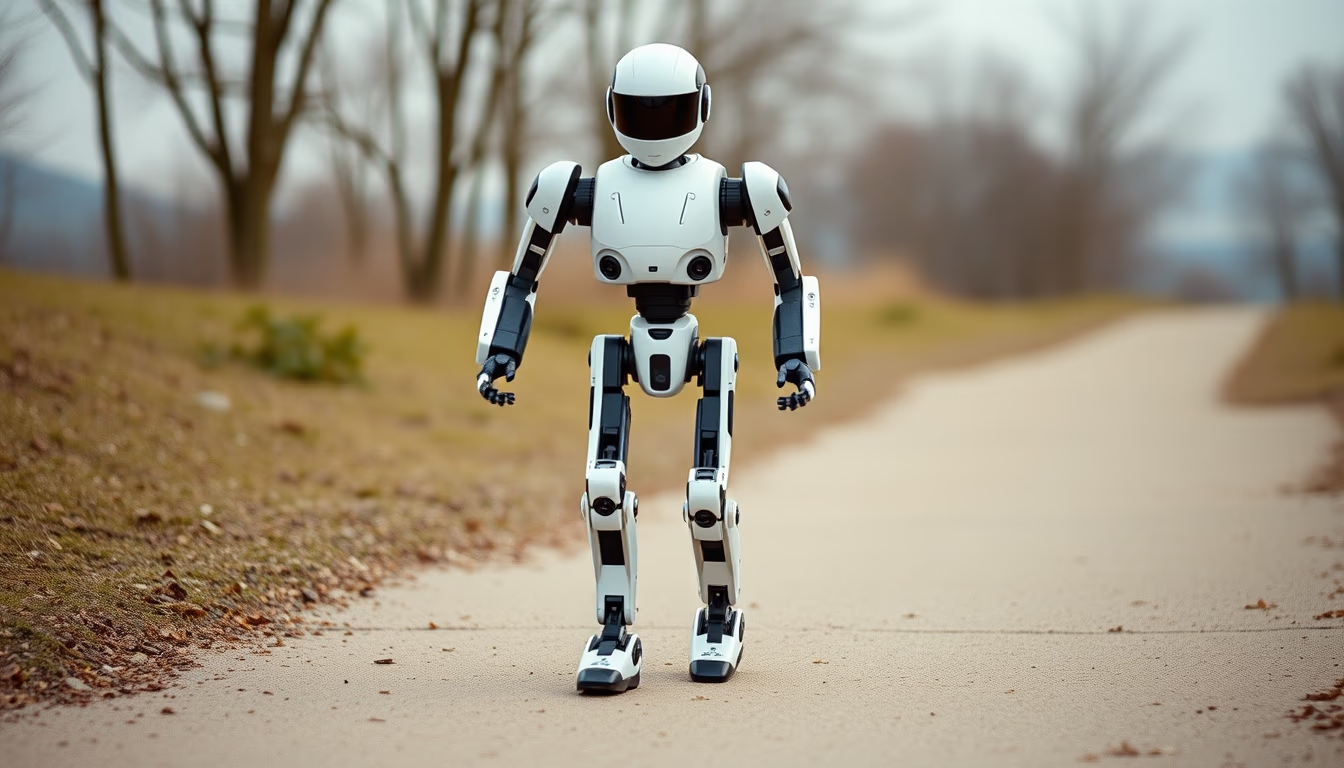
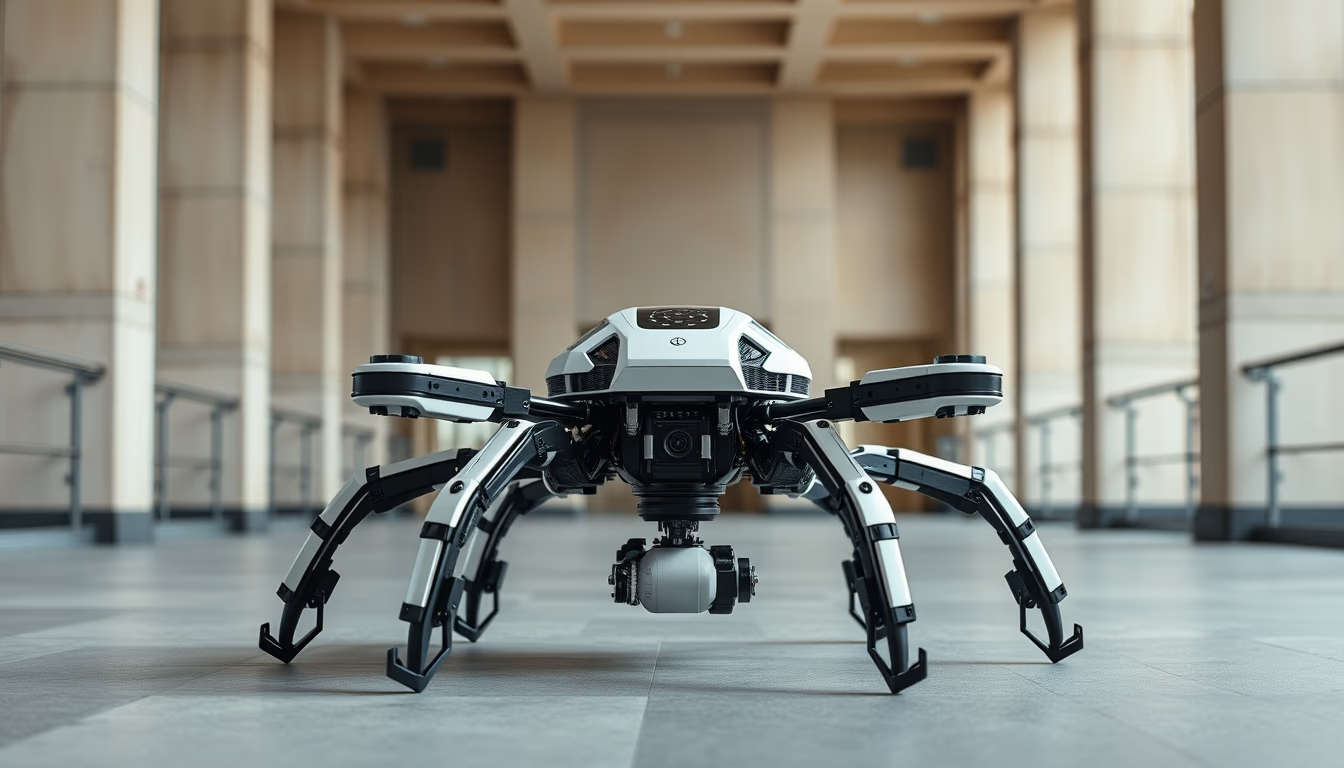
Robotic exoskeletons are external mechanical structures worn like a suit, capable of amplifying the user's strength, endurance, or mobility. They combine sensors, actuators, and artificial intelligence to interpret movements and provide proportional assistance. Originating from military research in the 1960s and 1970s, early prototypes were heavy and power-hungry. Today, advances in batteries, electric motors, and lightweight materials have made them practical for real-world use.
In medicine, exoskeletons are used for rehabilitation after spinal cord injury, stroke, or paralysis. Devices like ReWalk and Ekso enable patients to walk again, offering programmable support for lower limbs. Clinical studies show improvements in circulation, muscle tone, and even mental health among users.
In industry, both passive (motorless) and active (motorized) exoskeletons assist workers in lifting heavy loads or maintaining postures for extended periods, reducing occupational injuries. Companies like Ford, Honda, and Hyundai test models on assembly lines. The EksoVest, for example, supports arms during overhead tasks.
In the military, initiatives such as Talos (USA) and HULC aim to increase soldiers' load-carrying capacity. Though still experimental, they promise to revolutionize combat logistics. Meanwhile, home-use exoskeletons like the Japanese Muscle Suit help the elderly or frail perform daily tasks. The future points to lighter, autonomous, and body-integrated systems, with potential to redefine the limits of human performance.
Frequently Asked Questions
What is a robotic exoskeleton?
It is a wearable device consisting of an external frame with sensors and motors that amplifies the user's strength or mobility. It can be used for rehabilitation, industrial assistance, or performance enhancement.
How does an exoskeleton work?
Sensors detect the user's movements or muscle signals, and a computer controller activates electric motors or actuators to provide additional torque. Some models use cables and springs for passive assistance.
What are the main current applications?
In medicine, they help people with paraplegia walk. In industry, they reduce repetitive strain injuries. In military research, they test load-carrying capacity for soldiers. There are also versions to assist the elderly with daily tasks.
Direct URL
https://pub-c7d6a6ea828543ac903a74a341ccb2e1.r2.dev/imagens/robotic-exoskeleton-national-geographic-style-p12.avifHow to credit
Include a visible link back to UtilizAí. Copy one of the snippets below:
<a href="https://xn--utiliza-eza.com/en/midia/imagens/robotic-exoskeleton-national-geographic-style-p12">Robotic exoskeleton</a> by <a href="https://xn--utiliza-eza.com">UtilizAí</a>, licensed under <a href="https://creativecommons.org/licenses/by/4.0/">CC BY 4.0</a>.
[Robotic exoskeleton](https://xn--utiliza-eza.com/en/midia/imagens/robotic-exoskeleton-national-geographic-style-p12) by [UtilizAí](https://xn--utiliza-eza.com), CC BY 4.0
License: CC-BY-4.0