Robotic exoskeleton
1344×768 · AVIF · CC BY 4.0
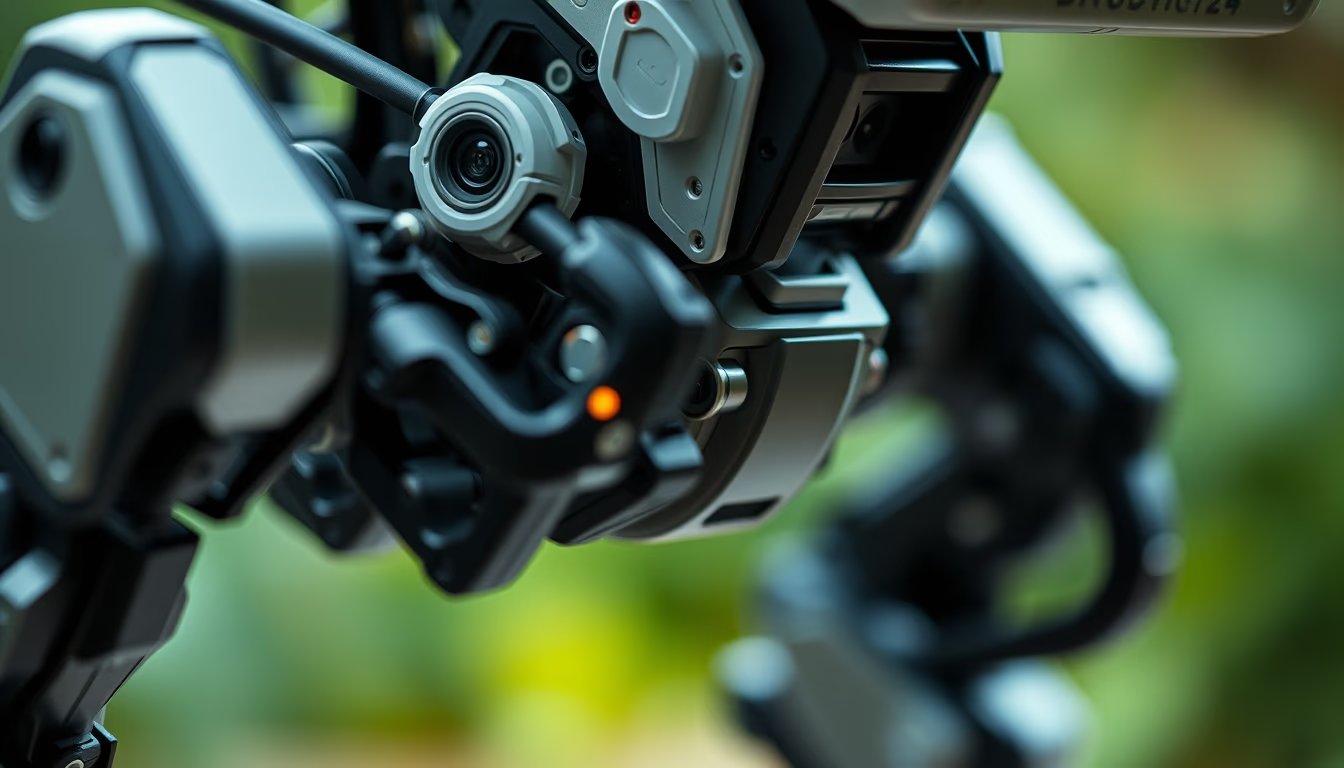
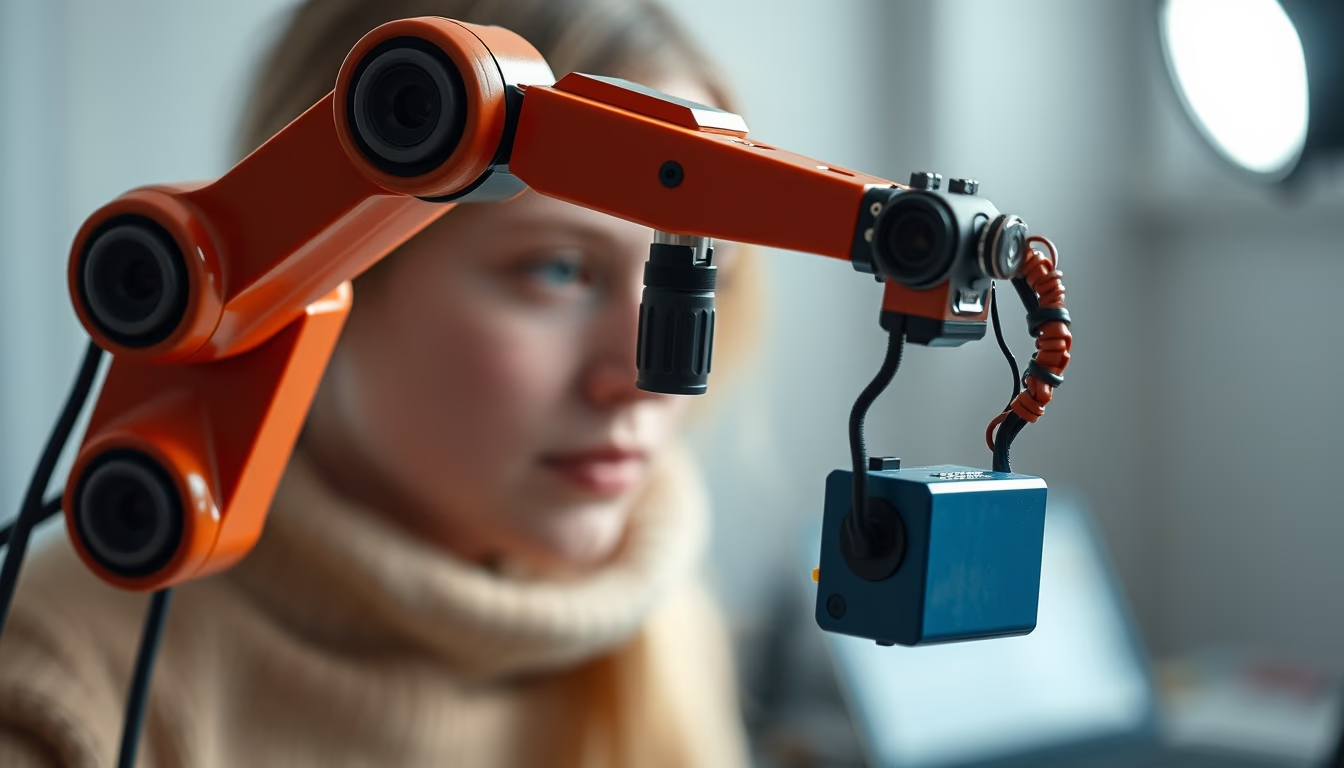
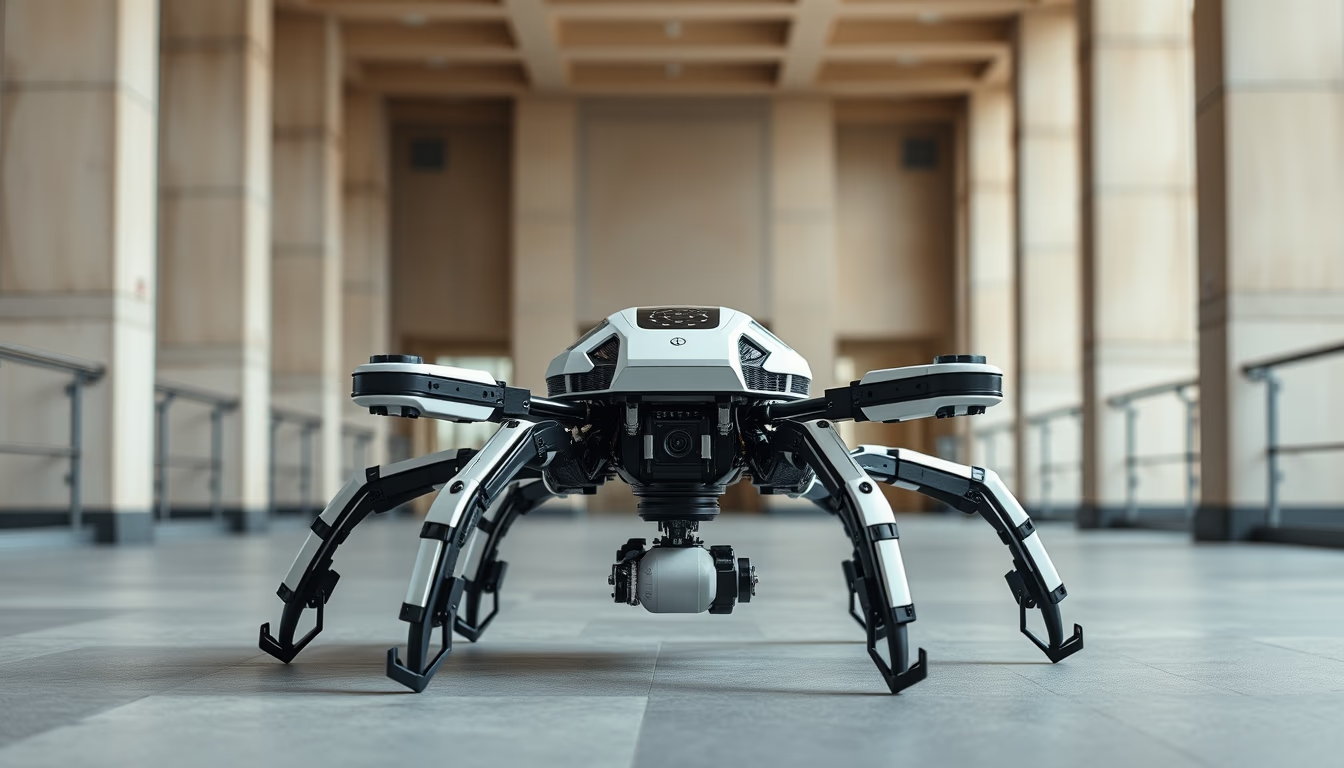
Robotic exoskeleton: wearable device that amplifies or restores human movement.
About this subject
A robotic exoskeleton is an external mechanical structure that attaches to the human body to enhance strength, endurance, or mobility. Inspired by the biology of insects and crustaceans, these devices combine sensors, actuators, and real-time control systems. The first exoskeleton patent was filed in 1890, but functional prototypes only emerged in the 1960s with General Electric's Hardiman project. Since then, technology has advanced rapidly due to improvements in lightweight materials, long-lasting batteries, and artificial intelligence.
Today, exoskeletons are used in three main areas: medical rehabilitation, industrial manufacturing, and military assistance. In medicine, models like ReWalk and Ekso GT enable paraplegics to walk again thanks to motorized joints and algorithms that detect movement intention. In industry, passive (motorless) and active (motorized) exoskeletons reduce physical strain in repetitive tasks, preventing injuries. Japan leads industrial adoption, with companies like Cyberdyne and Panasonic developing models for elderly care workers.
Brazil also has notable initiatives. The Federal University of Rio de Janeiro (UFRJ) created the ExoTAO exoskeleton, focused on stroke rehabilitation. Brazilian startups like NAG adapt open-source technologies to lower costs. One of the biggest challenges remains battery life and component weight, though new composite materials and compact hydraulics are making devices lighter and more efficient.
Remarkably, the world's fastest exoskeleton was developed by Japanese company Cyberdyne, reaching speeds of up to 7 km/h. Another innovation is the HAL (Hybrid Assistive Limb) exoskeleton, which reads electrical signals from the skin to anticipate movements. In the future, wearable devices are expected to integrate augmented reality and neural control, paving the way for human-machine symbiosis.
Frequently Asked Questions
How does a robotic exoskeleton work?
An exoskeleton uses sensors (like goniometers or electrodes) to detect the user's movement intention, actuators (motors or hydraulics) to generate force, and a control system to coordinate the action. Sensors monitor joint angles or muscle signals, and the software adjusts support in real time.
Who can benefit from an exoskeleton?
Exoskeletons are used by people with spinal cord injuries, stroke survivors, industrial workers (to reduce repetitive strain injuries), and military personnel (to carry heavy loads). Each application requires a specific design, ranging from medical devices to industrial protective equipment.
What are the main limitations of current exoskeletons?
Main limitations include high cost (tens of thousands of dollars), weight (many models weigh over 20 kg), battery life (typically 2 to 4 hours of continuous use), and adaptability to different body types. Current research focuses on reducing these bottlenecks with lighter materials and more efficient power sources.
Direct URL
https://pub-c7d6a6ea828543ac903a74a341ccb2e1.r2.dev/imagens/robotic-exoskeleton-macro-closeup-p6.avifHow to credit
Include a visible link back to UtilizAí. Copy one of the snippets below:
<a href="https://xn--utiliza-eza.com/en/midia/imagens/robotic-exoskeleton-macro-closeup-p6">Robotic exoskeleton</a> by <a href="https://xn--utiliza-eza.com">UtilizAí</a>, licensed under <a href="https://creativecommons.org/licenses/by/4.0/">CC BY 4.0</a>.
[Robotic exoskeleton](https://xn--utiliza-eza.com/en/midia/imagens/robotic-exoskeleton-macro-closeup-p6) by [UtilizAí](https://xn--utiliza-eza.com), CC BY 4.0
License: CC-BY-4.0