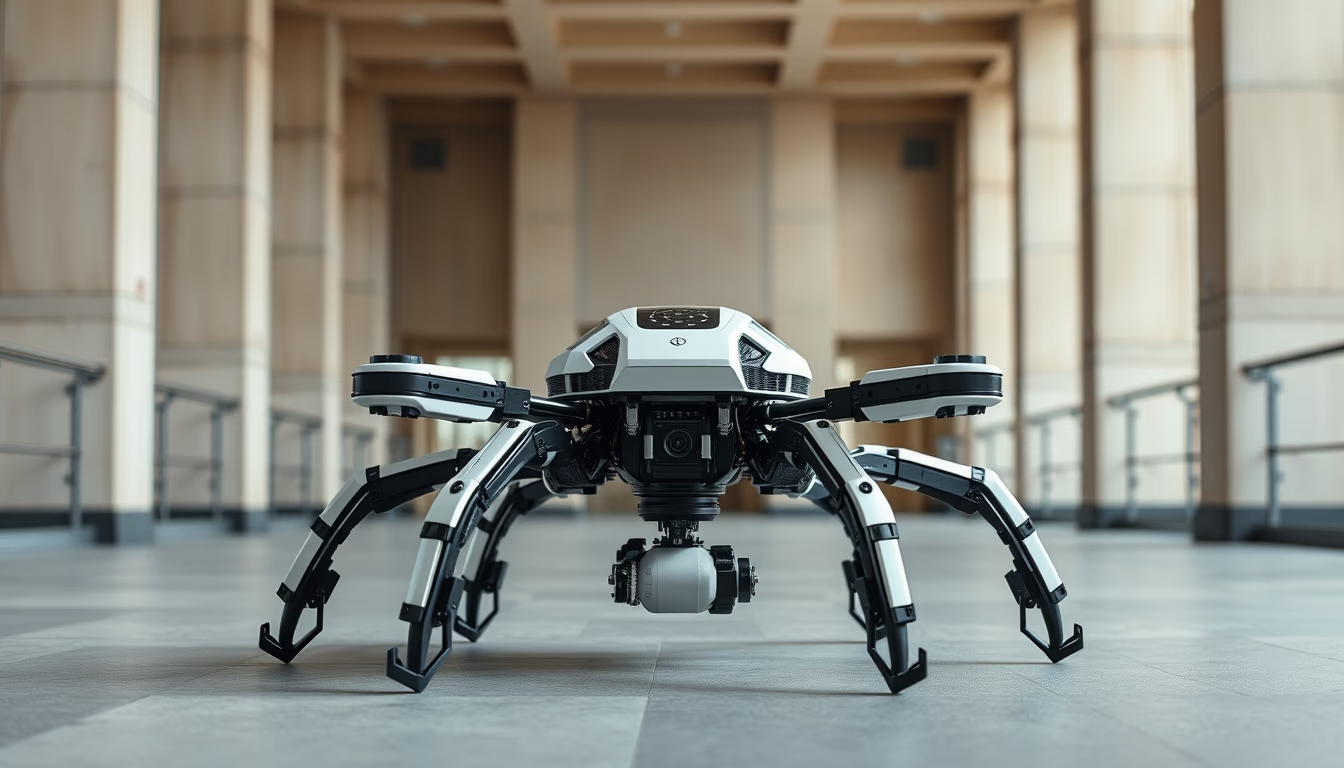
Robotic exoskeleton
1344×768 · AVIF · CC BY 4.0
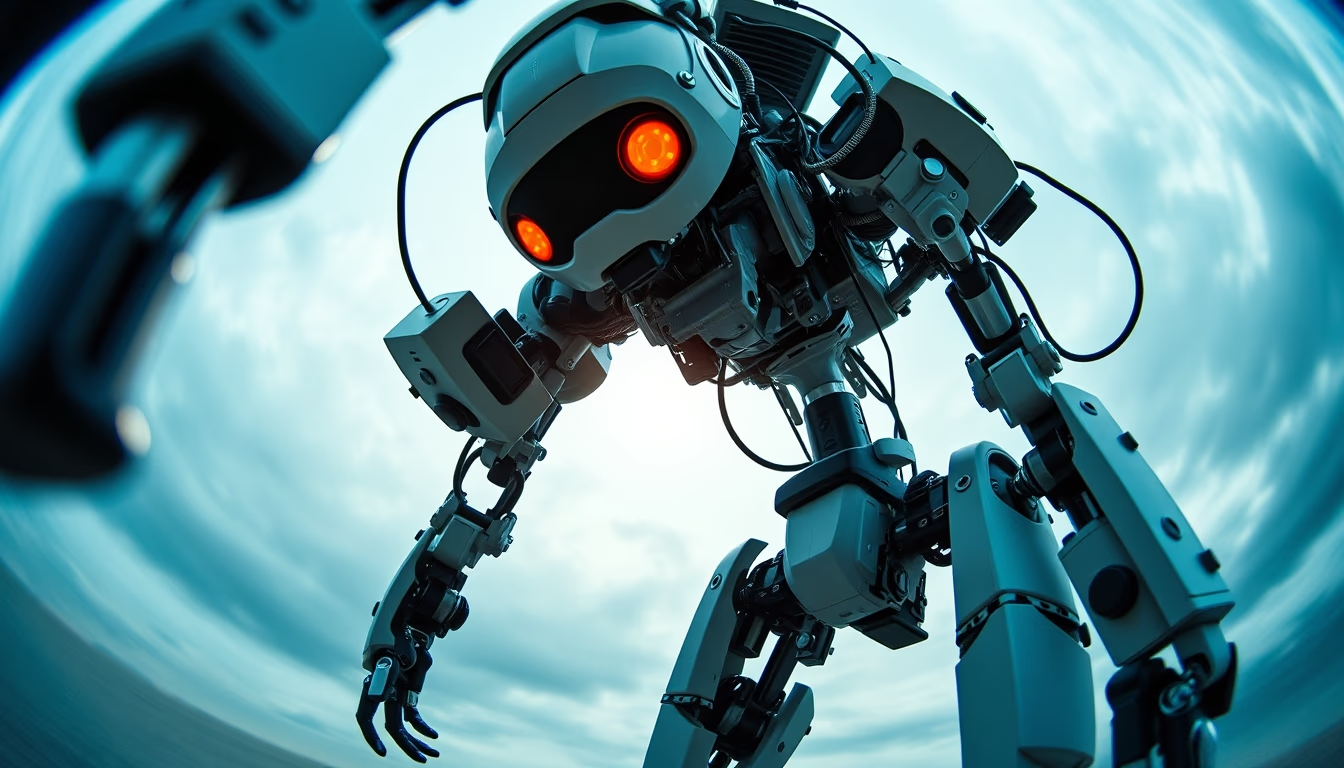
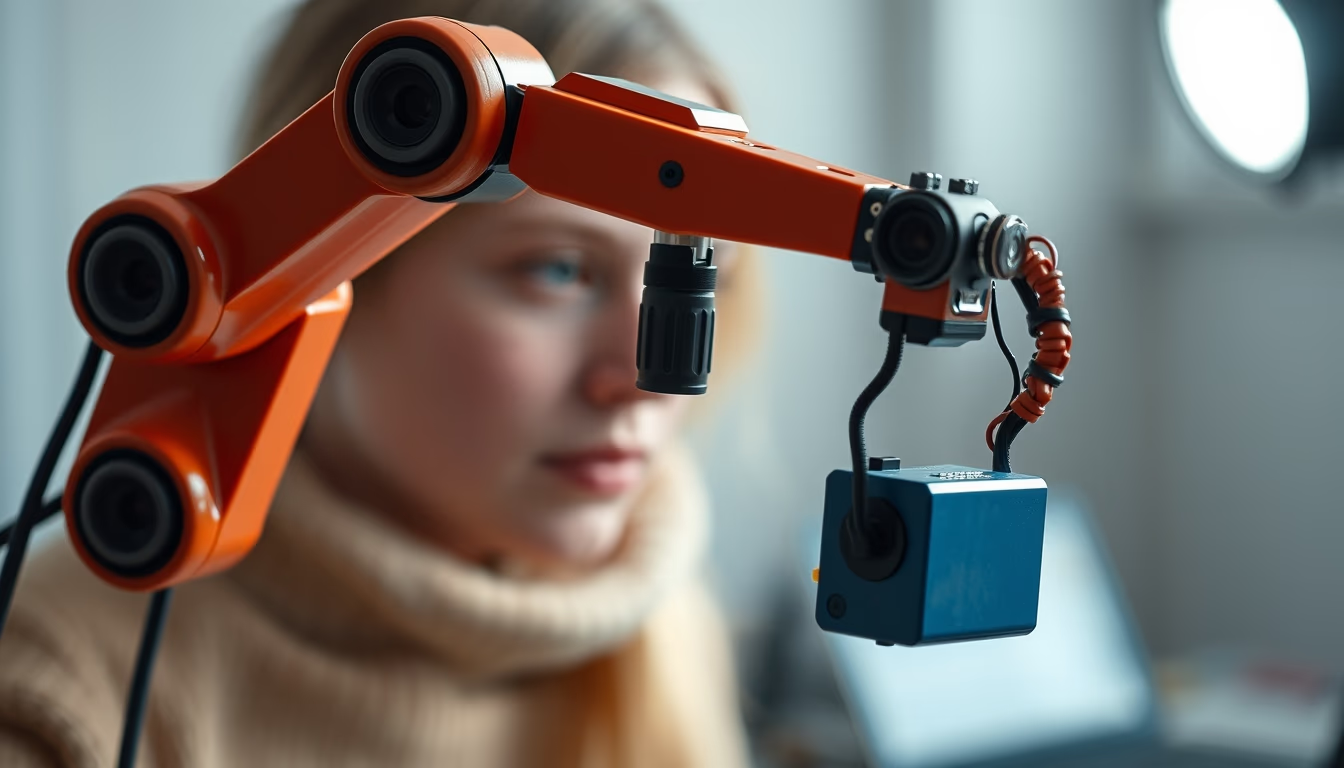
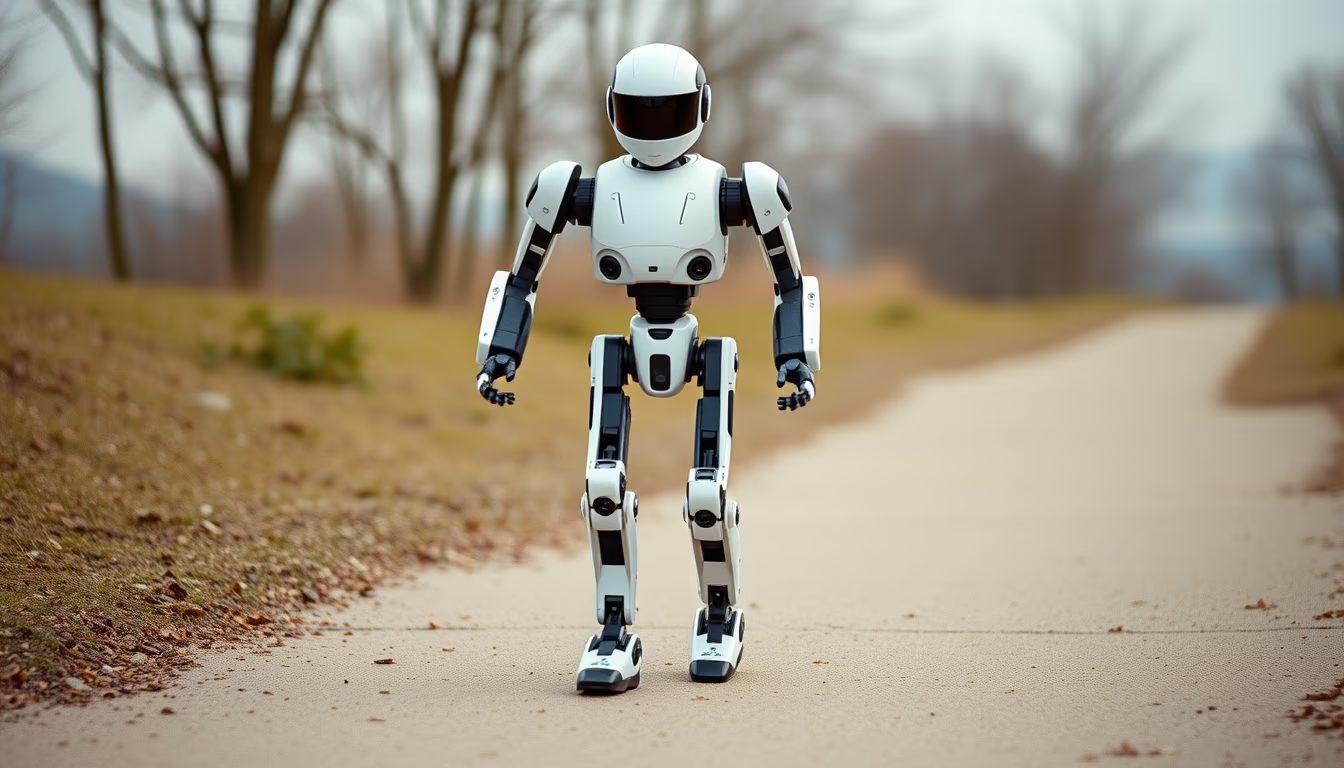
A robotic exoskeleton is a wearable structure that amplifies human strength, used in rehabilitation and industry.
About this subject
Robotic exoskeletons are wearable mechanical devices that integrate actuators, sensors, and control systems to assist or amplify user movements. Inspired by arthropod biology, these devices have evolved rapidly since the first military prototypes in the 1960s, such as General Electric's Hardiman. Today, they are applied in three main areas: rehabilitation for spinal cord injury or stroke patients, physical capability enhancement for industrial workers (e.g., at Ford and Toyota), and experimental use for soldiers carrying heavy loads.
In medicine, exoskeletons like the EksoNR and ReWalk enable paraplegics to walk again, with batteries lasting up to 4 hours and sensors detecting movement intention. In industry, devices like the EksoVest (by Ekso Bionics) reduce fatigue in overhead repetitive tasks. The global exoskeleton market was valued at $350 million in 2023, projected to reach $2.8 billion by 2030 (MarketsandMarkets). Challenges include weight reduction, battery life, and high cost (medical models range from $50,000 to $150,000).
Brazil has initiatives such as the exoskeleton from the Assistive Technologies Lab at UFRJ, focusing on lower limb rehabilitation. Exoskeletons are also used in gaming and entertainment, like Teslasuit's haptic system that simulates tactile sensations. Integration with artificial intelligence allows algorithms to learn gait patterns and provide personalized assistance. Safety is regulated by standards like ISO 13482 for personal care robots.
Frequently Asked Questions
How much does a robotic exoskeleton cost?
Prices vary: medical models like the ReWalk cost between $50,000 and $150,000. Industrial exoskeletons are cheaper, around $10,000 to $30,000. Low-cost versions are under development.
Can anyone use an exoskeleton?
Most require medical evaluation, especially rehabilitation models. Restrictions include weight, height, and cardiac conditions. Industrial models require training and respect ergonomic limits.
What is the difference between an exoskeleton and a robotic prosthesis?
Exoskeletons are worn externally, assisting existing movements. Robotic prostheses replace missing limbs, connecting to the stump and restoring motor functions.
Direct URL
https://pub-c7d6a6ea828543ac903a74a341ccb2e1.r2.dev/imagens/robotic-exoskeleton-fish-eye-wide-angle-p0.avifHow to credit
Include a visible link back to UtilizAí. Copy one of the snippets below:
<a href="https://xn--utiliza-eza.com/en/midia/imagens/robotic-exoskeleton-fish-eye-wide-angle-p0">Robotic exoskeleton</a> by <a href="https://xn--utiliza-eza.com">UtilizAí</a>, licensed under <a href="https://creativecommons.org/licenses/by/4.0/">CC BY 4.0</a>.
[Robotic exoskeleton](https://xn--utiliza-eza.com/en/midia/imagens/robotic-exoskeleton-fish-eye-wide-angle-p0) by [UtilizAí](https://xn--utiliza-eza.com), CC BY 4.0
License: CC-BY-4.0