Robotic exoskeleton
1344×768 · AVIF · CC BY 4.0

Robotic exoskeletons are wearable devices that enhance human strength and endurance, with applications in rehabilitation, industry, and military.
About this subject
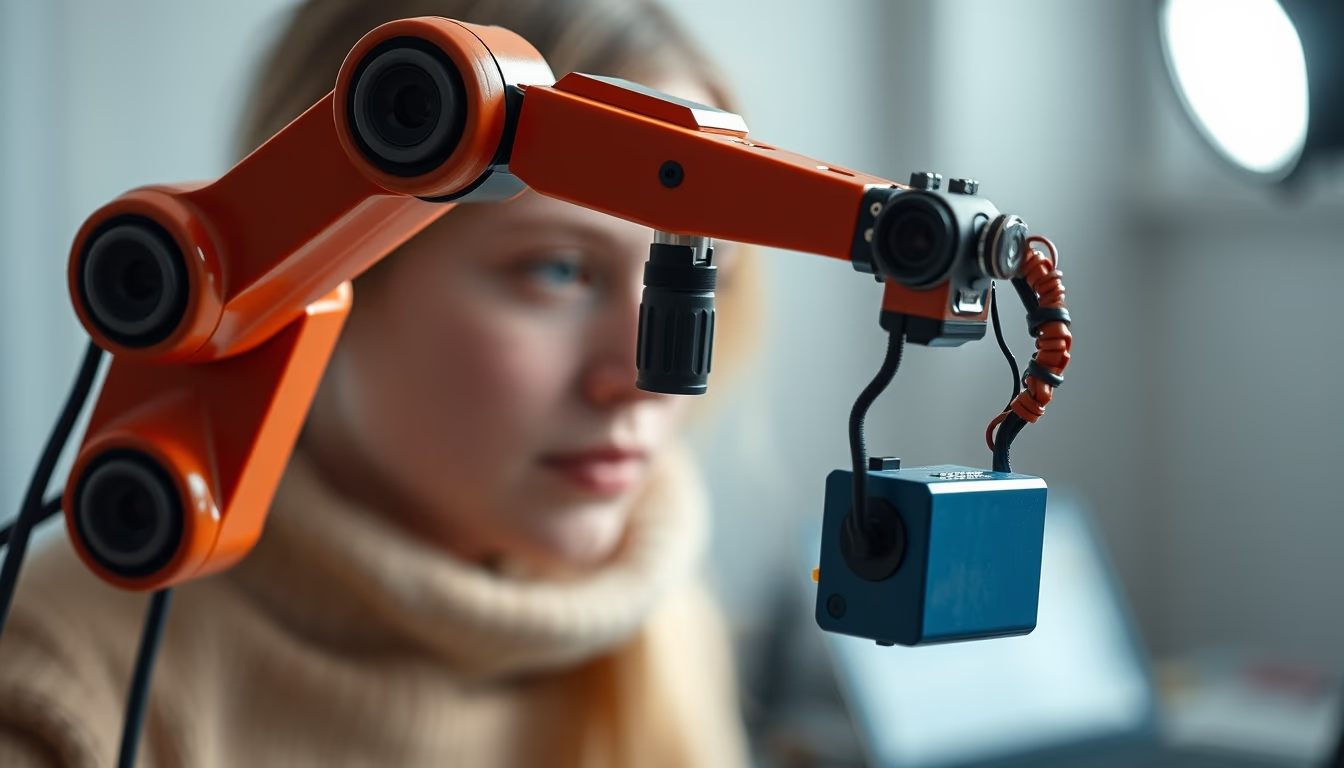
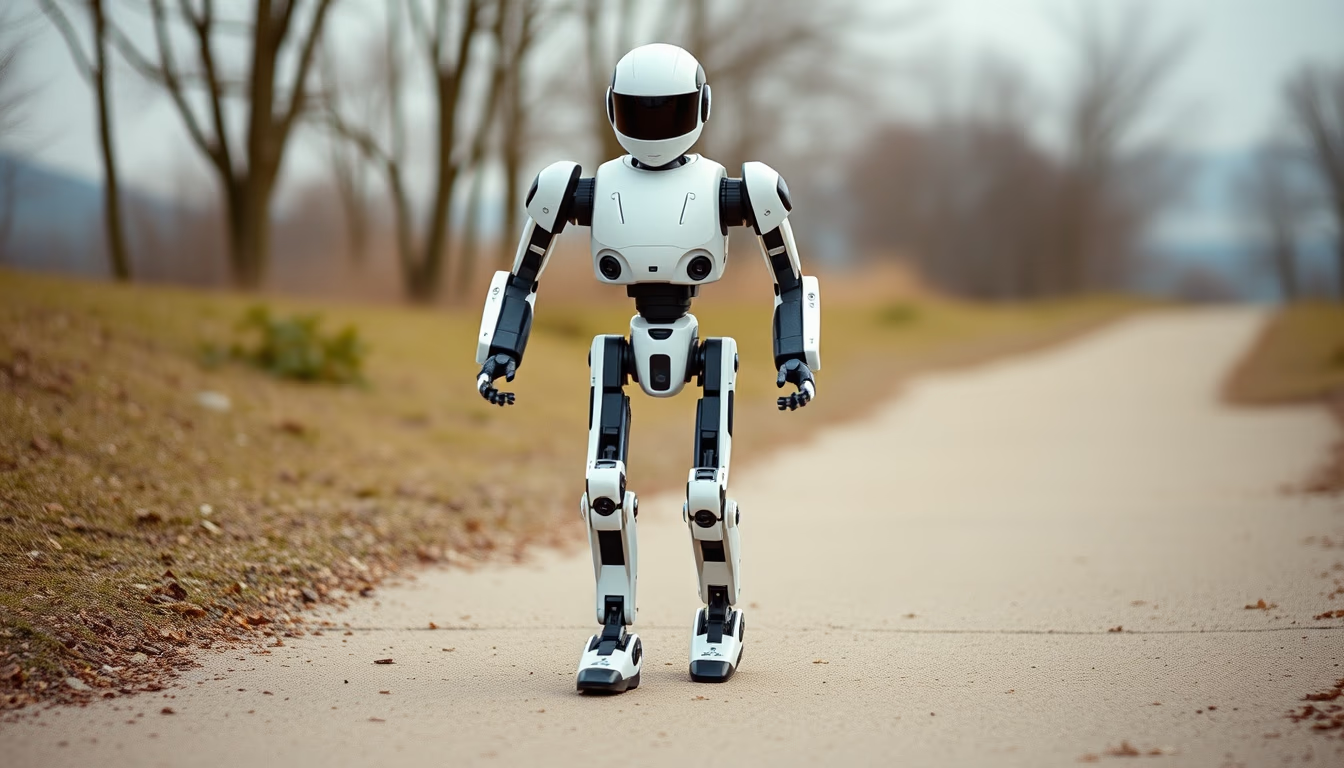
Robotic exoskeletons are motorized external structures worn by users, designed to amplify physical capabilities. Development accelerated in recent decades, combining advances in sensors, actuators, batteries, and artificial intelligence. In medicine, they aid rehabilitation for spinal cord injury or stroke patients, enabling them to regain walking. Companies like Ekso Bionics and ReWalk market certified models. In industry, passive and active exoskeletons reduce fatigue in repetitive tasks such as overhead lifting on automotive assembly lines. The military sector invests in versions that increase the load carried by soldiers, such as DARPA's Talos, though energy consumption still limits autonomy. The precision of inertial sensors and neural network control have evolved for more natural movements. In Brazil, research at the Federal University of Rio de Janeiro and the Aeronautics Institute of Technology explores low-cost models for rehabilitation. The global exoskeleton market is expected to surpass 6 billion dollars by 2028, driven by aging populations and automation of heavy tasks. Challenges include device weight, battery life, and adaptability to different body types. Next advances focus on brain-machine interfaces for intuitive control and cost reduction to popularize clinical and occupational use.
Frequently Asked Questions
What is the difference between passive and active exoskeletons?
Passive exoskeletons use springs or elastomers to store and release energy without motors, making them lighter and cheaper. Active exoskeletons employ electric, hydraulic, or pneumatic actuators to generate force, requiring batteries and electronic control.
Can exoskeletons harm the user?
Risks include pressure points, restricted natural movement, and over-reliance. Poorly fitted devices can cause musculoskeletal injuries. Standards like ISO 13482 establish safety requirements for exoskeletons.
How much does a robotic exoskeleton cost?
Medical models like ReWalk cost between $70,000 and $150,000. Industrial passive versions range from $3,000 to $10,000. Research aims to reduce prices to increase access, especially in developing countries.
Direct URL
https://pub-c7d6a6ea828543ac903a74a341ccb2e1.r2.dev/imagens/robotic-exoskeleton-fine-art-photography-p8.avifHow to credit
Include a visible link back to UtilizAí. Copy one of the snippets below:
<a href="https://xn--utiliza-eza.com/en/midia/imagens/robotic-exoskeleton-fine-art-photography-p8">Robotic exoskeleton</a> by <a href="https://xn--utiliza-eza.com">UtilizAí</a>, licensed under <a href="https://creativecommons.org/licenses/by/4.0/">CC BY 4.0</a>.
[Robotic exoskeleton](https://xn--utiliza-eza.com/en/midia/imagens/robotic-exoskeleton-fine-art-photography-p8) by [UtilizAí](https://xn--utiliza-eza.com), CC BY 4.0
License: CC-BY-4.0