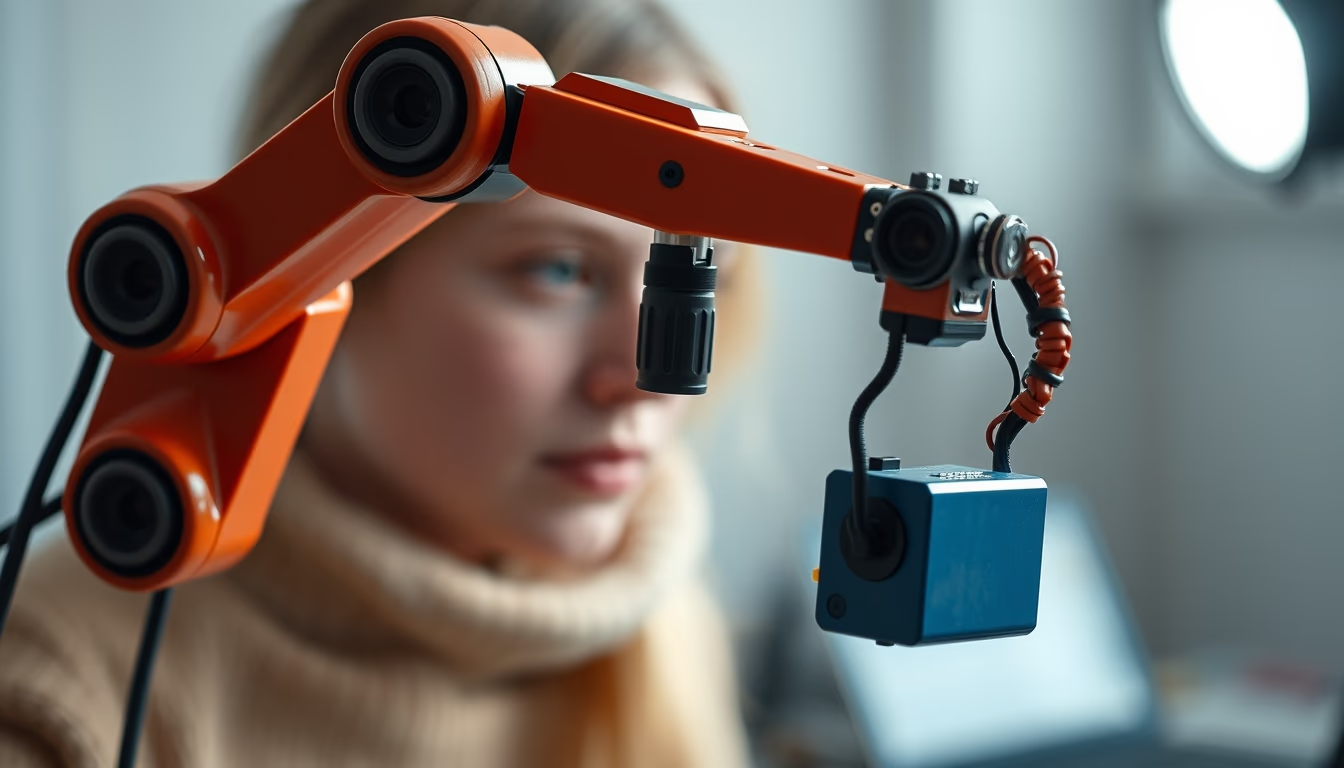
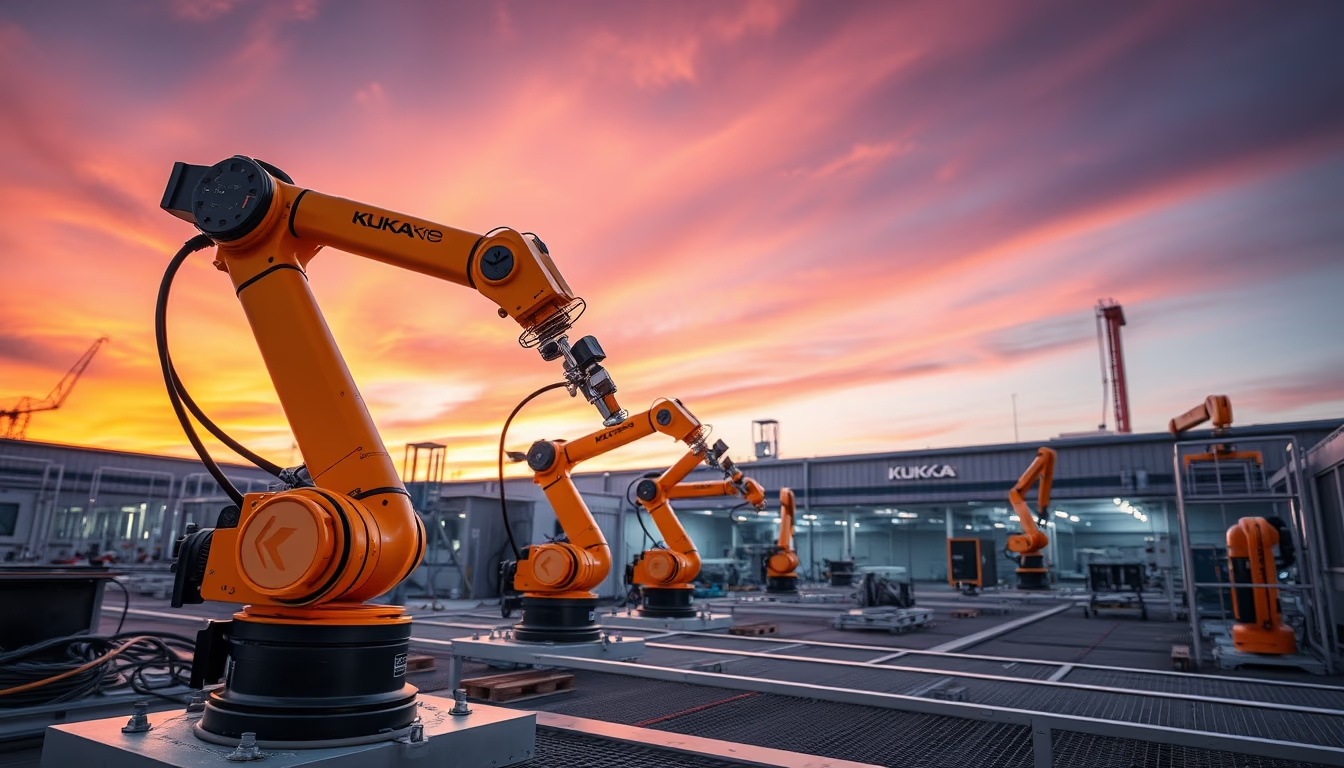
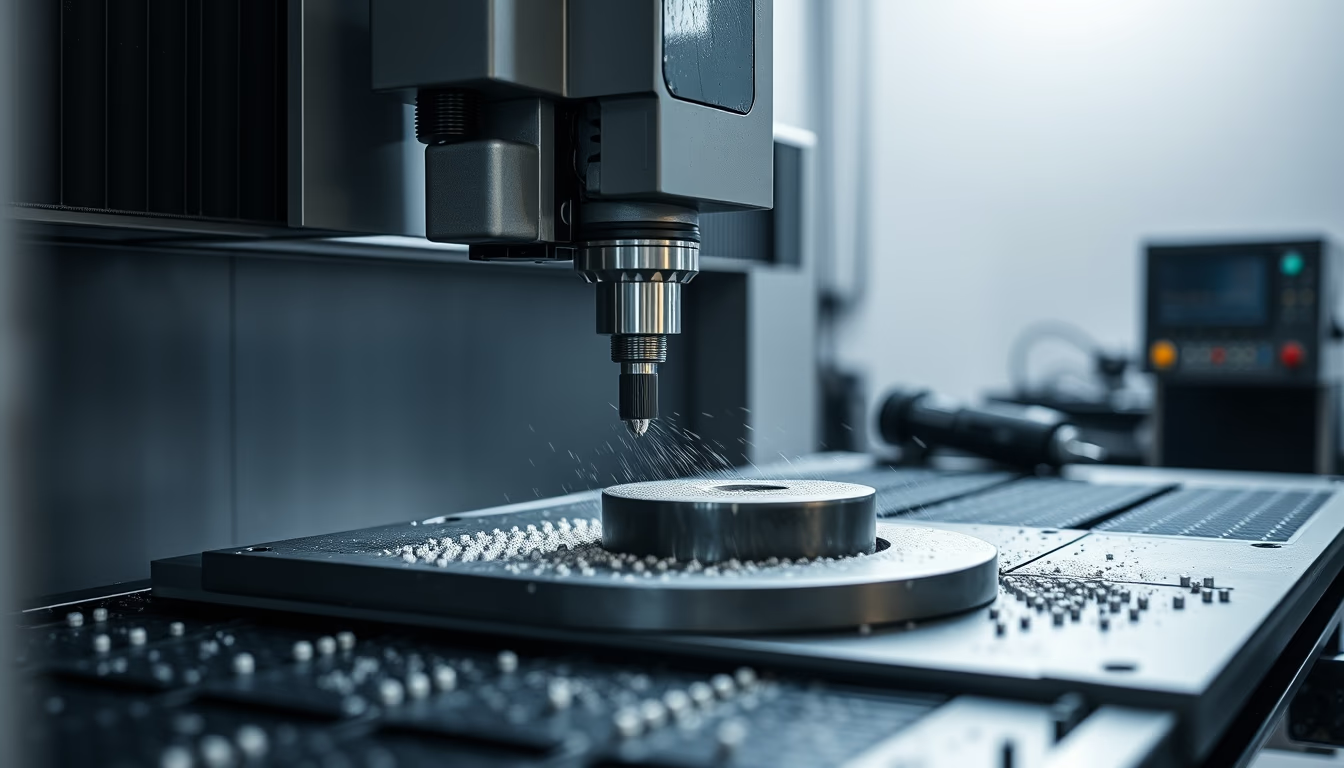
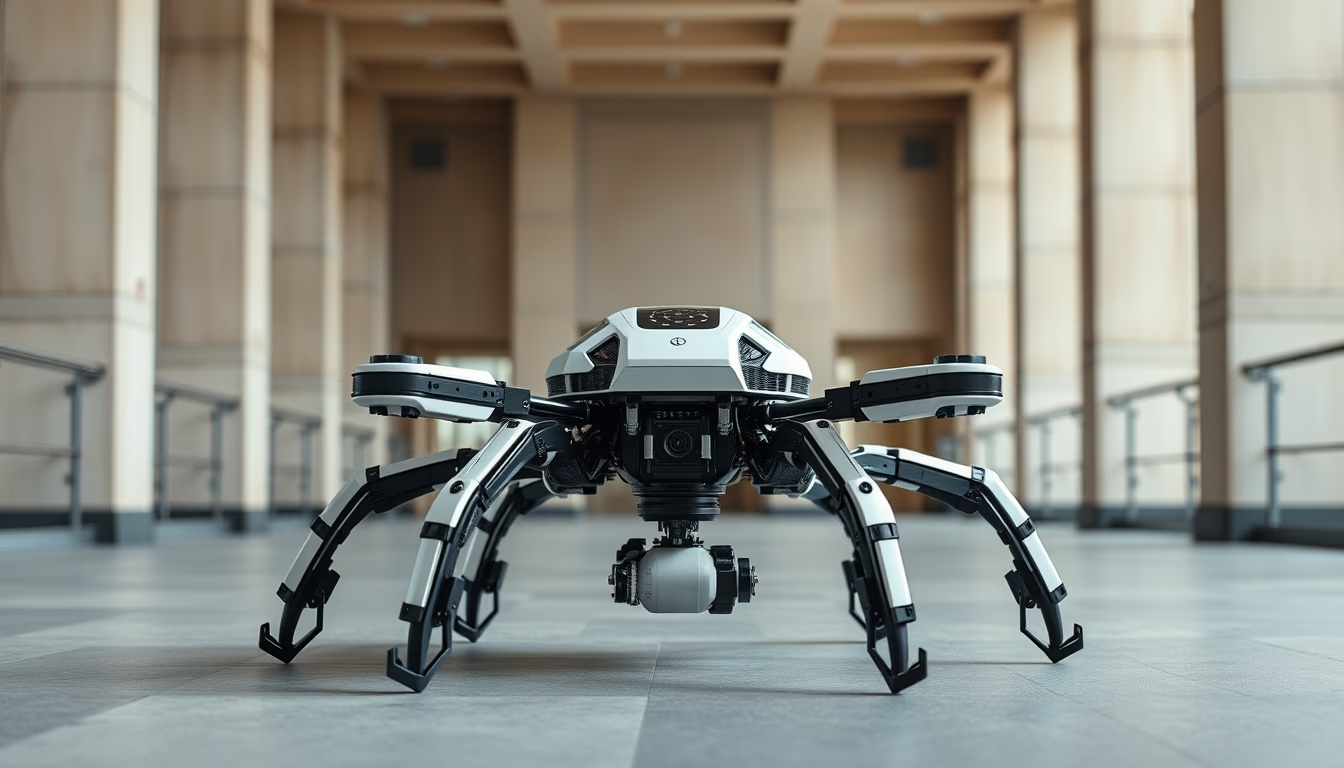
Robot arm assembling car
1344×768 · AVIF · CC BY 4.0

Robotic arms have revolutionized vehicle assembly, increasing precision and speed on automotive production lines.
About this subject
The first industrial robotic arms appeared in the 1960s, with the Unimate installed at General Motors in 1961 for welding tasks. Since then, robotics has become essential in the automotive industry, performing everything from body welding to painting and assembly of interior components. These robots, manufactured by companies like ABB, Kuka, and Fanuc, operate with millimeter precision and repeatability, reducing errors and increasing productivity.
In Brazil, automakers such as Fiat (Goiana), Volkswagen (São Bernardo do Campo), and General Motors (Gravataí) extensively use robotic arms on their assembly lines. The integration of sensors and artificial intelligence allows these robots to adapt to different vehicle models, optimizing production flow. Additionally, collaborative robotics, with robots working alongside humans, is gaining ground, enhancing flexibility and safety.
A curious fact is that modern robotic arms can reach speeds of up to 2 meters per second, with load capacities ranging from a few kilograms to over a ton. Calibration is performed by computer vision systems, ensuring each screw is tightened to the correct torque. It is estimated that in a car factory, robots perform up to 90% of welding tasks, contributing to the uniformity of the vehicle structure.
The continuous evolution of robotics promises safer and more personalized cars, with the possibility of mass production of electric and autonomous vehicles. The use of lighter materials, such as aluminum and carbon fiber, also requires adaptations of robotic arms, which need specialized grippers and tools to handle these components without damaging them.
Frequently Asked Questions
How does a robotic arm work in car assembly?
The robotic arm is programmed to execute precise movements, with joints that mimic the human arm. Sensors and actuators allow it to hold tools, such as welding guns or torque wrenches, and perform repetitive tasks with high accuracy.
What are the main advantages of using robots in the automotive industry?
Advantages include increased productivity, improved quality and consistency, reduced operating costs, greater worker safety (by eliminating hazardous tasks), and flexibility to switch between different vehicle models.
Who are the main manufacturers of robotic arms for automotive assembly?
The main manufacturers are ABB (Switzerland), Kuka (Germany), Fanuc (Japan), Yaskawa (Japan), and Kawasaki (Japan). Each offers specific models for applications such as welding, painting, and material handling.
Direct URL
https://pub-c7d6a6ea828543ac903a74a341ccb2e1.r2.dev/imagens/robot-arm-assembling-car-travel-photography-p2.avifHow to credit
Include a visible link back to UtilizAí. Copy one of the snippets below:
<a href="https://xn--utiliza-eza.com/en/midia/imagens/robot-arm-assembling-car-travel-photography-p2">Robot arm assembling car</a> by <a href="https://xn--utiliza-eza.com">UtilizAí</a>, licensed under <a href="https://creativecommons.org/licenses/by/4.0/">CC BY 4.0</a>.
[Robot arm assembling car](https://xn--utiliza-eza.com/en/midia/imagens/robot-arm-assembling-car-travel-photography-p2) by [UtilizAí](https://xn--utiliza-eza.com), CC BY 4.0
License: CC-BY-4.0