Robot arm assembling car
1344×768 · AVIF · CC BY 4.0
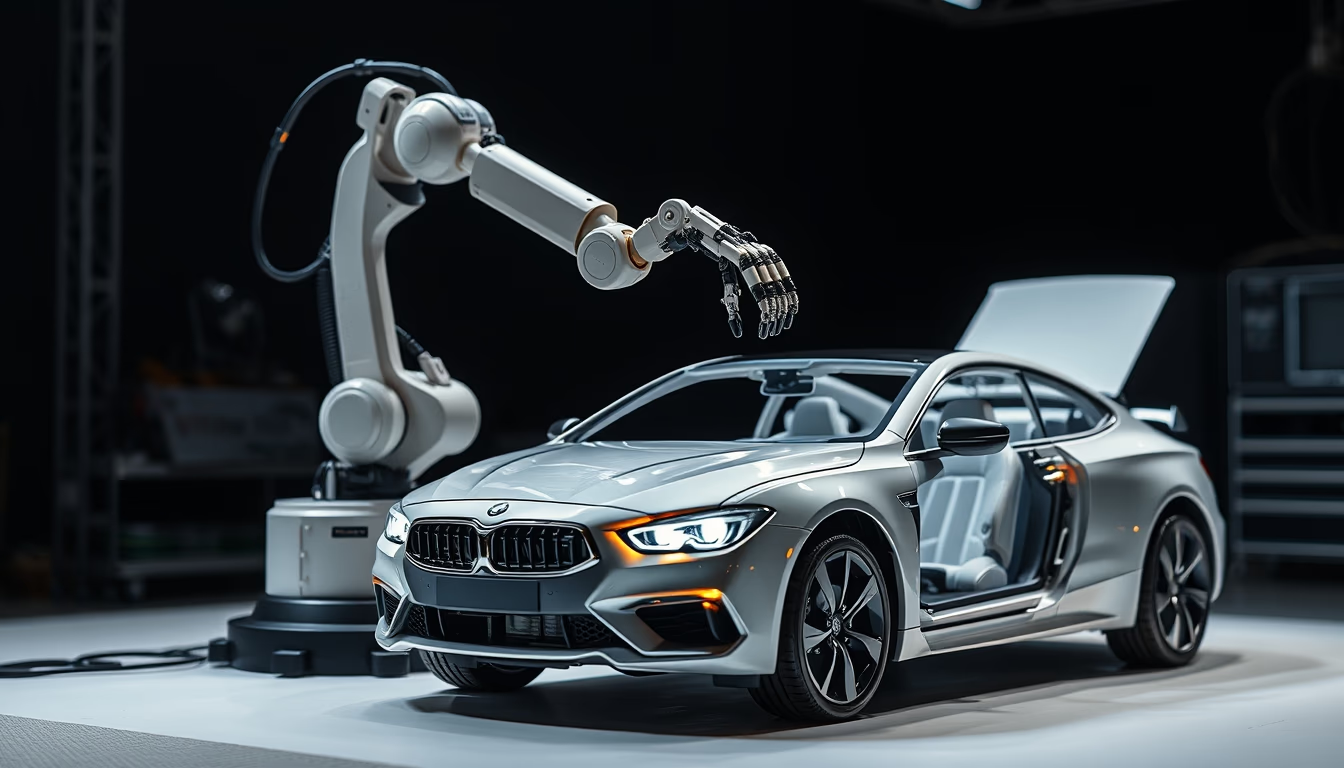
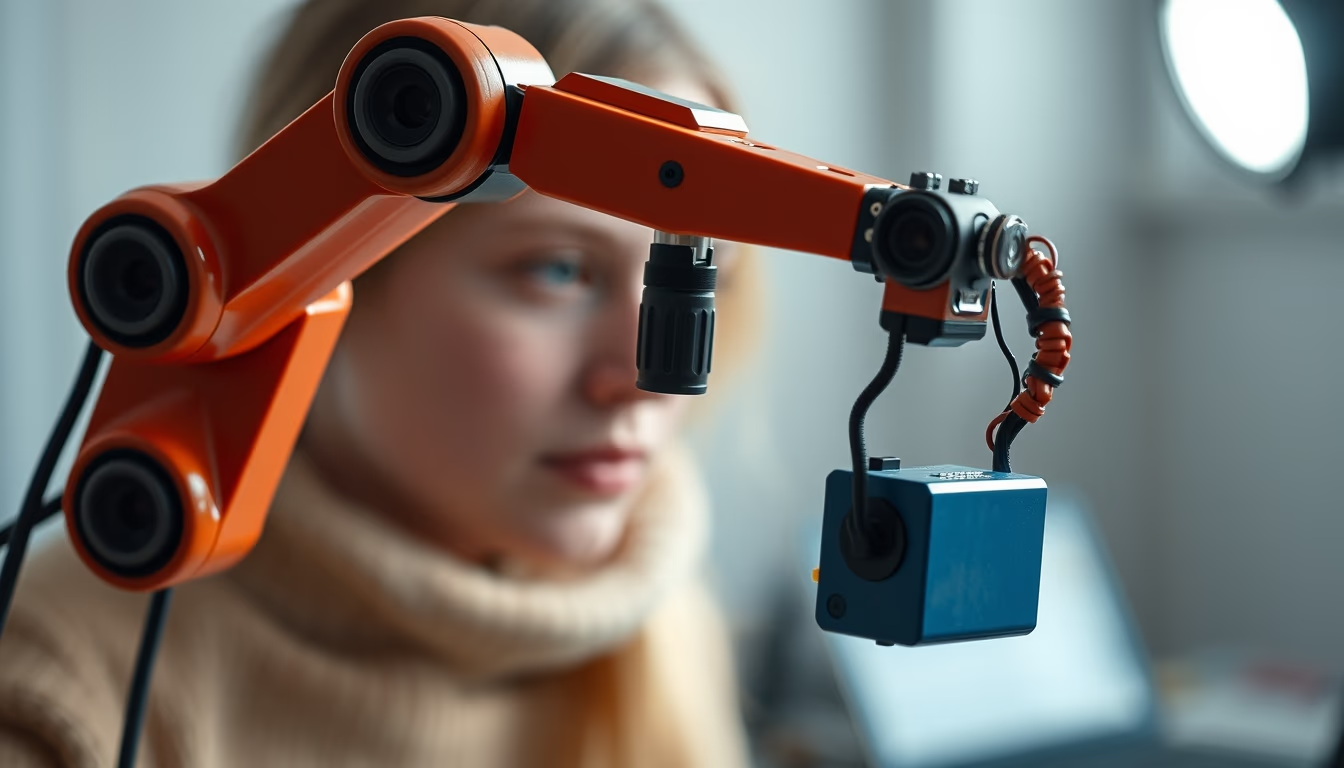
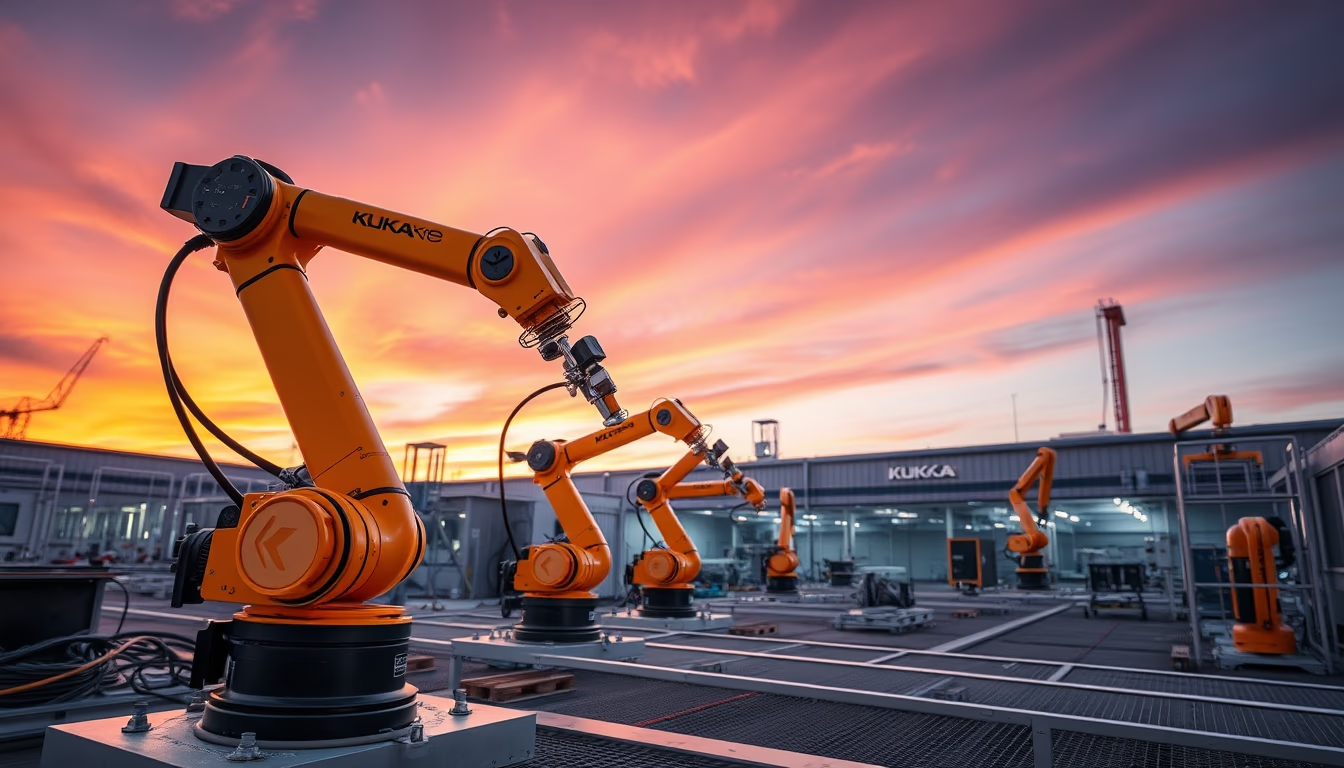
Robotic arms in car manufacturing perform tasks like welding, painting, and parts handling with high precision and repeatability.
About this subject
Robotic arms have revolutionized the automotive industry since the first industrial robot, the Unimate, was installed at General Motors in 1961 to handle hot die-cast parts. Today, six-axis articulated robots are the most common on assembly lines, performing spot welding, adhesive application, painting, and assembly of components such as doors, panels, and engines.
These robots offer consistent speed, sub-millimeter accuracy, and the ability to operate 24/7, reducing human errors and increasing productivity. Advanced sensors, computer vision, and artificial intelligence algorithms enable them to adapt to part variations and collaborate with human workers in hybrid production cells.
The adoption of robots in car assembly has brought challenges like high upfront costs, need for specialized maintenance, and concerns about technological unemployment. However, demand for consistent quality vehicles and pressure for energy efficiency continue to drive automation. Companies such as Tesla, Toyota, and Volkswagen employ thousands of robots in their factories, often integrated with Internet of Things (IoT) systems for predictive maintenance.
Notably, Brazil has one of the largest robot fleets in Latin America, especially in the automotive hub of São Bernardo do Campo, where automakers like Ford and Mercedes-Benz have used robots since the 1990s. Future trends include lighter, safer collaborative robots that work alongside operators without safety cages.
Frequently Asked Questions
How do robotic arms assemble cars?
They follow pre-programmed paths to position tools and move parts with high accuracy. Sensors and cameras enable real-time adjustments for strong welds and perfect fits.
What are the advantages of using robots in automotive manufacturing?
Increased productivity, consistent quality, reduced waste and workplace injuries, and the ability to operate in hazardous environments involving paints and welds.
Since when have robots been used in car manufacturing?
The first industrial robot was installed in 1961 at General Motors to handle hot parts. Widespread adoption began in the 1980s with welding robots.
Direct URL
https://pub-c7d6a6ea828543ac903a74a341ccb2e1.r2.dev/imagens/robot-arm-assembling-car-studio-still-life-p8.avifHow to credit
Include a visible link back to UtilizAí. Copy one of the snippets below:
<a href="https://xn--utiliza-eza.com/en/midia/imagens/robot-arm-assembling-car-studio-still-life-p8">Robot arm assembling car</a> by <a href="https://xn--utiliza-eza.com">UtilizAí</a>, licensed under <a href="https://creativecommons.org/licenses/by/4.0/">CC BY 4.0</a>.
[Robot arm assembling car](https://xn--utiliza-eza.com/en/midia/imagens/robot-arm-assembling-car-studio-still-life-p8) by [UtilizAí](https://xn--utiliza-eza.com), CC BY 4.0
License: CC-BY-4.0