Robot arm assembling car
1344×768 · AVIF · CC BY 4.0
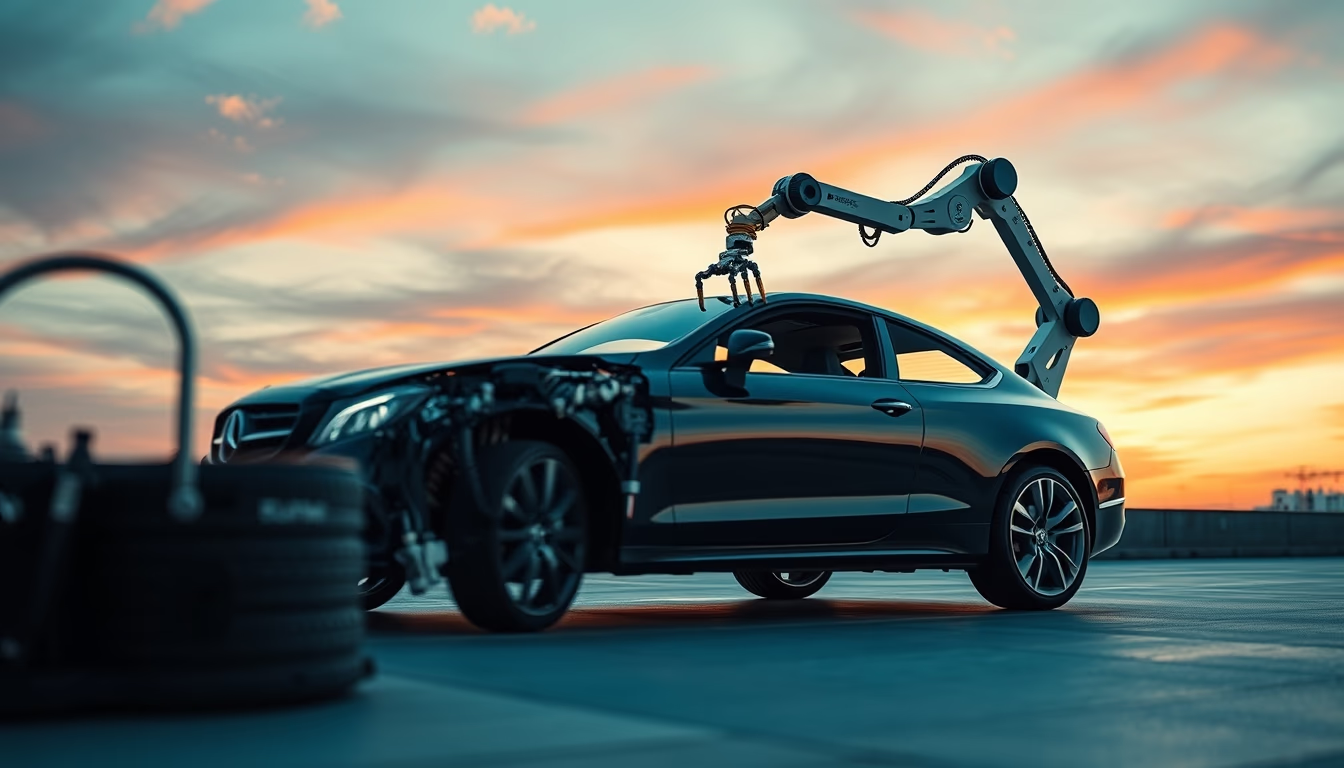
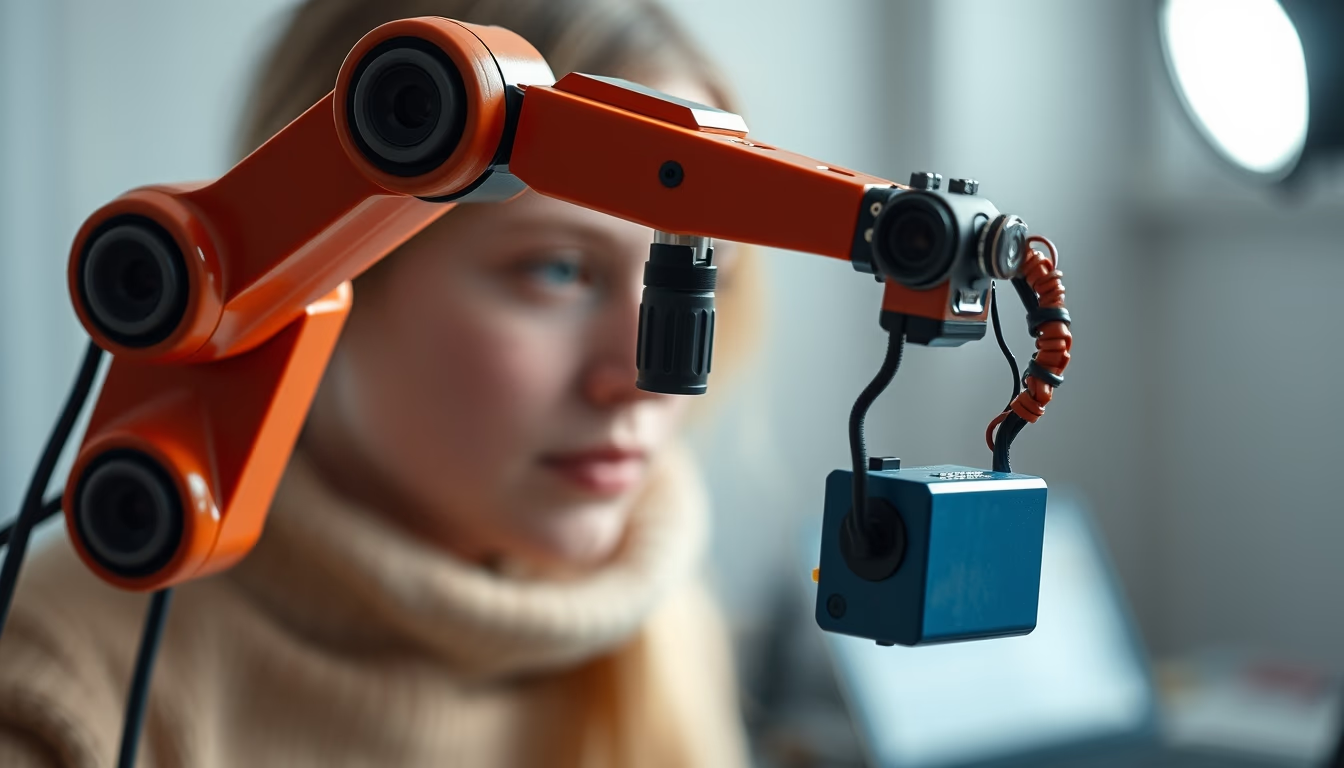
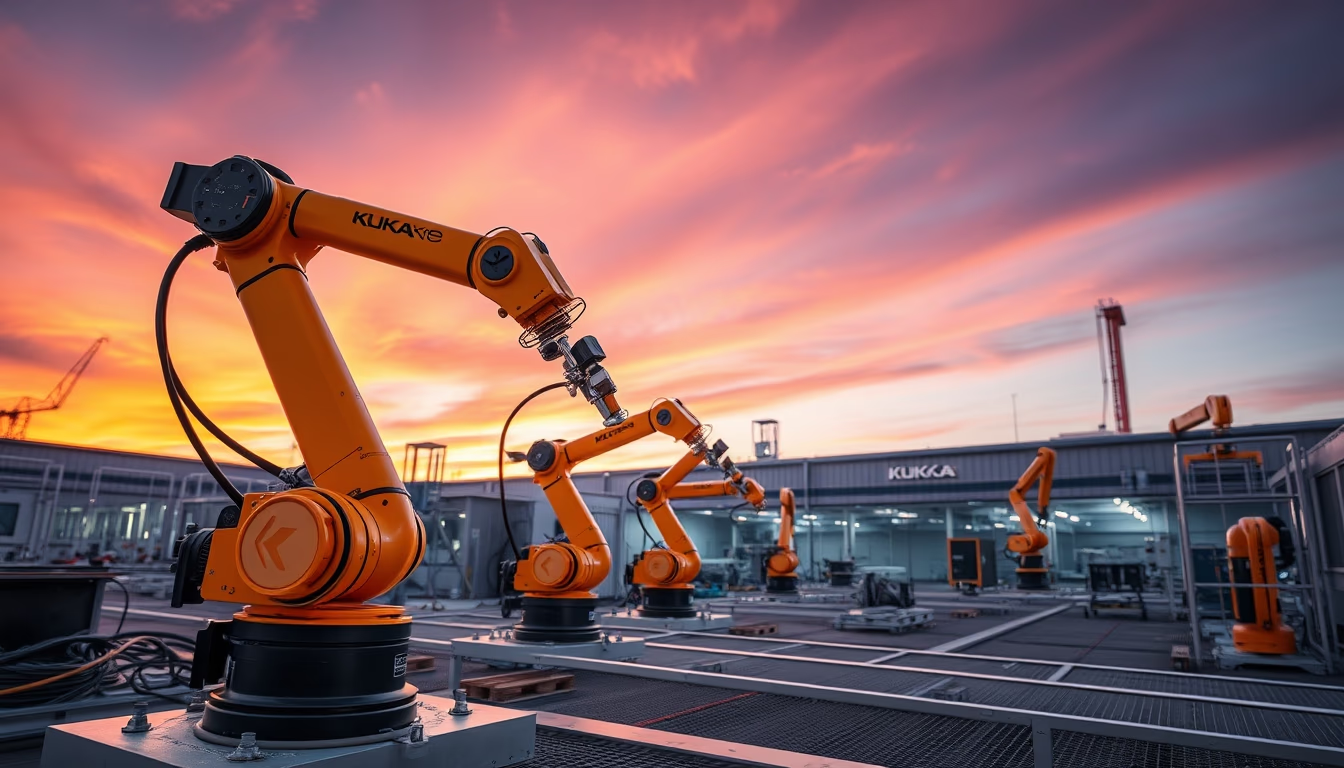
Robotic arms are essential in car assembly, performing tasks like welding and painting with high precision and speed.
About this subject
Industrial robotic arms have transformed the automotive industry since their introduction in the 1960s. The first industrial robot, Unimate, was installed at General Motors in 1961 for die-casting operations. Today, automakers like Toyota, Volkswagen, and Tesla use thousands of articulated robots (typically 6-axis) on production lines for spot welding, painting, component assembly, and quality inspection.
The submillimeter precision of these robots allows consistent repeatability, reducing defects and rework. Brands like KUKA, Fanuc, and ABB dominate the market, offering models such as the KR 1000 Titan (capable of lifting 1.3 tons) and the IRB 6700. In welding, robots perform hundreds of spots per minute, with sensors adjusting the path in real time. In painting, they ensure uniform layers with no paint waste.
In Brazil, the use of robots in vehicle assembly is intense. Fiat in Betim (MG) has one of the largest robotized factories in Latin America, with over 800 robots on the production line. Volkswagen in São Bernardo do Campo (SP) employs robots for welding and handling heavy parts. The current trend is toward cobots (collaborative robots) that work side by side with humans, equipped with force sensors and machine vision for safety.
The longevity of these machines is remarkable: many robots operate for decades with proper maintenance. Programming is done offline via CAD/CAM software, simulating movements before execution. Integration with artificial intelligence enables pattern learning and continuous process optimization. Despite high initial costs (a robot can cost from $20,000 to $200,000), the return comes from labor savings, error reduction, and 24/7 productivity gains.
Frequently Asked Questions
How do robotic arms work in car assembly?
Robotic arms use electric motors and control systems to articulate multiple axes, moving tools like grippers, welders, or paint guns. Programmed via CAM software, they perform precise, repetitive motion sequences guided by sensors and cameras.
What are the main advantages of using robots in the automotive industry?
Increased productivity (24/7 operation), consistent quality, reduced waste, safety in hazardous tasks (welding, toxic painting), and ability to handle heavy loads (up to 1.3 tons).
Are robots completely replacing human workers in assembly plants?
Not entirely. While repetitive and high-precision tasks are automated, humans are still needed for supervision, maintenance, programming, and complex part assembly. Cobots work side by side, and the trend is a division of tasks between human and machine.
Direct URL
https://pub-c7d6a6ea828543ac903a74a341ccb2e1.r2.dev/imagens/robot-arm-assembling-car-long-exposure-p9.avifHow to credit
Include a visible link back to UtilizAí. Copy one of the snippets below:
<a href="https://xn--utiliza-eza.com/en/midia/imagens/robot-arm-assembling-car-long-exposure-p9">Robot arm assembling car</a> by <a href="https://xn--utiliza-eza.com">UtilizAí</a>, licensed under <a href="https://creativecommons.org/licenses/by/4.0/">CC BY 4.0</a>.
[Robot arm assembling car](https://xn--utiliza-eza.com/en/midia/imagens/robot-arm-assembling-car-long-exposure-p9) by [UtilizAí](https://xn--utiliza-eza.com), CC BY 4.0
License: CC-BY-4.0