Robot arm assembling car
1344×768 · AVIF · CC BY 4.0
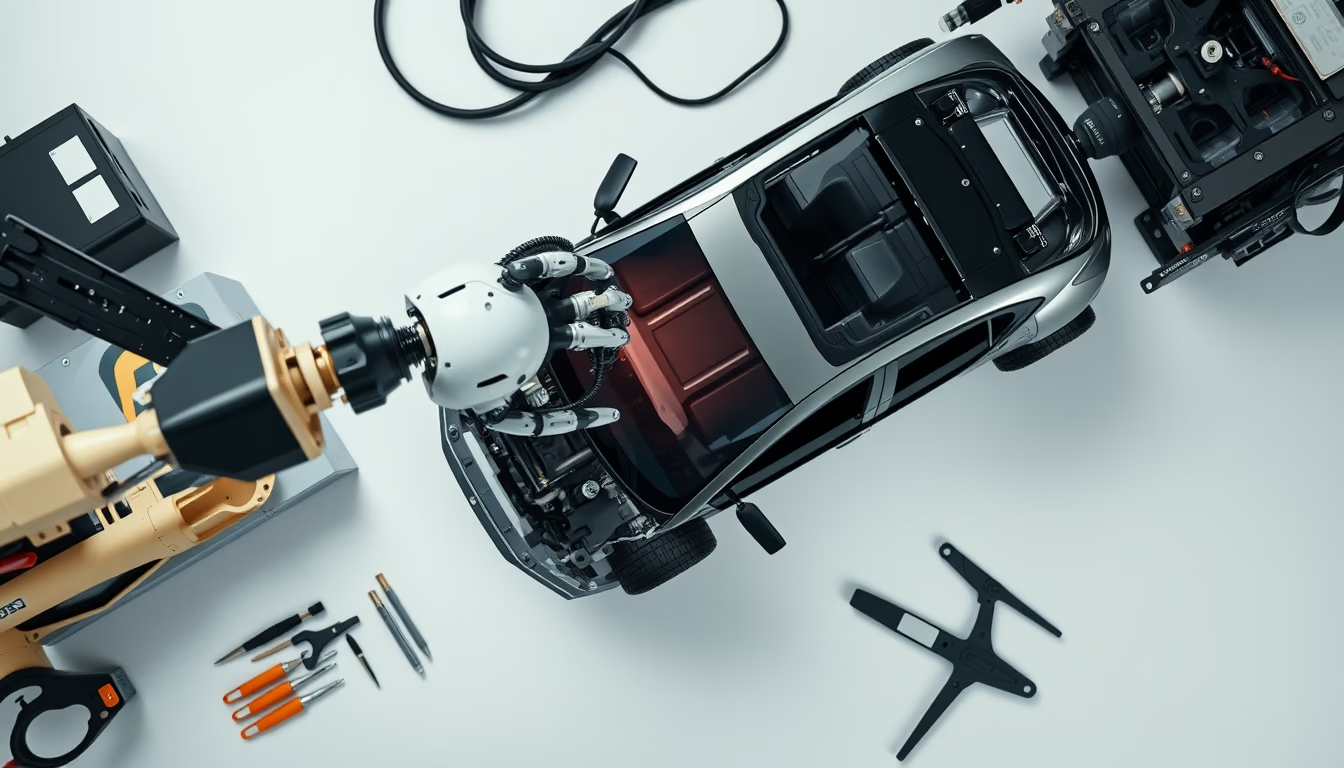
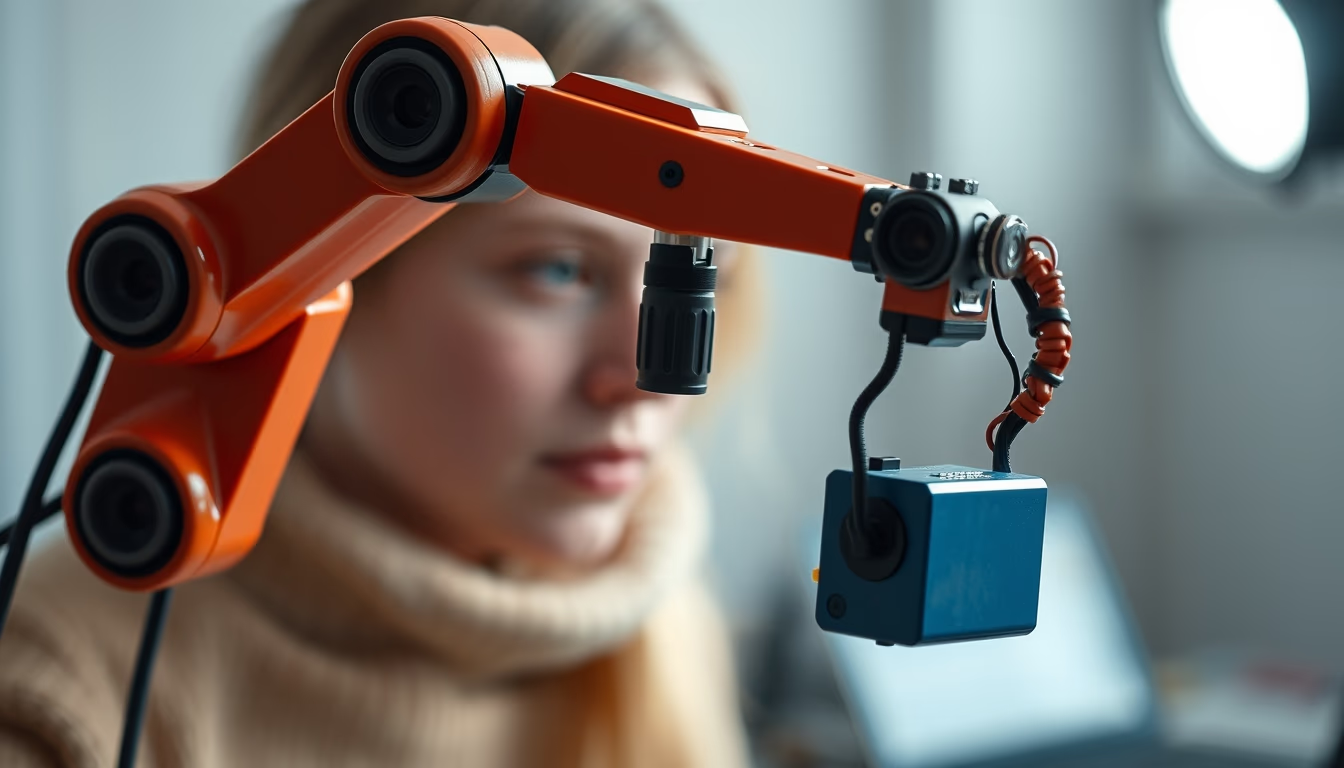
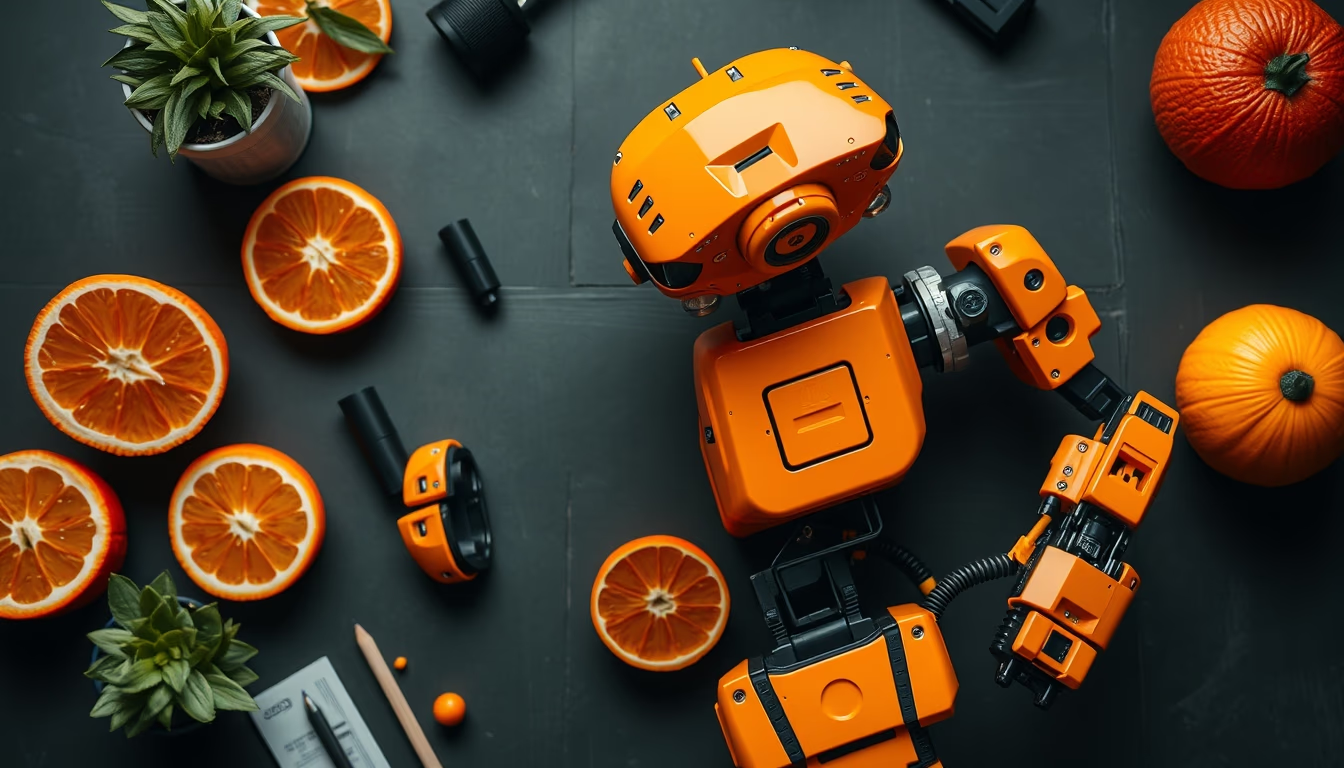
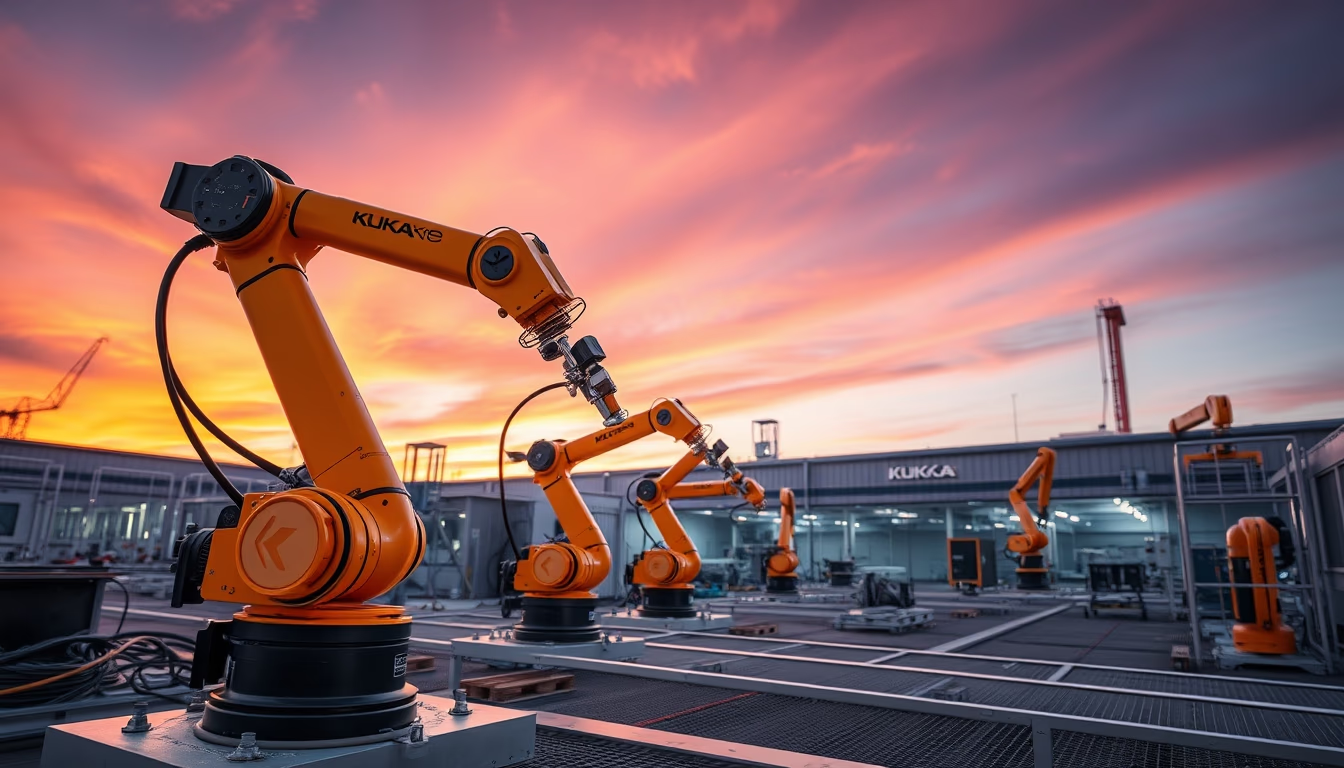
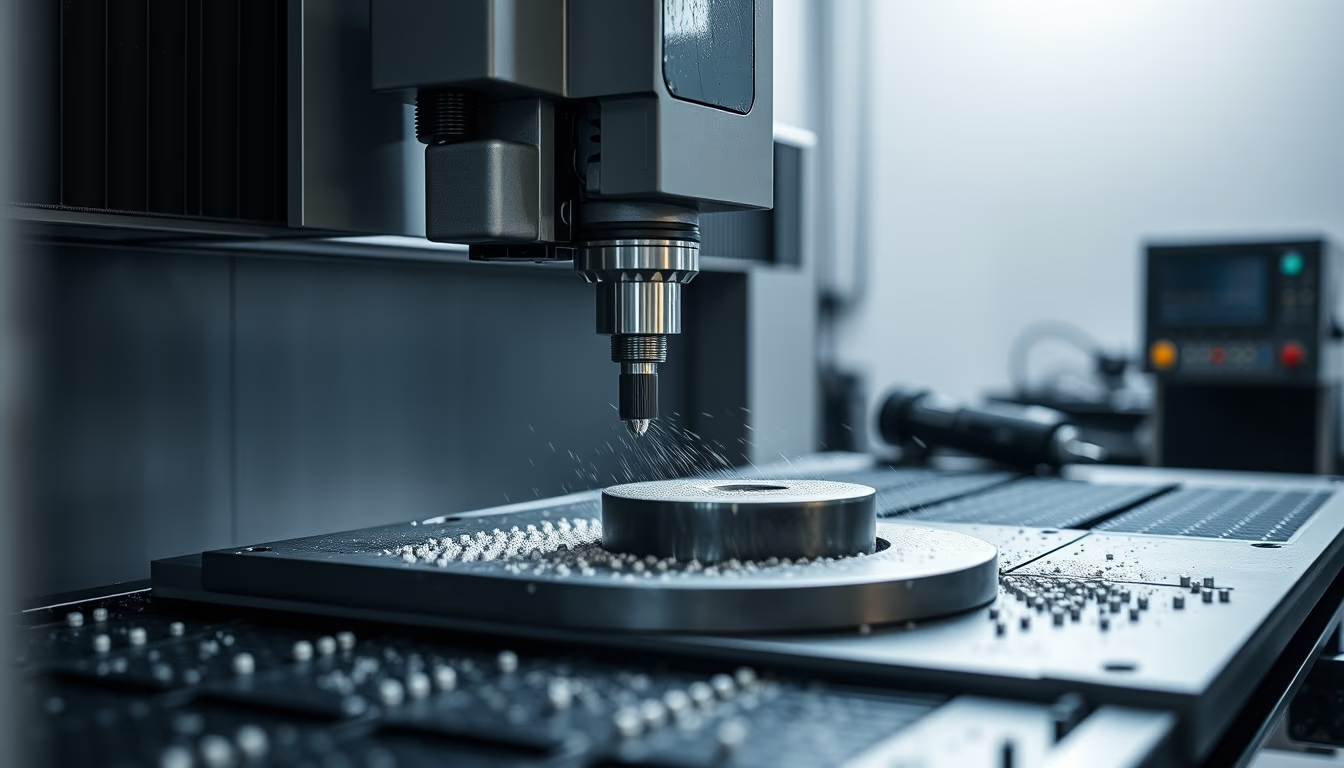
Robot arms assemble cars on modern production lines, combining precision and efficiency.
About this subject
Robot arms have been essential in the automotive industry since 1961, when General Motors installed the first industrial robot, the Unimate, for welding tasks. These machines are typically articulated arms with six axes of movement, capable of performing repetitive operations with extremely high precision, such as assembling parts, painting, and welding. During car assembly, robots can tighten bolts, install panels, and even manipulate heavy components like engines with an error margin below 0.1 millimeter.
Today, about 70% of vehicle assembly is automated, with collaborative robots (cobots) working alongside humans. Programming is done via teach pendants or offline simulation, allowing fine-tuning for each car model. Force and vision sensors ensure the robot adapts to part variations, avoiding damage. The current trend is integration with artificial intelligence to optimize routes and detect faults in real time.
Despite automation, human labor is still needed for supervision, maintenance, and tasks requiring flexibility. Companies like Tesla and Toyota use robots from KUKA, FANUC, and ABB, which can operate 24/7, increasing production by up to 50% compared to manual lines. Safety is ensured by physical barriers and emergency stop sensors.
Frequently Asked Questions
How are robots programmed to assemble cars?
Robots are programmed using teach pendants (manual controllers) or offline simulation on a computer. The programmer guides the robotic arm through the desired movements or creates virtual paths, adjusting speed, angles, and forces for each specific task.
What is the typical precision of a robotic arm in automotive assembly?
The repeatability precision of modern industrial robots is about 0.02 to 0.1 mm, depending on the model and application. This allows tightening bolts with controlled torque and positioning panels accurately.
Have robots completely replaced humans on the assembly line?
No. While robots perform repetitive and heavy tasks, humans are still needed for supervision, maintenance, quality inspection, and operations requiring cognitive flexibility. Human-machine collaboration is increasingly common.
Direct URL
https://pub-c7d6a6ea828543ac903a74a341ccb2e1.r2.dev/imagens/robot-arm-assembling-car-isometric-flat-lay-p10.avifHow to credit
Include a visible link back to UtilizAí. Copy one of the snippets below:
<a href="https://xn--utiliza-eza.com/en/midia/imagens/robot-arm-assembling-car-isometric-flat-lay-p10">Robot arm assembling car</a> by <a href="https://xn--utiliza-eza.com">UtilizAí</a>, licensed under <a href="https://creativecommons.org/licenses/by/4.0/">CC BY 4.0</a>.
[Robot arm assembling car](https://xn--utiliza-eza.com/en/midia/imagens/robot-arm-assembling-car-isometric-flat-lay-p10) by [UtilizAí](https://xn--utiliza-eza.com), CC BY 4.0
License: CC-BY-4.0