Robot arm 3d printer
1344×768 · AVIF · CC BY 4.0
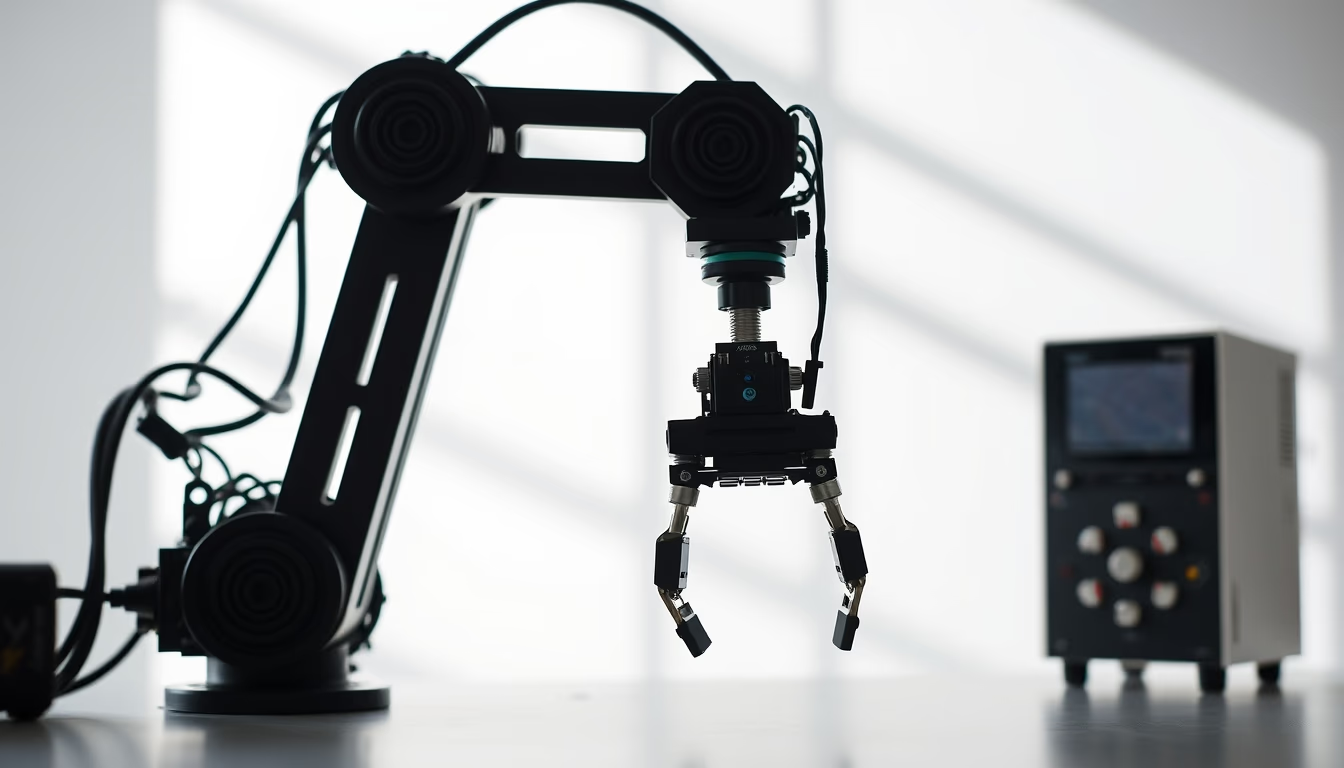
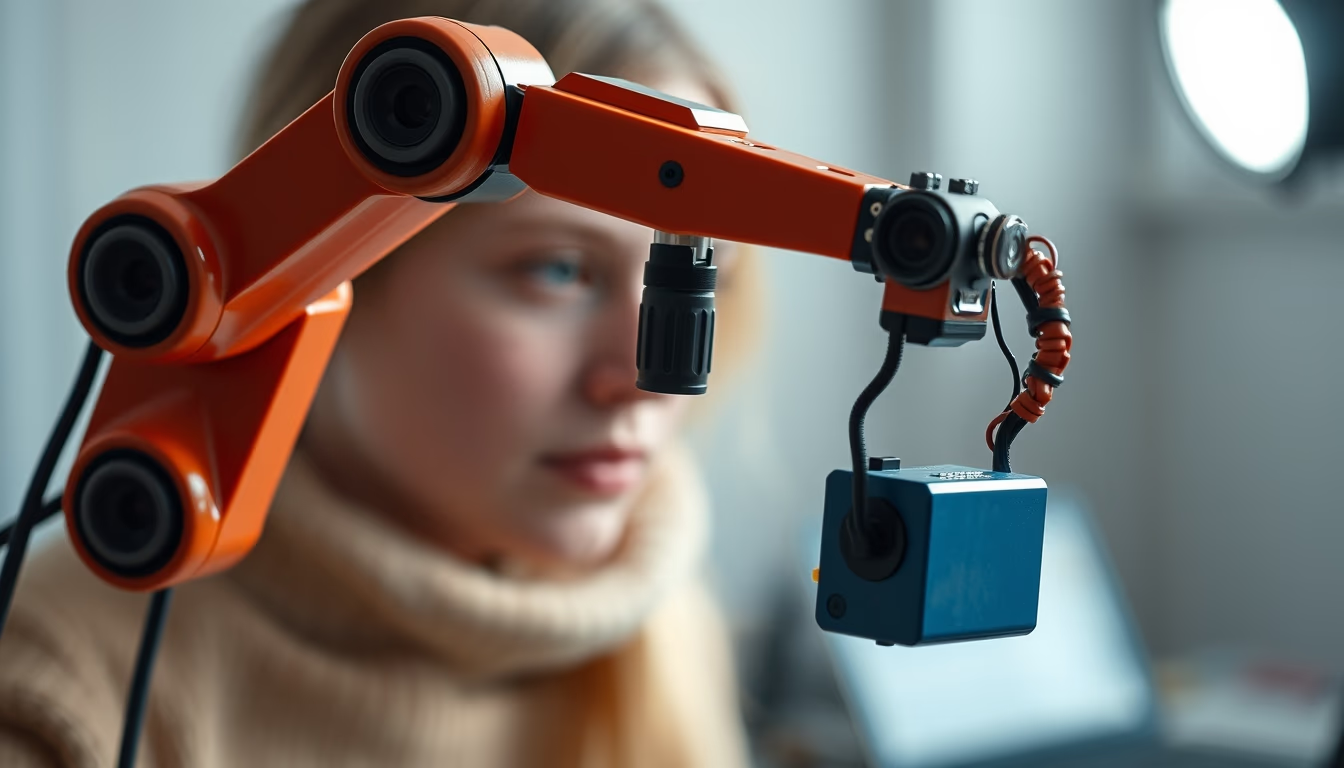
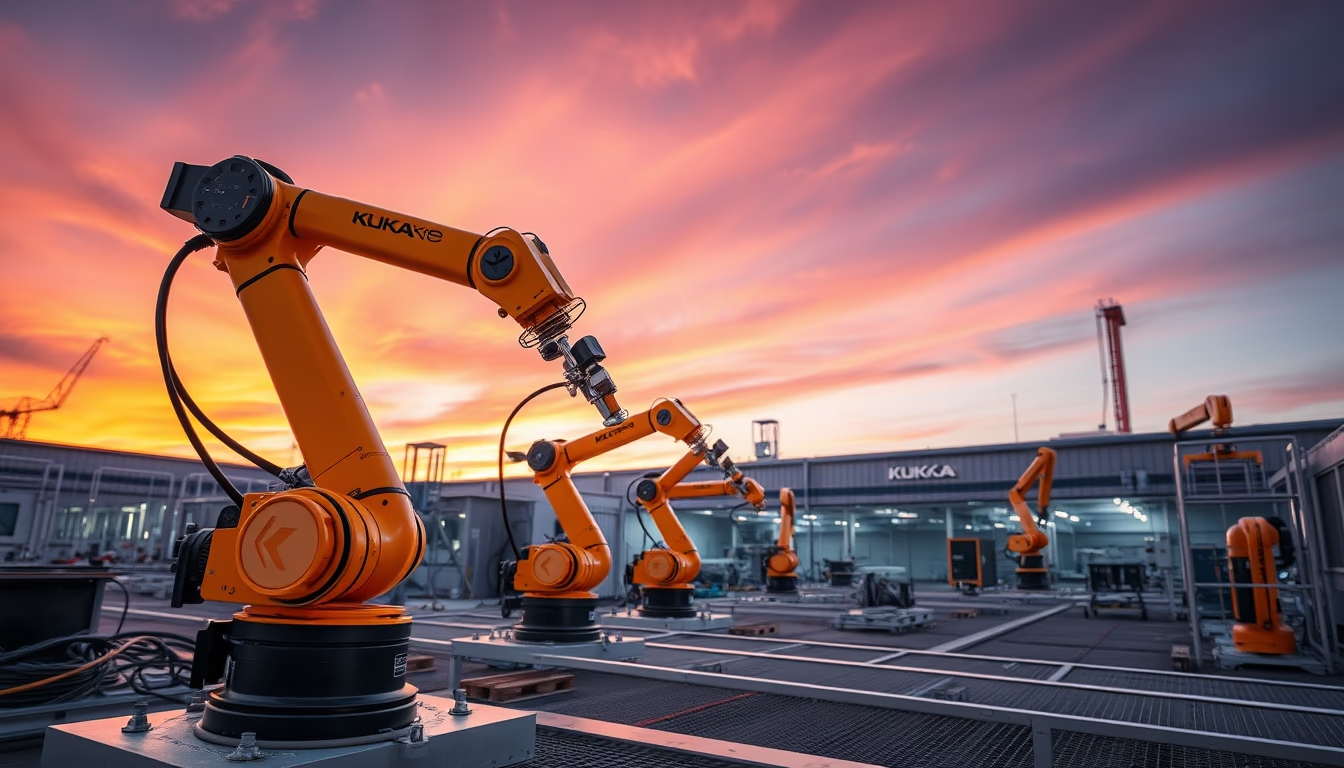
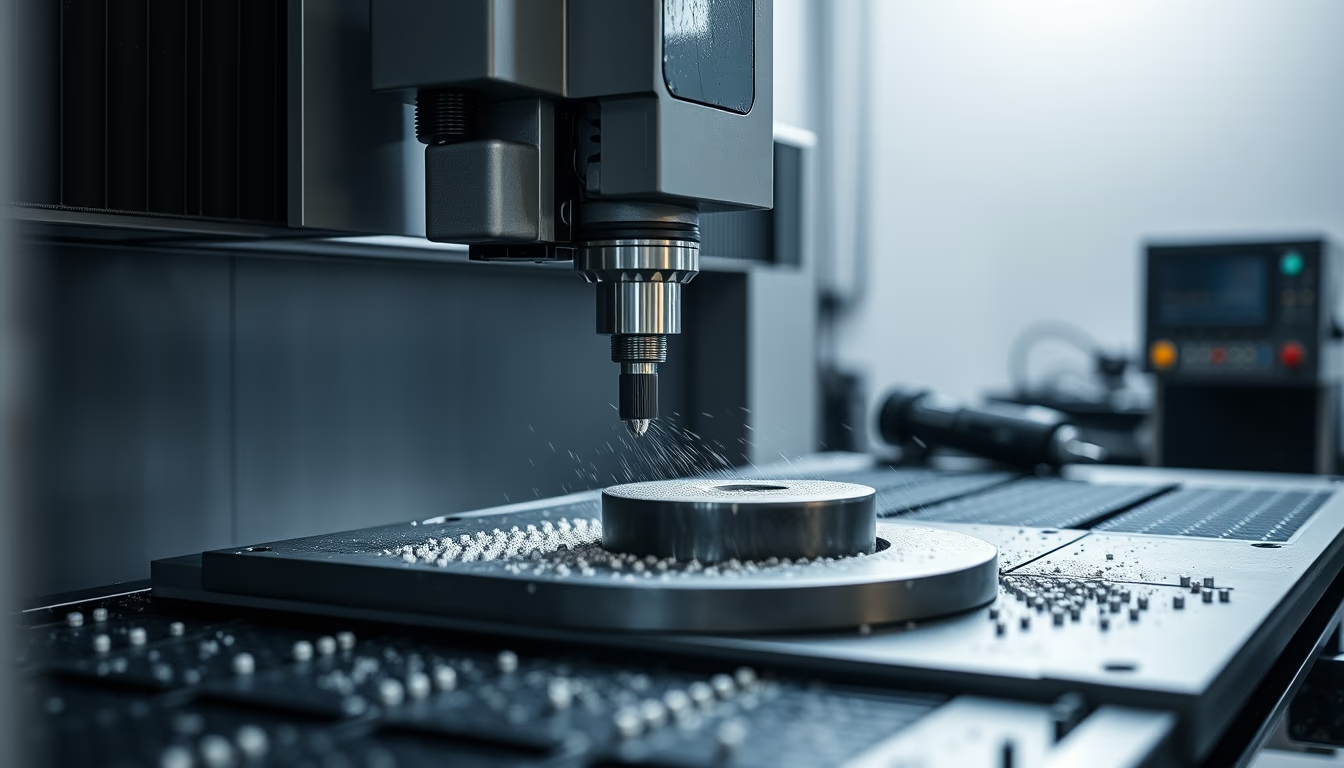
Robotic arm used in additive 3D printing, enabling large-scale part fabrication with geometric freedom.
About this subject
Robotic arms applied to 3D printing represent a significant evolution over traditional gantry printers. Unlike Cartesian models limited to linear movements on X, Y, and Z axes, articulated robots have multiple degrees of freedom (typically 6 or 7 axes), enabling material deposition in any orientation. This characteristic is fundamental for additive manufacturing of complex parts such as aerospace components, civil construction structures, and industrial prototypes.
The technology combines an industrial robotic arm (from manufacturers like KUKA, ABB, or Universal Robots) with a 3D printing extruder or head. The robot follows a programmed path, depositing plastic filament, concrete, metal, or composite materials layer by layer. The main advantage is the ability to build larger objects without a fixed base the size of the part, as the robot can move on rails or even be mounted on mobile platforms.
Companies like MX3D in the Netherlands have already used robotic arms to print full-scale stainless steel bridges. In Brazil, academic initiatives and startups explore the technique to manufacture furniture and customized architectural components. The precision of robots, combined with path compensation algorithms, ensures tolerances in the order of tenths of a millimeter, enabling applications that require high surface quality.
A technical curiosity: programming these robots often uses languages such as RAPID (ABB) or KRL (KUKA), integrated with specific slicing software (like RoboDK or KUKA.prc). Additionally, force and vision sensors can be incorporated for real-time correction, allowing the robot to adapt to material deformations during printing. This level of automation makes the process suitable for on-demand production and mass customization.
Frequently Asked Questions
How does a robotic arm 3D printer work?
The robotic arm receives instructions from software translating a 3D model into paths. The robot moves freely while an extruder deposits material layer by layer, following the part geometry.
What are the advantages over traditional 3D printers?
Main advantages are multi-axis freedom of movement, ability to print larger parts without a fixed base, and deposition at complex angles, reducing the need for supports.
In which sectors is it most used?
It is widely used in aerospace, automotive, construction, and product design industries, especially for rapid prototyping and large-scale manufacturing of complex geometries.
Direct URL
https://pub-c7d6a6ea828543ac903a74a341ccb2e1.r2.dev/imagens/robot-arm-3d-printer-minimalist-composition-p3.avifHow to credit
Include a visible link back to UtilizAí. Copy one of the snippets below:
<a href="https://xn--utiliza-eza.com/en/midia/imagens/robot-arm-3d-printer-minimalist-composition-p3">Robot arm 3d printer</a> by <a href="https://xn--utiliza-eza.com">UtilizAí</a>, licensed under <a href="https://creativecommons.org/licenses/by/4.0/">CC BY 4.0</a>.
[Robot arm 3d printer](https://xn--utiliza-eza.com/en/midia/imagens/robot-arm-3d-printer-minimalist-composition-p3) by [UtilizAí](https://xn--utiliza-eza.com), CC BY 4.0
License: CC-BY-4.0