Robot arm 3d printer
1344×768 · AVIF · CC BY 4.0
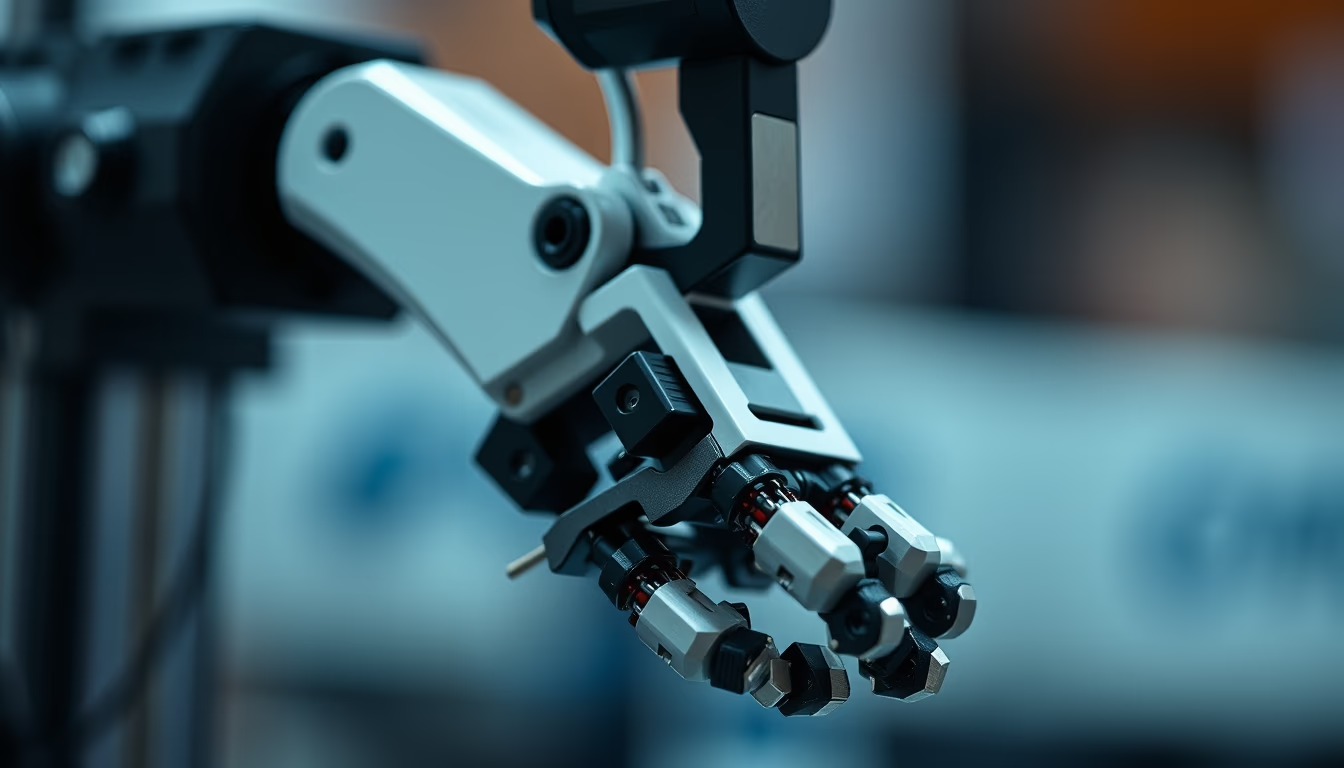
Robotic arm 3D printing combines freedom of movement with additive manufacturing, enabling large and complex parts without the need for supports.
About this subject
Robotic arms equipped with 3D printing heads represent a major leap in additive manufacturing. Unlike traditional Cartesian printers (which move along X, Y, Z axes), robotic arms have six or more degrees of freedom, allowing material deposition in any spatial orientation. This enables the fabrication of parts with organic geometries, overhangs, and internal cavities that would otherwise require complex supports.
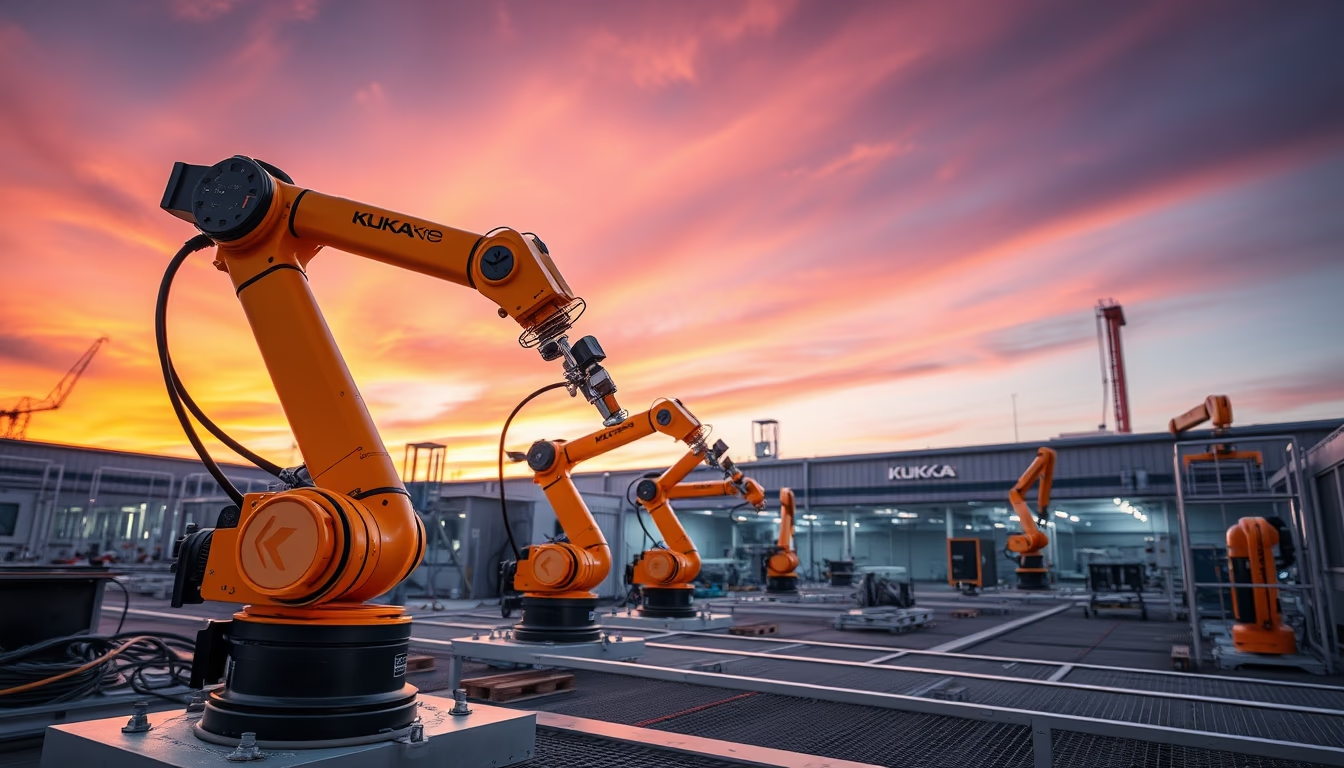
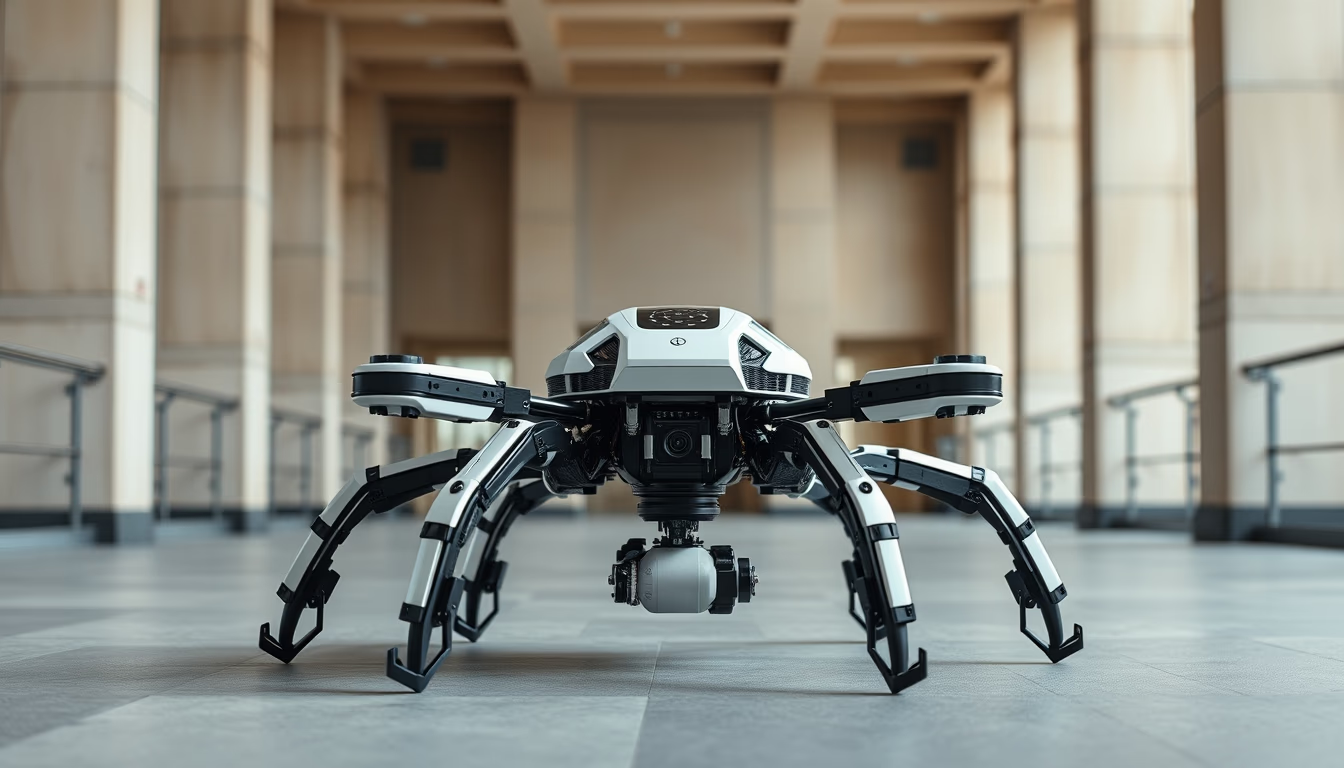
These systems are widely used in aerospace, automotive, and architecture sectors. Companies like KUKA, ABB, and Fanuc supply robots adapted for extruding plastics (e.g., PLA, ABS, PEEK) or metals (aluminum, titanium) through processes like Directed Energy Deposition (DED). The freedom of movement allows printing multi-meter parts, such as turbine blades or drone structures, directly onto existing substrates, repairing or adding material.
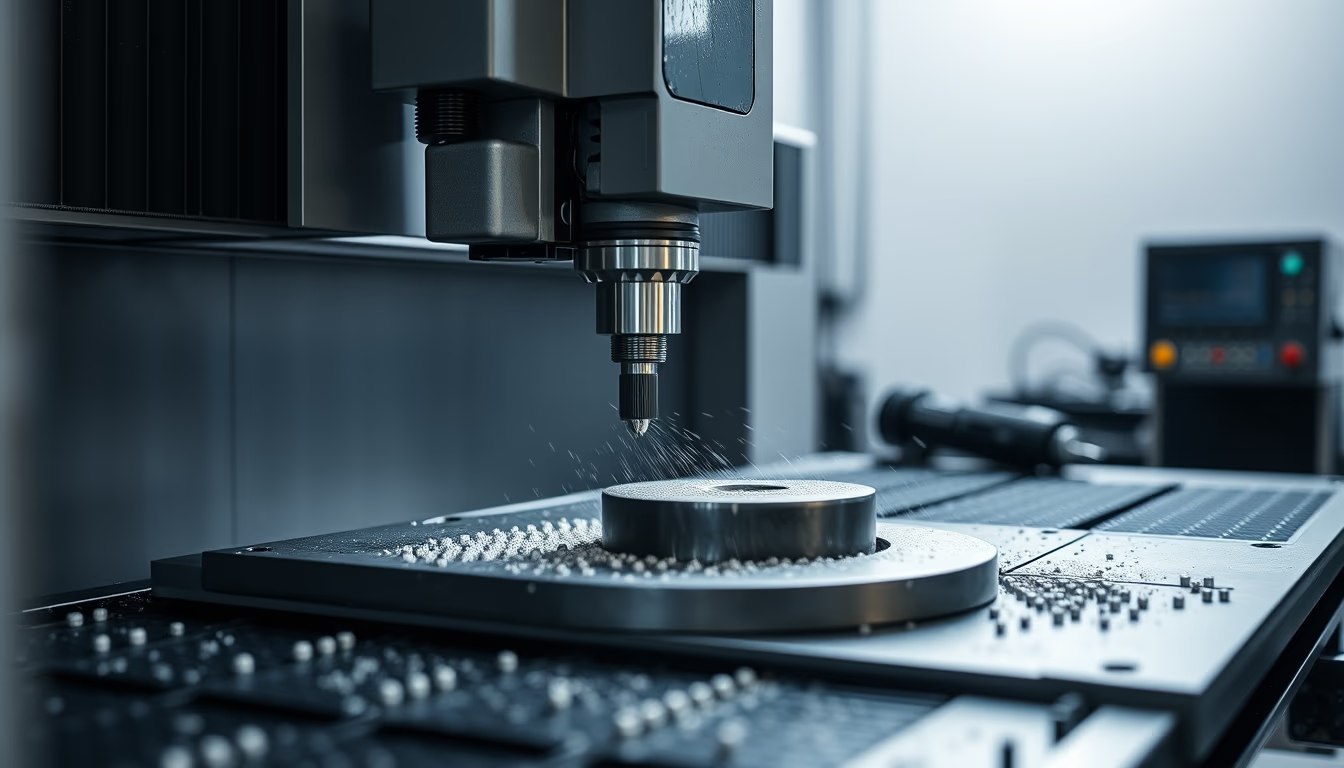
A notable innovation is collaborative 3D printing with multiple robotic arms working simultaneously, increasing speed and enabling objects larger than the robot itself. The arm can swap print heads during operation, alternating between materials or functions (e.g., milling, polishing). This flexibility reduces production time and material waste, aligning with Industry 4.0 principles.
Despite higher costs compared to desktop printers, robotic arm 3D printing is growing in applications requiring large-scale customization or repair of high-value components. Research institutions like MIT and Fraunhofer are exploring trajectory planning algorithms to optimize deposition and avoid collisions, pushing the boundaries of this technology even further.
Frequently Asked Questions
What is the main advantage of a robotic arm 3D printer over a Cartesian printer?
The main advantage is freedom of movement: with six or more axes, the robot can deposit material at any angle, allowing complex geometries, overhangs, and cavities without the need for supports.
What materials can be used in robotic arm 3D printers?
Thermoplastics such as PLA, ABS, PEEK, and polycarbonate, as well as metals like aluminum, stainless steel, and titanium, typically through Directed Energy Deposition (DED) or filament extrusion.
Which industries most commonly use robotic arm 3D printing?
It is widely used in aerospace (turbine blades, satellite components), automotive (custom parts, prototypes), and architecture (large-scale structures, concrete molds).
Direct URL
https://pub-c7d6a6ea828543ac903a74a341ccb2e1.r2.dev/imagens/robot-arm-3d-printer-macro-closeup-p2.avifHow to credit
Include a visible link back to UtilizAí. Copy one of the snippets below:
<a href="https://xn--utiliza-eza.com/en/midia/imagens/robot-arm-3d-printer-macro-closeup-p2">Robot arm 3d printer</a> by <a href="https://xn--utiliza-eza.com">UtilizAí</a>, licensed under <a href="https://creativecommons.org/licenses/by/4.0/">CC BY 4.0</a>.
[Robot arm 3d printer](https://xn--utiliza-eza.com/en/midia/imagens/robot-arm-3d-printer-macro-closeup-p2) by [UtilizAí](https://xn--utiliza-eza.com), CC BY 4.0
License: CC-BY-4.0