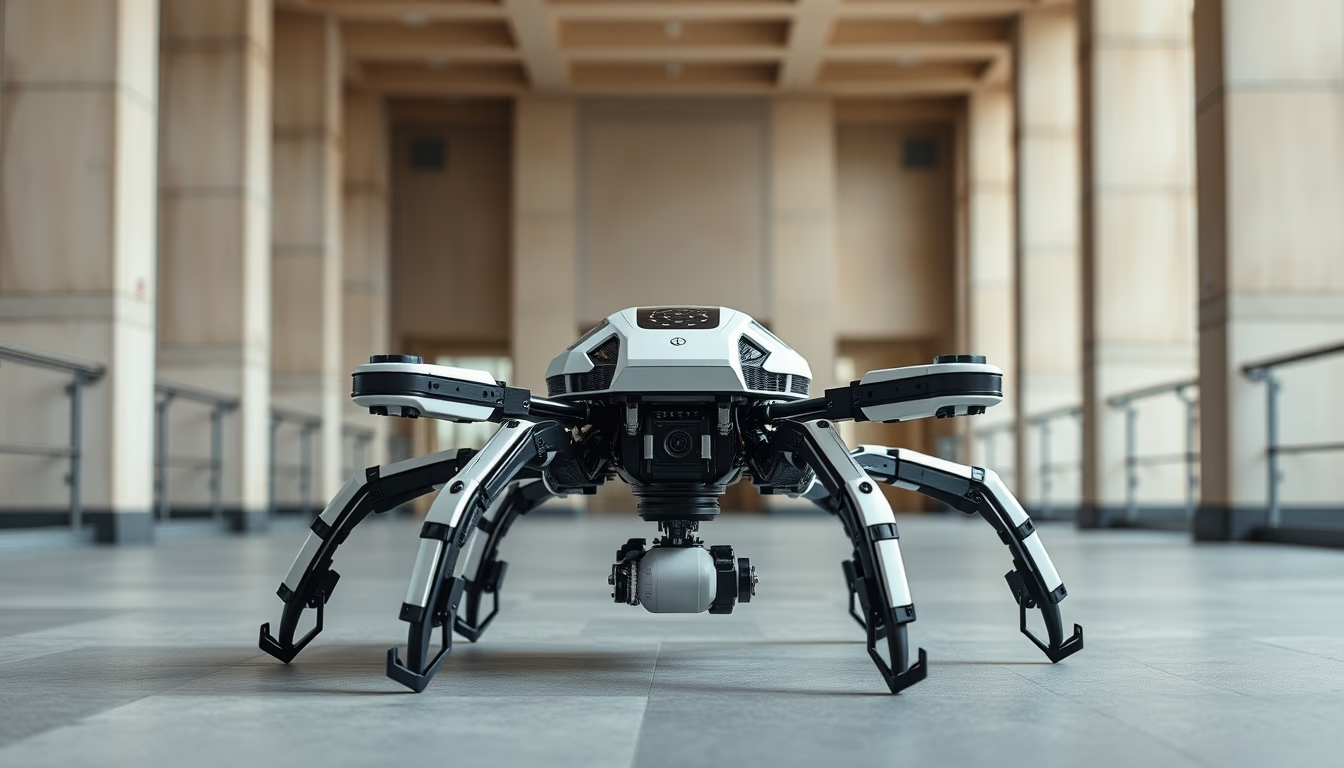
Robot arm 3d printer
1344×768 · AVIF · CC BY 4.0

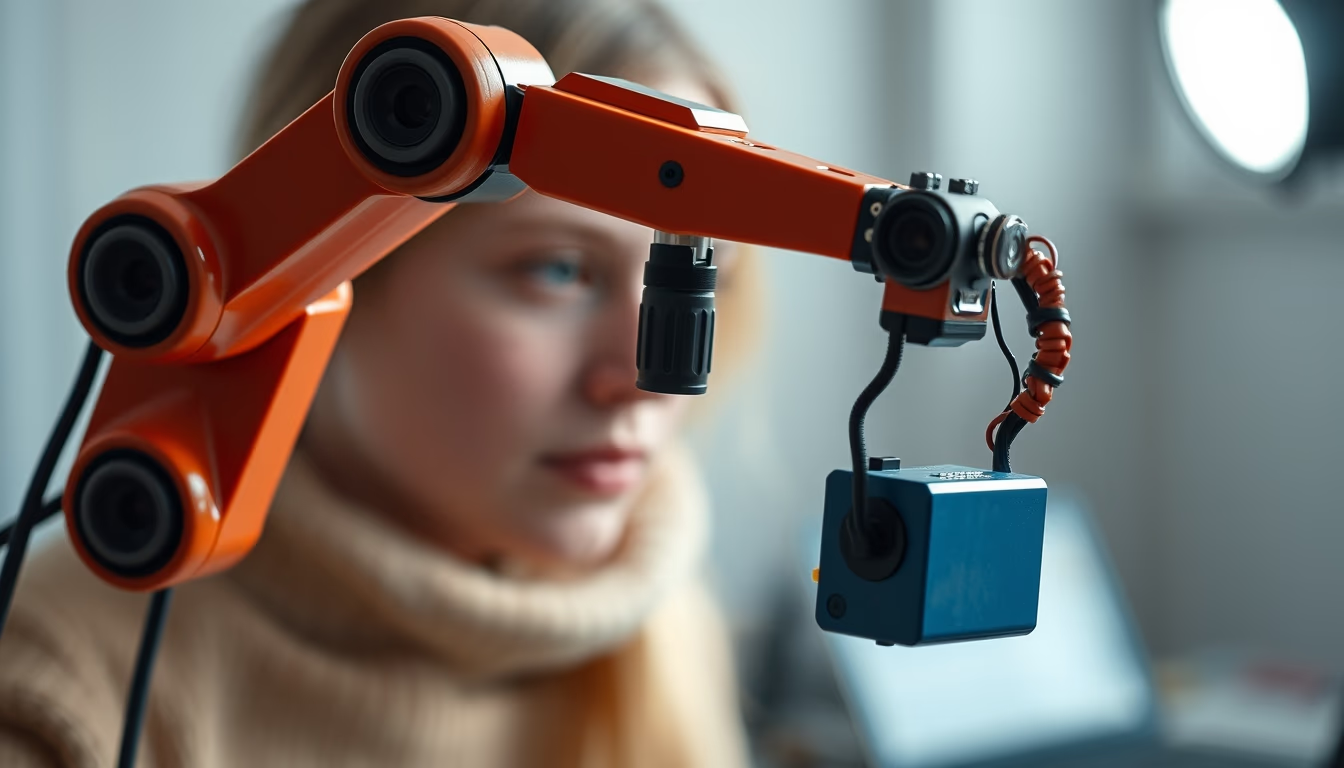
Robotic arms equipped with 3D printers are revolutionizing haute couture by enabling on-demand fabrication of complex garments.
About this subject
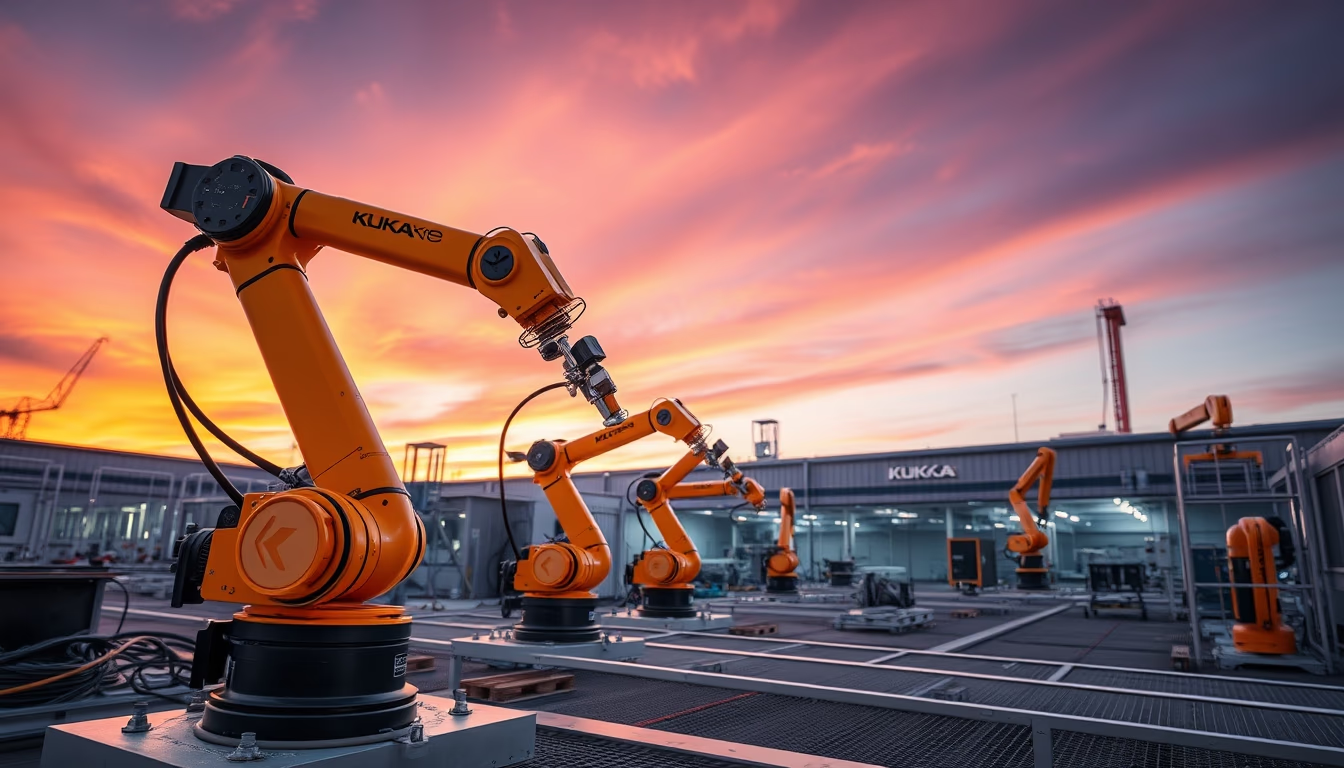
The combination of robotic arms and 3D printing represents a significant advancement in industrial additive manufacturing. Unlike conventional 3D printers, which operate within a limited space and usually in a single orientation, robotic arms offer freedom of movement across multiple axes, allowing printing on different angles and even on curved surfaces. This flexibility is especially valuable in sectors like haute couture, where designers experiment with three-dimensional structures and innovative materials.
In the fashion industry, 3D printing with robotic arms has been used to create dresses, accessories, and footwear with geometries impossible to produce via traditional methods. Companies like Iris van Herpen incorporate this technology into their collections, merging computational design and digital fabrication. The process enables mass customization while reducing material waste, as each piece is printed only when needed, with no leftover fabric.
Beyond fashion, robotic 3D printing is applied in construction, aerospace, and medicine. Robotic arms can print concrete structures on an architectural scale, replacement parts for aircraft, and custom prosthetics. The precision and repeatability of industrial robots ensure high quality, while design freedom expands creative boundaries. The cost of these systems is still high, but the trend is declining as the technology becomes more widespread.
Interestingly, the integration of sensors and computer vision allows the robotic arm to adapt in real time to environmental variations, correcting imperfections during printing. This is crucial for ensuring the structural integrity of complex parts. The combination of robotics and 3D printing promises to transform manufacturing, making it more agile, sustainable, and personalized.
Frequently Asked Questions
How does a robotic arm for 3D printing work?
A robotic arm with a 3D printer uses an end effector (print head) attached to the arm, which moves in multiple axes to deposit material layer by layer. The system can print at various angles, unlike traditional Cartesian printers.
What materials are used in robotic 3D printing for fashion?
In fashion, flexible thermoplastics like TPU, nylon, and polyurethane are used, along with biodegradable materials such as PLA. Some designers incorporate silicone and metals for specific effects.
Is robotic 3D printing sustainable?
Yes, because it allows on-demand production, reducing material waste. Additionally, many materials are recyclable or biodegradable. The technology also eliminates the need for molds and tooling, lowering environmental impact.
Direct URL
https://pub-c7d6a6ea828543ac903a74a341ccb2e1.r2.dev/imagens/robot-arm-3d-printer-high-fashion-editorial-p9.avifHow to credit
Include a visible link back to UtilizAí. Copy one of the snippets below:
<a href="https://xn--utiliza-eza.com/en/midia/imagens/robot-arm-3d-printer-high-fashion-editorial-p9">Robot arm 3d printer</a> by <a href="https://xn--utiliza-eza.com">UtilizAí</a>, licensed under <a href="https://creativecommons.org/licenses/by/4.0/">CC BY 4.0</a>.
[Robot arm 3d printer](https://xn--utiliza-eza.com/en/midia/imagens/robot-arm-3d-printer-high-fashion-editorial-p9) by [UtilizAí](https://xn--utiliza-eza.com), CC BY 4.0
License: CC-BY-4.0