Robot arm 3d printer
1344×768 · AVIF · CC BY 4.0

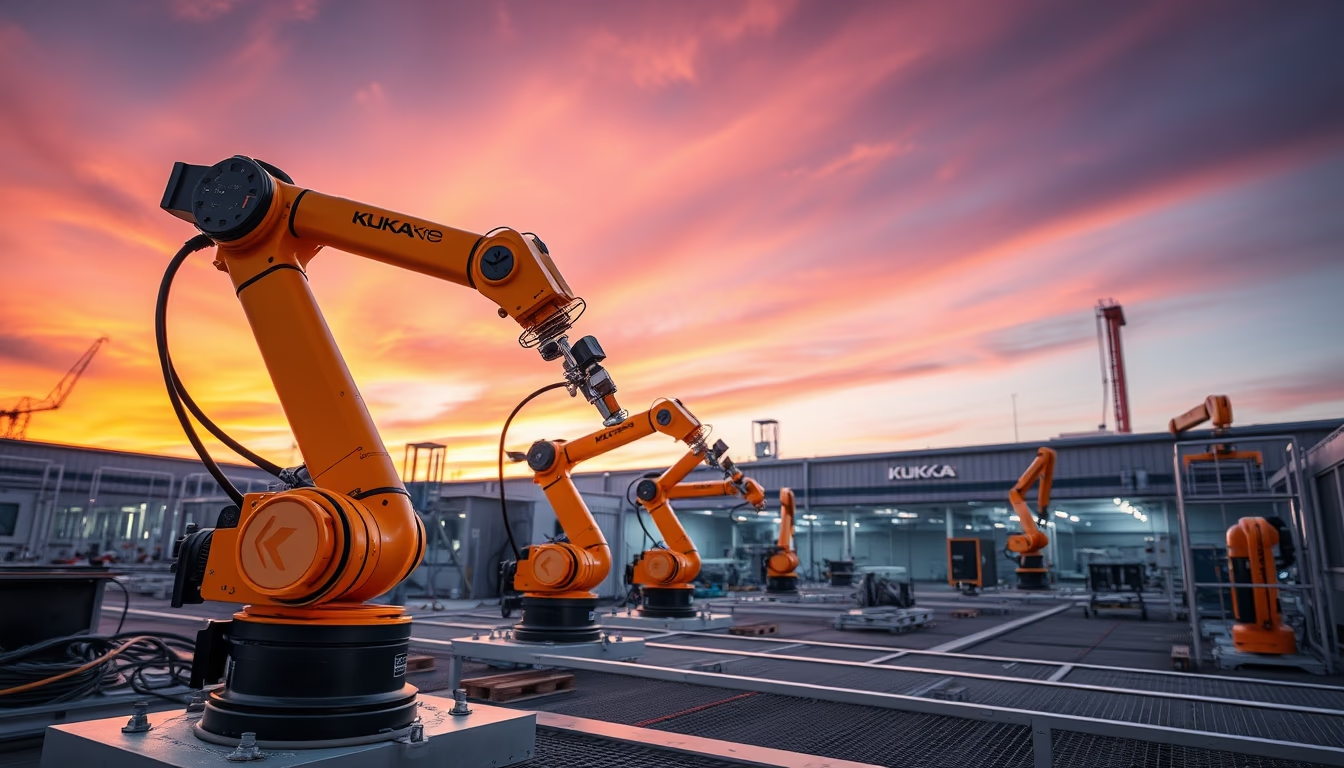
Articulated robotic arms are revolutionizing 3D printing by enabling large-scale fabrication and complex geometries.
About this subject
Robot arm 3D printing uses industrial six-axis robots equipped with extruders or deposition heads to build objects layer by layer. Unlike traditional Cartesian printers, articulated robots offer greater freedom of movement, enabling printing in multiple orientations and creating structures with minimal or no supports. This technology is particularly useful for large-scale parts such as wind turbine blades, aerospace components, and even entire houses.
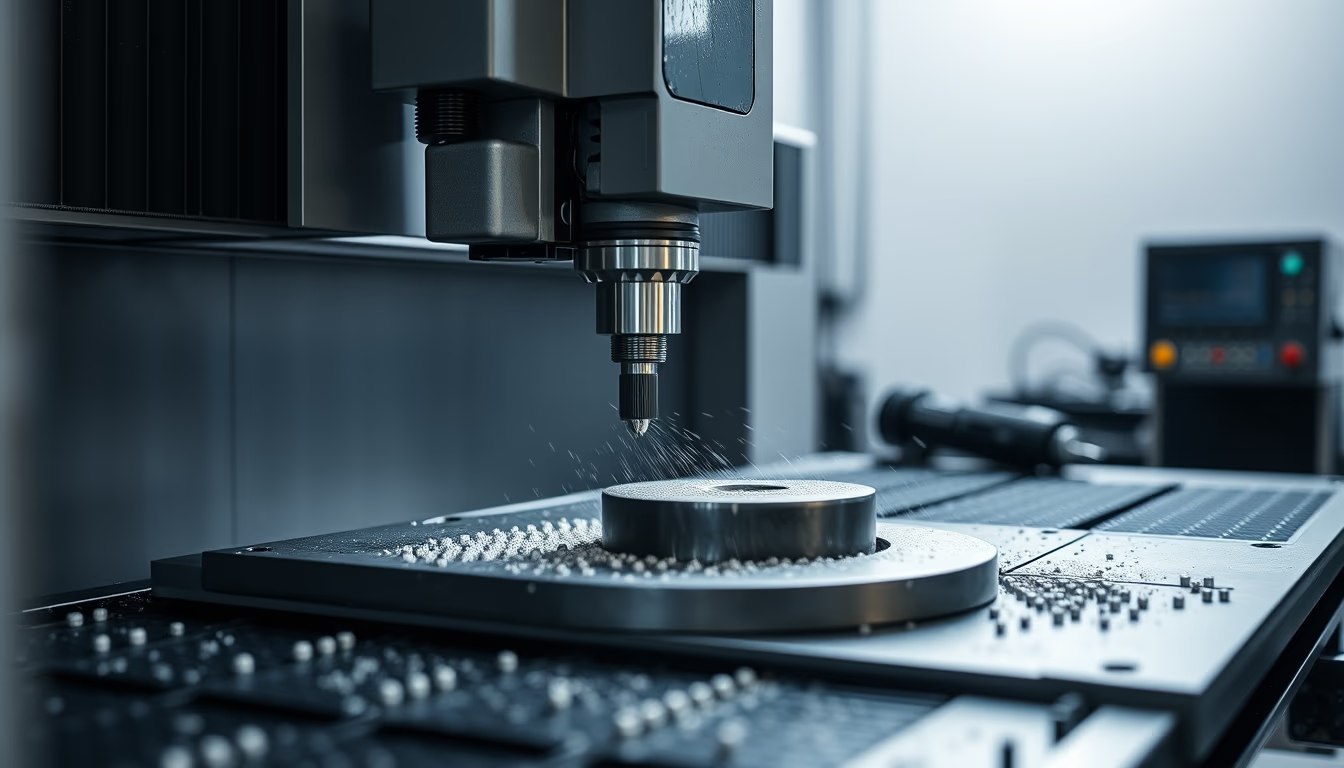
Materials go beyond common plastics: it is possible to extrude concrete, metals like titanium and aluminum, carbon-fiber composites, and ceramics. High precision (up to 0.1 mm) combined with computer vision allows real-time corrections during printing. This makes the process more robust for factory floors and construction sites.
Landmark projects include the stainless-steel bridge printed by MX3D in Amsterdam, demonstrating structural viability of robotic metal printing. In aerospace, Relativity Space uses robotic arms to manufacture rockets almost entirely via 3D printing, reducing lead times and costs. Construction continues to advance with robotic printers capable of building curved and detailed walls, such as those by Apis Cor.
Interestingly, robot arm printing is not limited to flat surfaces: robots can be mounted on rails or mobile platforms to expand the workspace. This allows printing structures in hard-to-reach areas like offshore platforms or disaster zones. Although initial costs are high, material savings and reduced waste make the technology attractive for customized small-batch production.
Frequently Asked Questions
What are the main advantages of robot arm 3D printing?
The main advantages are the ability to print large-scale parts, freedom of movement for complex geometries with reduced supports, and versatility in materials such as metal and concrete. The process is also highly customizable and reduces material waste.
What materials can be used in robotic 3D printing?
Materials include plastics (PLA, ABS, nylon), metals (stainless steel, titanium, aluminum), concrete, ceramics, carbon-fiber composites, and even biodegradable materials. The choice depends on the application and the print head.
Which industries most commonly use robot arm 3D printing?
It is widely used in aerospace (rocket components), automotive (prototypes and tooling), construction (houses and bridges), wind energy (turbine blades), and in the production of injection molds.
Direct URL
https://pub-c7d6a6ea828543ac903a74a341ccb2e1.r2.dev/imagens/robot-arm-3d-printer-film-grain-authentic-p11.avifHow to credit
Include a visible link back to UtilizAí. Copy one of the snippets below:
<a href="https://xn--utiliza-eza.com/en/midia/imagens/robot-arm-3d-printer-film-grain-authentic-p11">Robot arm 3d printer</a> by <a href="https://xn--utiliza-eza.com">UtilizAí</a>, licensed under <a href="https://creativecommons.org/licenses/by/4.0/">CC BY 4.0</a>.
[Robot arm 3d printer](https://xn--utiliza-eza.com/en/midia/imagens/robot-arm-3d-printer-film-grain-authentic-p11) by [UtilizAí](https://xn--utiliza-eza.com), CC BY 4.0
License: CC-BY-4.0