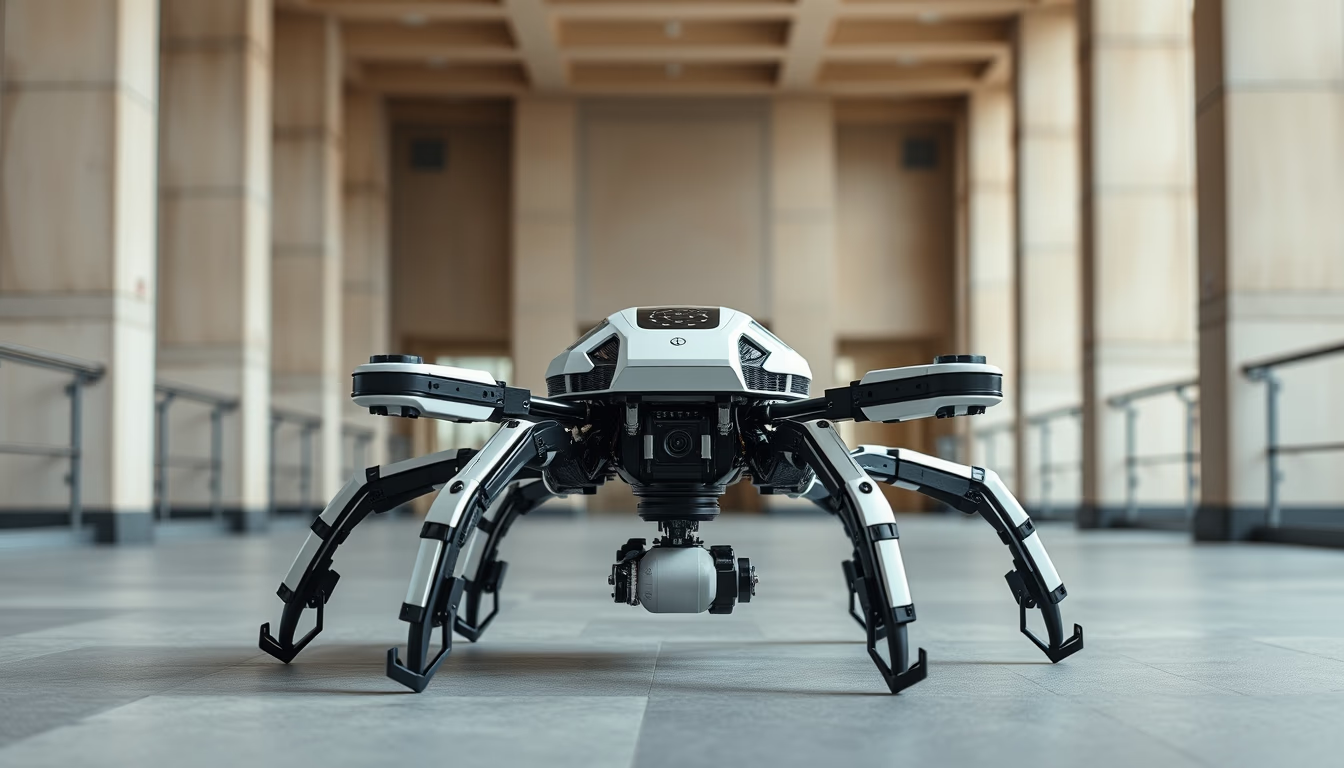
Robot arm 3d printer
1344×768 · AVIF · CC BY 4.0
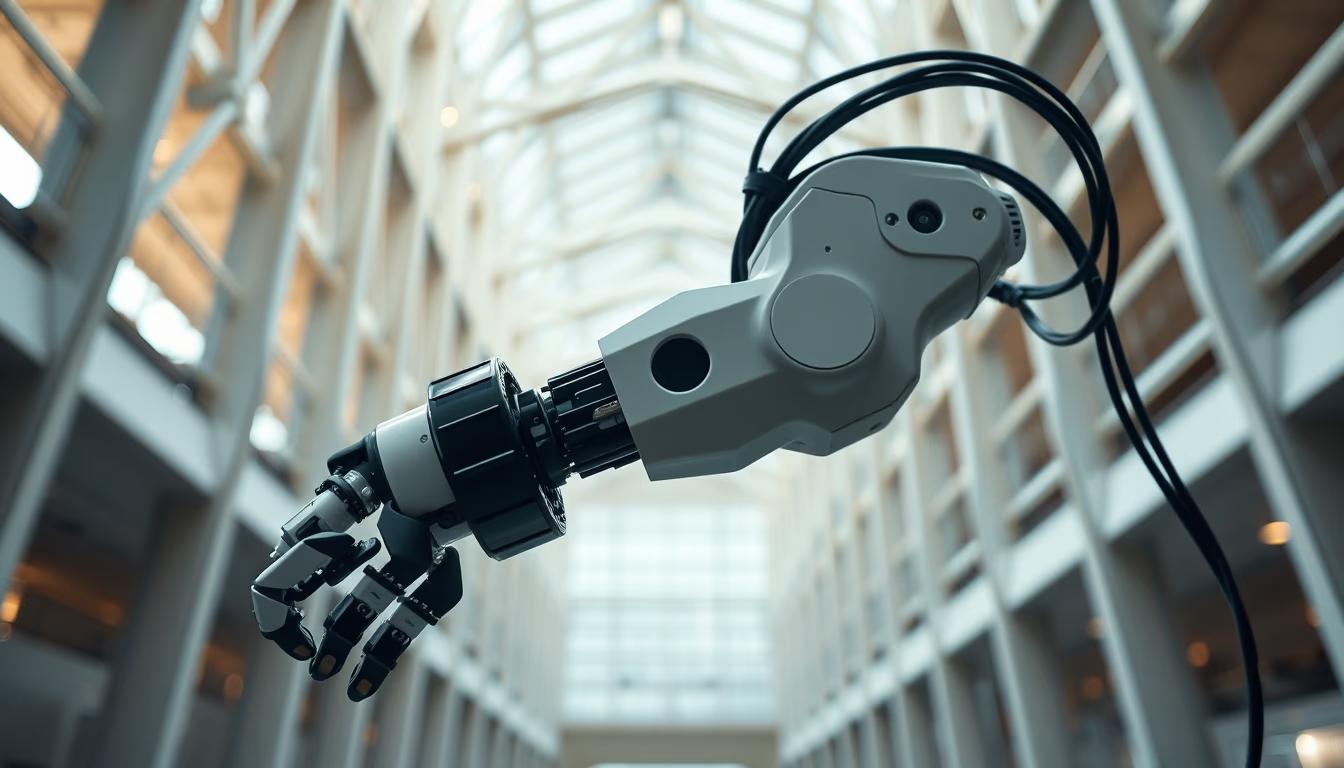
Robotic arms equipped with 3D printers are revolutionizing additive manufacturing by enabling the creation of large, complex parts without support structures.
About this subject
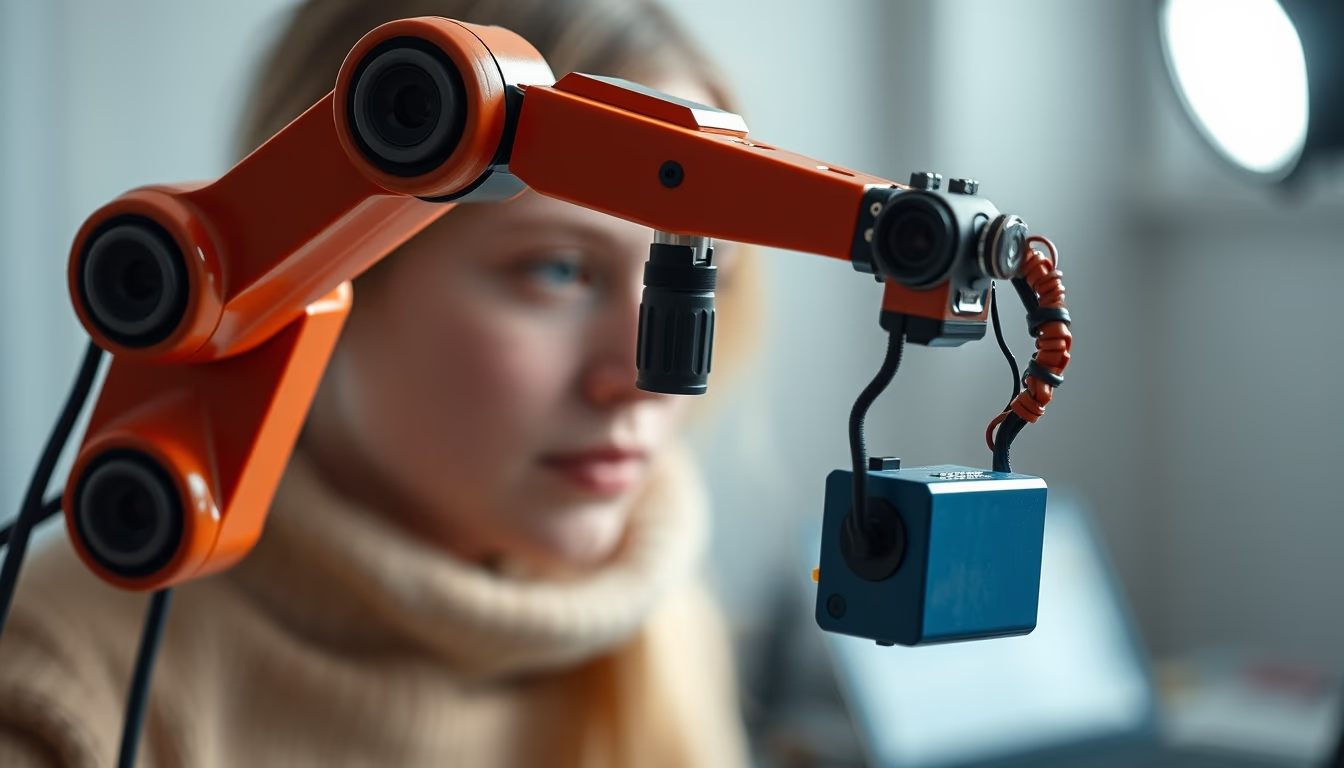
Robotic arm 3D printing combines the free movement of an industrial robot with precise material deposition, enabling printing on multiple axes and angles. Unlike traditional gantry 3D printers that operate only on three linear axes (X, Y, Z), robotic arms have six or more degrees of freedom. This allows printing complex geometries such as curves, undercuts, and organic structures without the need for removable supports. Material is extruded through a nozzle attached to the robot's wrist while the arm moves freely in space.
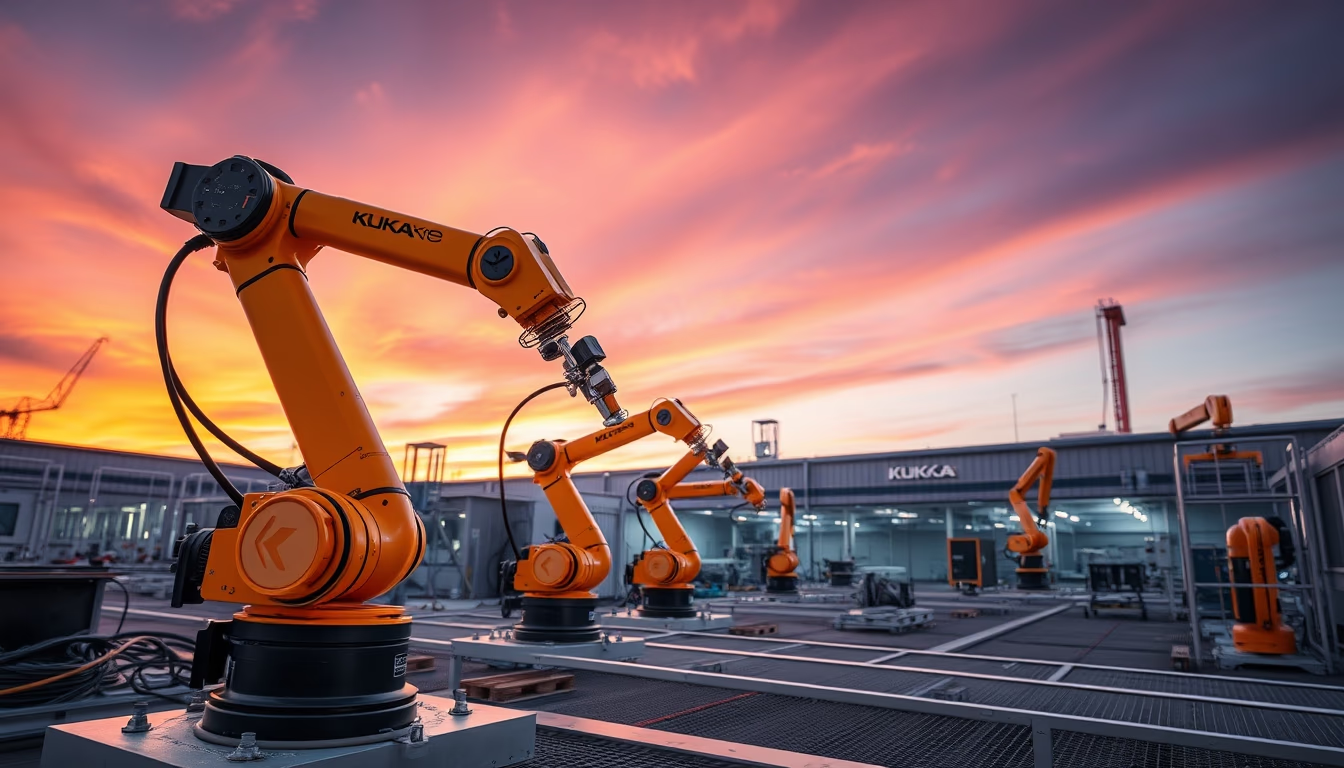
This technology is widely used in manufacturing molds, prototypes, and final parts for aerospace, automotive, and architectural industries. Companies like ABB, KUKA, and Yaskawa develop specific robots for 3D printing, often combined with trajectory planning software that optimizes movements to avoid collisions and ensure uniform deposition. The use of materials such as plastics, composites, concrete, and even metals expands applications: in construction, robots print walls and structures; in medicine, customized prosthetics.
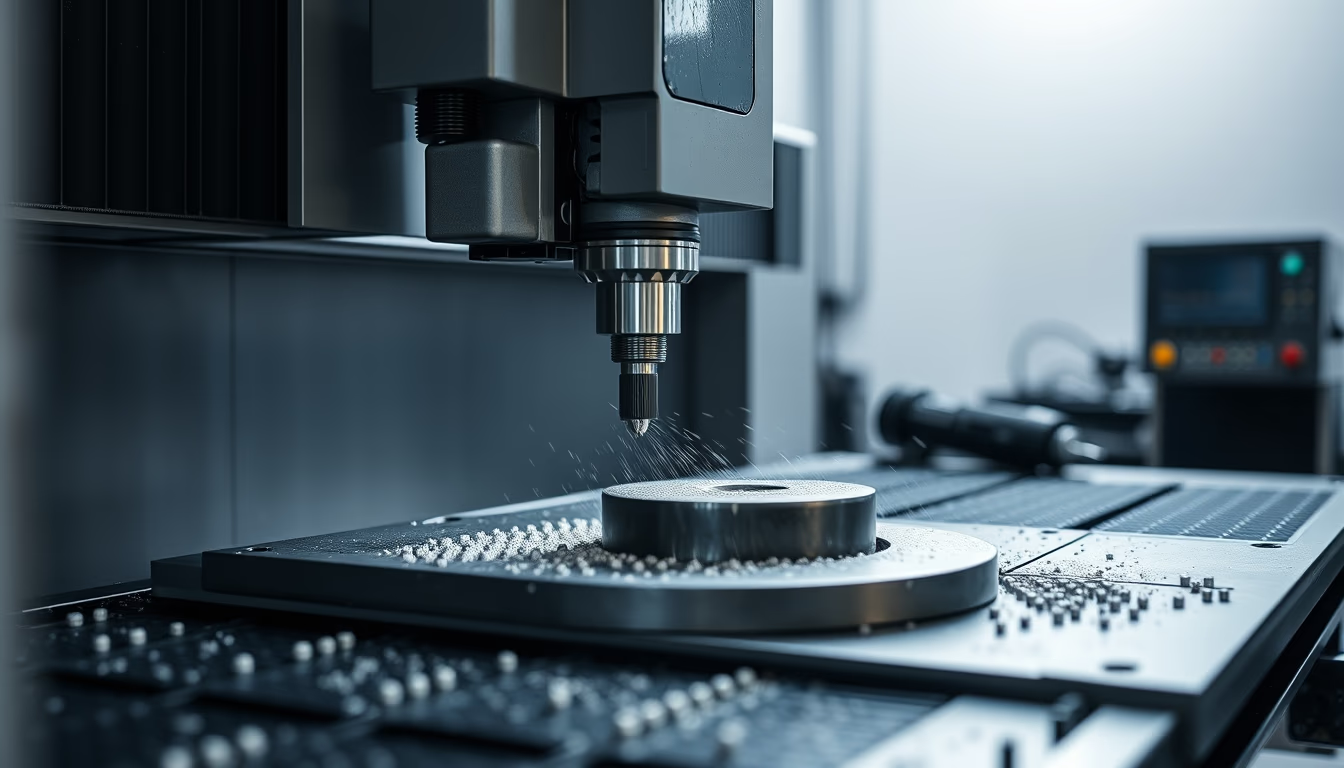
A significant advantage is the reduction of material waste, as additive processes deposit material only where needed, unlike subtractive methods. Moreover, the ability to print large volumes, with reach radii of up to several meters, makes robotic arms ideal for large-scale parts. However, challenges like precise calibration, interlayer adhesion, and complex programming still limit mass adoption. Advances in sensors and artificial intelligence promise to make these systems more accessible and autonomous.
Interestingly, the first robotic arm for 3D printing was developed in the early 2000s by researchers at the University of Southern California using a reprogrammed industrial robot. Today, the technology is present in startups like Branch Technology and MX3D, which print bridges and artistic installations in concrete and steel.
Frequently Asked Questions
What are the main advantages of robotic arm 3D printing?
The main advantages are multi-axis freedom of movement, allowing printing of complex geometries without supports, the ability to produce large parts (reach up to several meters), and reduced material waste compared to subtractive methods.
Which materials can be used in robotic arm 3D printing?
Materials include plastics (PLA, ABS, nylon), composites, concrete, ceramics, metals (aluminum, stainless steel, titanium), and even biodegradable materials. The choice depends on the application and the extruder system attached.
In which industries is robotic arm 3D printing most used?
The main industries are aerospace (lightweight parts), automotive (rapid prototyping and tooling), construction (walls and structures), architecture (models and installations), and medical (custom implants and prosthetics).
Direct URL
https://pub-c7d6a6ea828543ac903a74a341ccb2e1.r2.dev/imagens/robot-arm-3d-printer-architectural-photography-p10.avifHow to credit
Include a visible link back to UtilizAí. Copy one of the snippets below:
<a href="https://xn--utiliza-eza.com/en/midia/imagens/robot-arm-3d-printer-architectural-photography-p10">Robot arm 3d printer</a> by <a href="https://xn--utiliza-eza.com">UtilizAí</a>, licensed under <a href="https://creativecommons.org/licenses/by/4.0/">CC BY 4.0</a>.
[Robot arm 3d printer](https://xn--utiliza-eza.com/en/midia/imagens/robot-arm-3d-printer-architectural-photography-p10) by [UtilizAí](https://xn--utiliza-eza.com), CC BY 4.0
License: CC-BY-4.0