Quadruped robot dog
1344×768 · AVIF · CC BY 4.0
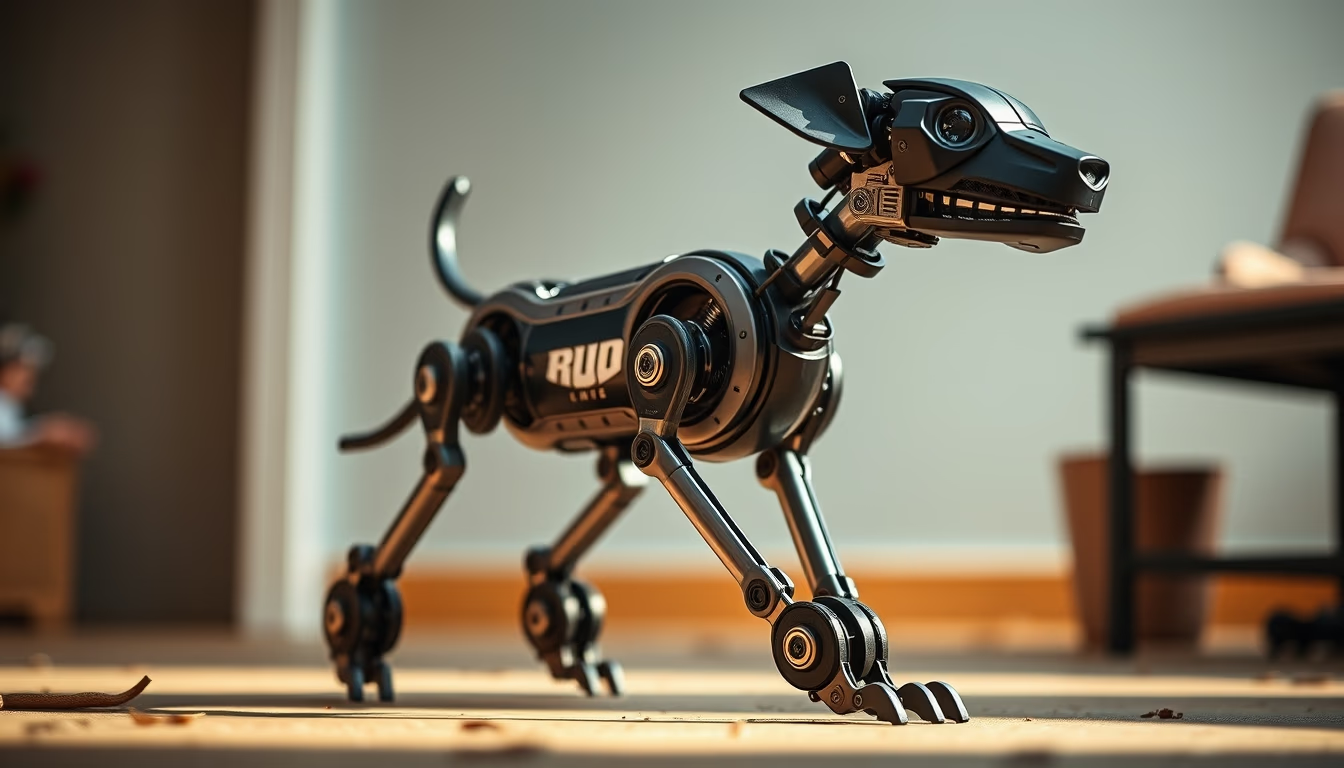
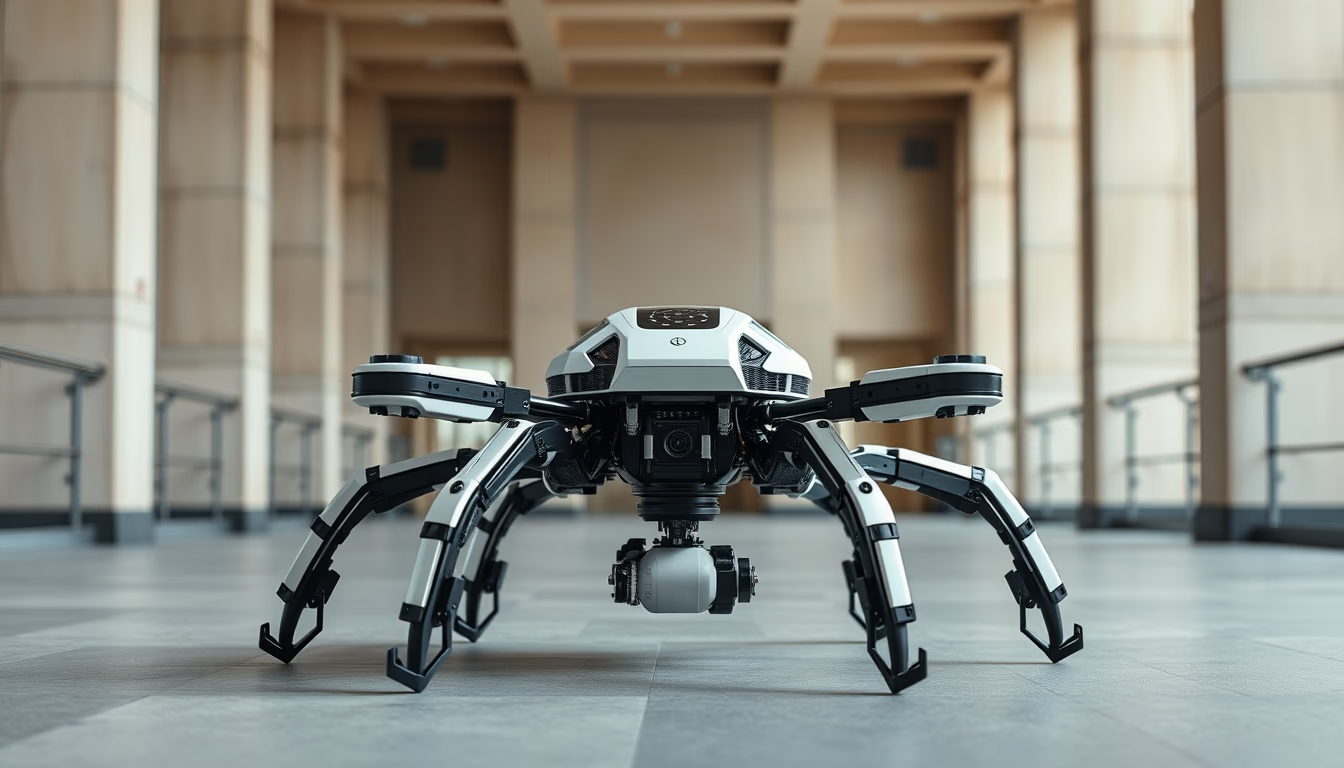
Quadruped robots, such as robot dogs, combine animal-inspired locomotion with artificial intelligence for industrial inspection and rescue operations.
About this subject
Quadruped robots are machines designed to move on four legs, mimicking the gait of animals like dogs and horses. The most famous example is Spot by Boston Dynamics, which weighs about 30 kg and can carry sensors and modular payloads. Unlike wheeled or tracked robots, quadrupeds can climb stairs, traverse rough terrain, and maintain balance even when pushed. This capability comes from advanced control algorithms that process data from gyroscopes, accelerometers, and cameras in real time.
These robots are primarily used in hazardous or hard-to-reach environments. Oil and gas companies use Spot to inspect pipelines and tanks in explosive-risk areas. In nuclear plants, they map contaminated zones without exposing humans to radiation. They are also deployed in earthquake search-and-rescue operations, entering debris fields. Recently, versions with robotic arms have been developed to open doors or turn valves, expanding their functionality.
Culturally, robot dogs fascinate and spark debate. They appear at tech expos and even fashion shows, like the BOSS 2021 runway where a Spot robot was a model. However, their use by police and militaries raises ethical concerns about surveillance and autonomous engagement. Countries like China (with Unitree Robotics) and Switzerland (ETH Zurich) develop their own models, showing the technology is becoming global and accessible.
Interestingly, these robots learn locomotion through trial-and-error in simulations, using reinforcement learning. They may spend thousands of virtual hours learning to walk, then adapt to real-world terrain in seconds. This process is similar to animal learning but accelerated by deep neural networks.
Frequently Asked Questions
How does a quadruped robot maintain balance?
It uses sensors like gyroscopes and accelerometers to measure its orientation and motion. Control algorithms process this data hundreds of times per second, adjusting leg positions to prevent falls even on inclined or slippery terrain.
What are the main limitations of robot dogs?
Battery life is limited, usually 1 to 2 hours. Also, cost is high: Spot costs about $75,000. On very soft ground like mud or deep snow, the legs can get stuck.
Can quadruped robots be used as pets?
Consumer versions exist, like Sony's Aibo (robotic dog) and the Unitree Robot Dog (about $1,600). They can follow commands and interact, but lack the emotional bond of real animals.
Direct URL
https://pub-c7d6a6ea828543ac903a74a341ccb2e1.r2.dev/imagens/quadruped-robot-dog-documentary-photography-p7.avifHow to credit
Include a visible link back to UtilizAí. Copy one of the snippets below:
<a href="https://xn--utiliza-eza.com/en/midia/imagens/quadruped-robot-dog-documentary-photography-p7">Quadruped robot dog</a> by <a href="https://xn--utiliza-eza.com">UtilizAí</a>, licensed under <a href="https://creativecommons.org/licenses/by/4.0/">CC BY 4.0</a>.
[Quadruped robot dog](https://xn--utiliza-eza.com/en/midia/imagens/quadruped-robot-dog-documentary-photography-p7) by [UtilizAí](https://xn--utiliza-eza.com), CC BY 4.0
License: CC-BY-4.0