Port of Santos with cargo containers and cranes at sunset
1344×768 · AVIF · CC BY 4.0
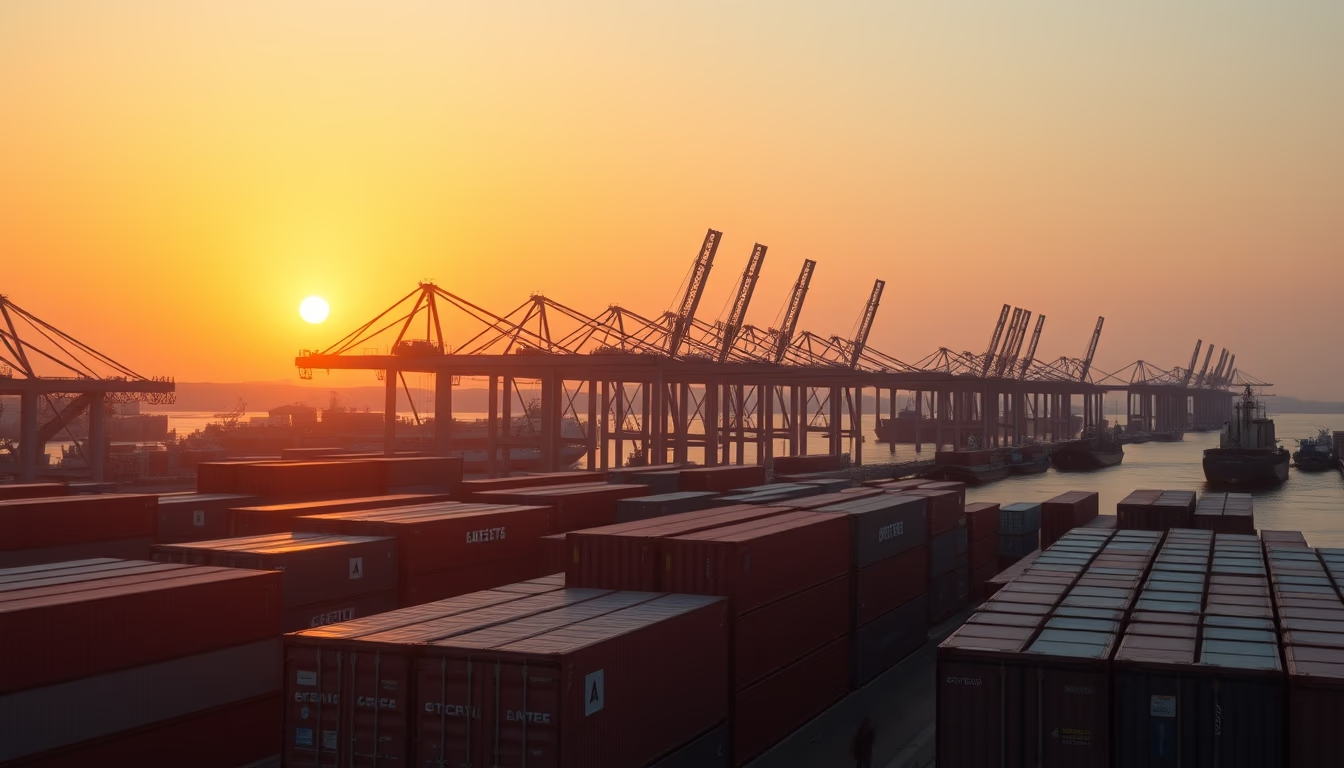
The Port of Santos, the largest port complex in Latin America, handles about 30% of all Brazilian foreign trade, with emphasis on containers and bulk cargo.
About this subject
The Port of Santos, located on the coast of São Paulo state, is Brazil's main logistics hub and the largest port in Latin America by cargo throughput. Inaugurated in 1892, its infrastructure has expanded over the years, currently featuring over 13 km of wharves and specialized terminals for containers, solid and liquid bulk, and general cargo. In 2023, the port handled about 162 million tons, accounting for approximately 30% of Brazil's total foreign trade value. Containers represent a significant portion of this volume, with terminals like Brazil Terminal Portuário (BTP) and Santos Container Terminal (Tecon) operating with high technology. The gantry cranes, which can reach up to 50 meters in height, are essential for fast loading and unloading of containers, allowing large vessels, such as New Panamax class ships, to dock safely.
The importance of the Port of Santos goes beyond numbers. It is a strategic point for the Brazilian economy, exporting commodities like soybeans, coffee, sugar, and meat, as well as manufactured goods. Its privileged location, about 70 km from the state capital, facilitates road and rail access, especially via the MRS Logística railway, which connects the port to producing regions in the Midwest and Southeast. The sunset seen from the port is a spectacle in itself, with the orange sky contrasting with the metallic structures of the cranes and the vibrant colors of the containers, a scene that attracts photographers and tourists.
Interestingly, the Port of Santos was the stage for important historical events, such as the arrival of European and Japanese immigrants in the early 20th century. Today, it faces challenges of modernization and sustainability, with projects to deepen the navigation channel and reduce carbon emissions. The presence of refrigerated containers, for example, is increasingly common for exporting fruits and meats, requiring constant electrical power. The port also houses the Port Museum, which tells its history from colonial times, when coffee was transported in sacks to steam ships.
Frequently Asked Questions
What is the container handling capacity of the Port of Santos?
The Port of Santos handles about 4.5 million TEUs (twenty-foot equivalent units) per year, making it the leading container port in Latin America.
What are the main products exported through the Port of Santos?
The main exports include soybeans, coffee, sugar, beef, orange juice, and manufactured goods such as vehicles and machinery.
Does the Port of Santos receive cruise ships?
Yes, the port has a passenger terminal that receives cruise ships, especially during the summer season (November to April), with departures to destinations like Ilhabela and Rio de Janeiro.
Direct URL
https://pub-c7d6a6ea828543ac903a74a341ccb2e1.r2.dev/imagens/port-of-santos-with-cargo-containers-and-cranes-at-sunset-symmetric-bright-midday-4.avifHow to credit
Include a visible link back to UtilizAí. Copy one of the snippets below:
<a href="https://xn--utiliza-eza.com/en/midia/imagens/port-of-santos-with-cargo-containers-and-cranes-at-sunset-symmetric-bright-midday-4">Port of Santos with cargo containers and cranes at sunset</a> by <a href="https://xn--utiliza-eza.com">UtilizAí</a>, licensed under <a href="https://creativecommons.org/licenses/by/4.0/">CC BY 4.0</a>.
[Port of Santos with cargo containers and cranes at sunset](https://xn--utiliza-eza.com/en/midia/imagens/port-of-santos-with-cargo-containers-and-cranes-at-sunset-symmetric-bright-midday-4) by [UtilizAí](https://xn--utiliza-eza.com), CC BY 4.0
License: CC-BY-4.0