Port of Santos with cargo containers and cranes at sunset
1344×768 · AVIF · CC BY 4.0
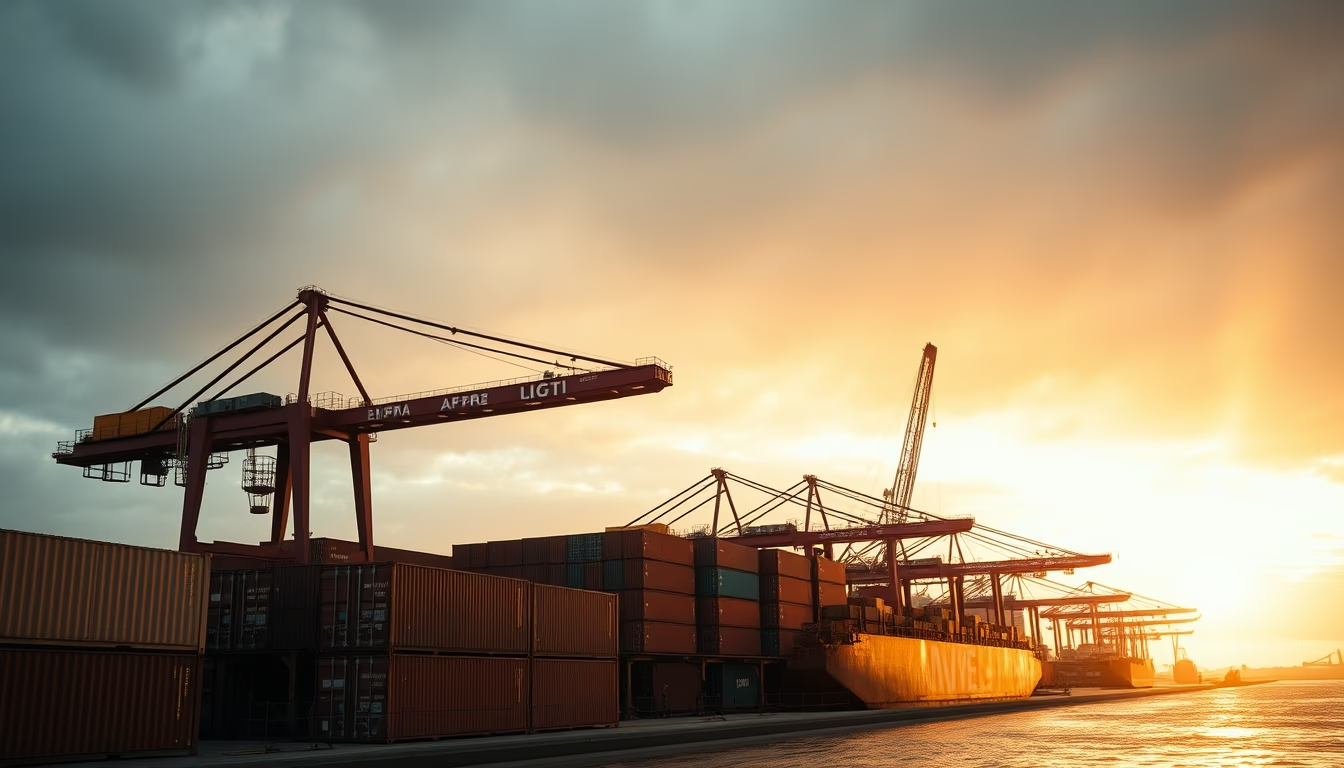
Port of Santos, the largest port complex in Latin America, seen at sunset with containers and cranes.
About this subject
The Port of Santos, located on the coast of São Paulo, is the main logistics hub in Brazil and handles about 30% of the country's foreign trade. With over 13 km of docks, it moves more than 100 million tons of cargo annually, including containers, grains, sugar, coffee, and manufactured goods. Its infrastructure includes modern container terminals such as Tecon Santos and Brasil Terminal Portuário, equipped with state-of-the-art cranes capable of handling large vessels like New Panamax ships. The sunset view highlights the silhouettes of the cranes against the sky, while colorful containers form a mosaic reflecting the dynamics of global trade.
The port's history dates back to the 16th century, when it began as a small anchorage for exporting gold and coffee. In the 19th century, with the construction of the Santos-Jundiaí Railway, it became the world's leading coffee exporter. Today, the port undergoes constant expansions, such as dredging projects to deepen the access channel to accommodate vessels with drafts of up to 15 meters. Additionally, the Export Processing Zone (ZPE) in Santos attracts investments in logistics and industry.
Interestingly, the Port of Santos is also a departure point for cruise ships, with the Giusfredo Santini terminal receiving thousands of tourists during the season. The port area also houses the Port Museum, which preserves the memory of port activity and immigration. Despite its economic importance, the port faces challenges such as traffic congestion and environmental impacts, which are mitigated by sustainability programs like water quality monitoring and mangrove restoration.
In terms of connectivity, the port is served by highways such as Anchieta and Imigrantes, as well as railways connecting it to the country's interior. Recent concessions of new terminals and modernization of existing ones promise to further increase its capacity. The Port of Santos is not just a transit point for goods but an engine of the Brazilian economy, generating thousands of direct and indirect jobs.
Frequently Asked Questions
What is the handling capacity of the Port of Santos?
The Port of Santos moves over 100 million tons of cargo annually, making it the largest port in Latin America by volume.
What are the main products exported through the Port of Santos?
Main products include soybeans, corn, sugar, coffee, meat, iron ore, pulp, and containers with manufactured goods.
Does the Port of Santos receive cruise ships?
Yes, the Giusfredo Santini terminal receives cruise ships, serving as a major embarkation and disembarkation point for tourists during the season.
Direct URL
https://pub-c7d6a6ea828543ac903a74a341ccb2e1.r2.dev/imagens/port-of-santos-with-cargo-containers-and-cranes-at-sunset-editorial-overcast-daytime-7.avifHow to credit
Include a visible link back to UtilizAí. Copy one of the snippets below:
<a href="https://xn--utiliza-eza.com/en/midia/imagens/port-of-santos-with-cargo-containers-and-cranes-at-sunset-editorial-overcast-daytime-7">Port of Santos with cargo containers and cranes at sunset</a> by <a href="https://xn--utiliza-eza.com">UtilizAí</a>, licensed under <a href="https://creativecommons.org/licenses/by/4.0/">CC BY 4.0</a>.
[Port of Santos with cargo containers and cranes at sunset](https://xn--utiliza-eza.com/en/midia/imagens/port-of-santos-with-cargo-containers-and-cranes-at-sunset-editorial-overcast-daytime-7) by [UtilizAí](https://xn--utiliza-eza.com), CC BY 4.0
License: CC-BY-4.0