Port of Santos with cargo containers and cranes at sunset
1344×768 · AVIF · CC BY 4.0
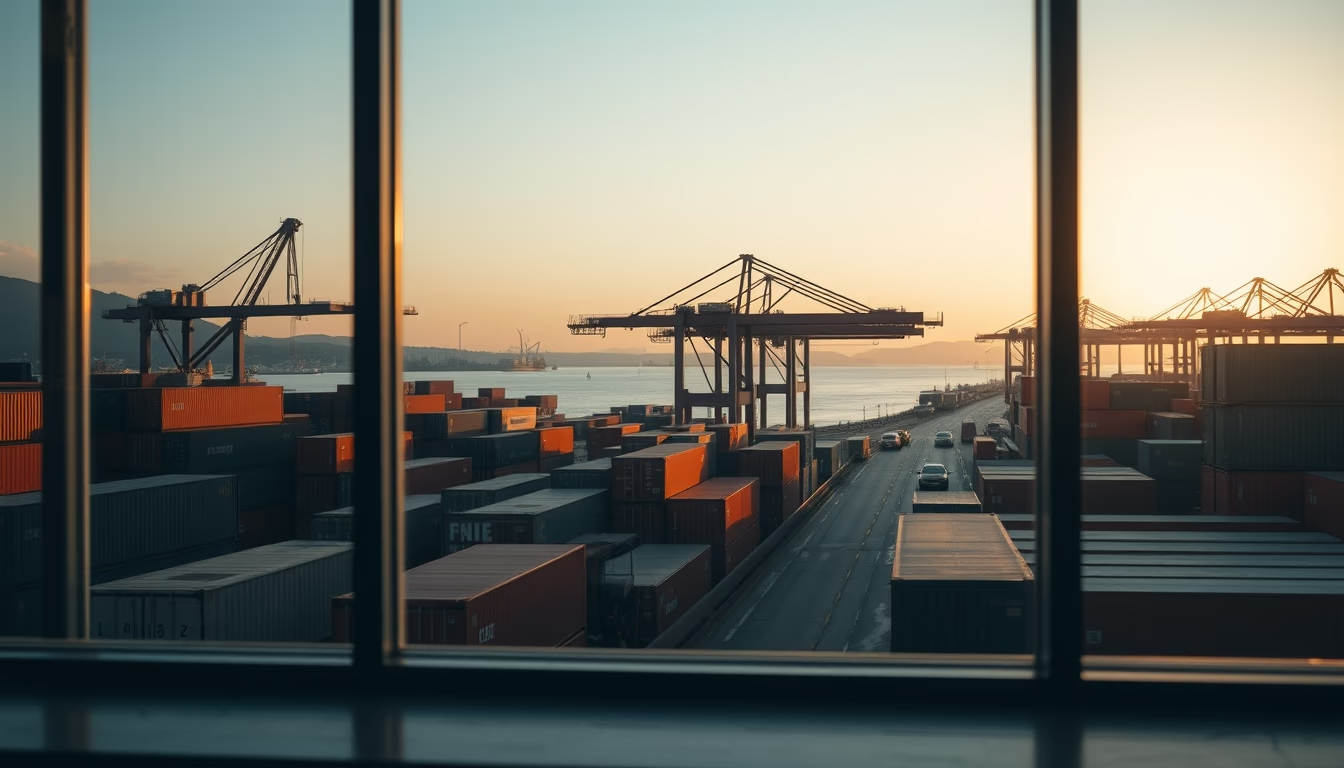
The Port of Santos, the largest port complex in Latin America, handles about 30% of Brazil's foreign trade.
About this subject
The Port of Santos, located on the coast of São Paulo state, is the largest port in Latin America and one of the most important worldwide. Its history dates back to 1532 when the settlement of Santos was founded, but the modern port began construction in the late 19th century, with the opening of the dock in 1892. Today, the port complex spans about 13 km across the municipalities of Santos, Guarujá, and Cubatão. Cargo throughput exceeds 130 million tons per year, including containers, solid bulk (such as soybeans and iron ore), liquid bulk (oil and derivatives), and general cargo.
The cranes and containers are central to the port infrastructure. Gantry cranes (portainers) can lift up to 65 tons each, operating 24 hours a day. Container terminals like Brasil Terminal Portuário (BTP) and Terminal de Contêineres de Santos (Tecon) handle millions of TEUs (twenty-foot equivalent units) annually. The port is vital for the Brazilian economy, especially for exporting agricultural and mineral commodities.
A curiosity: the Port of Santos has the largest container terminal in South America, Tecon Santos, which handles about 2 million TEUs per year. The navigation channel has a depth of up to 15 meters, allowing large vessels like New Panamax ships to dock. The sunset seen from the port is a spectacle, with the lights of cranes and ships reflecting on the canal waters.
Environmental impact is significant, and the port has implemented sustainability measures such as cold ironing (using shore power for docked ships) and water quality monitoring programs. Port activities also generate direct and indirect jobs for thousands of people in the Baixada Santista metropolitan region.
Frequently Asked Questions
What is the container handling capacity of the Port of Santos?
The Port of Santos handles about 4.5 million TEUs (20-foot containers) per year, with the largest container terminal in South America, Tecon Santos, accounting for approximately 2 million TEUs.
What are the main products exported through the Port of Santos?
Main exports include soybeans, corn, sugar, coffee, meat, iron ore, and oil. The port is crucial for shipping agricultural production from Brazil's Center-West and Southeast regions.
How does the Port of Santos address environmental issues?
The port implements measures such as cold ironing (shore power for docked ships), water and air quality monitoring, and waste recycling programs. There are also environmental preservation areas nearby.
Direct URL
https://pub-c7d6a6ea828543ac903a74a341ccb2e1.r2.dev/imagens/port-of-santos-with-cargo-containers-and-cranes-at-sunset-documentary-morning-5.avifHow to credit
Include a visible link back to UtilizAí. Copy one of the snippets below:
<a href="https://xn--utiliza-eza.com/en/midia/imagens/port-of-santos-with-cargo-containers-and-cranes-at-sunset-documentary-morning-5">Port of Santos with cargo containers and cranes at sunset</a> by <a href="https://xn--utiliza-eza.com">UtilizAí</a>, licensed under <a href="https://creativecommons.org/licenses/by/4.0/">CC BY 4.0</a>.
[Port of Santos with cargo containers and cranes at sunset](https://xn--utiliza-eza.com/en/midia/imagens/port-of-santos-with-cargo-containers-and-cranes-at-sunset-documentary-morning-5) by [UtilizAí](https://xn--utiliza-eza.com), CC BY 4.0
License: CC-BY-4.0