Port of Santos with cargo containers and cranes at sunset
1344×768 · AVIF · CC BY 4.0
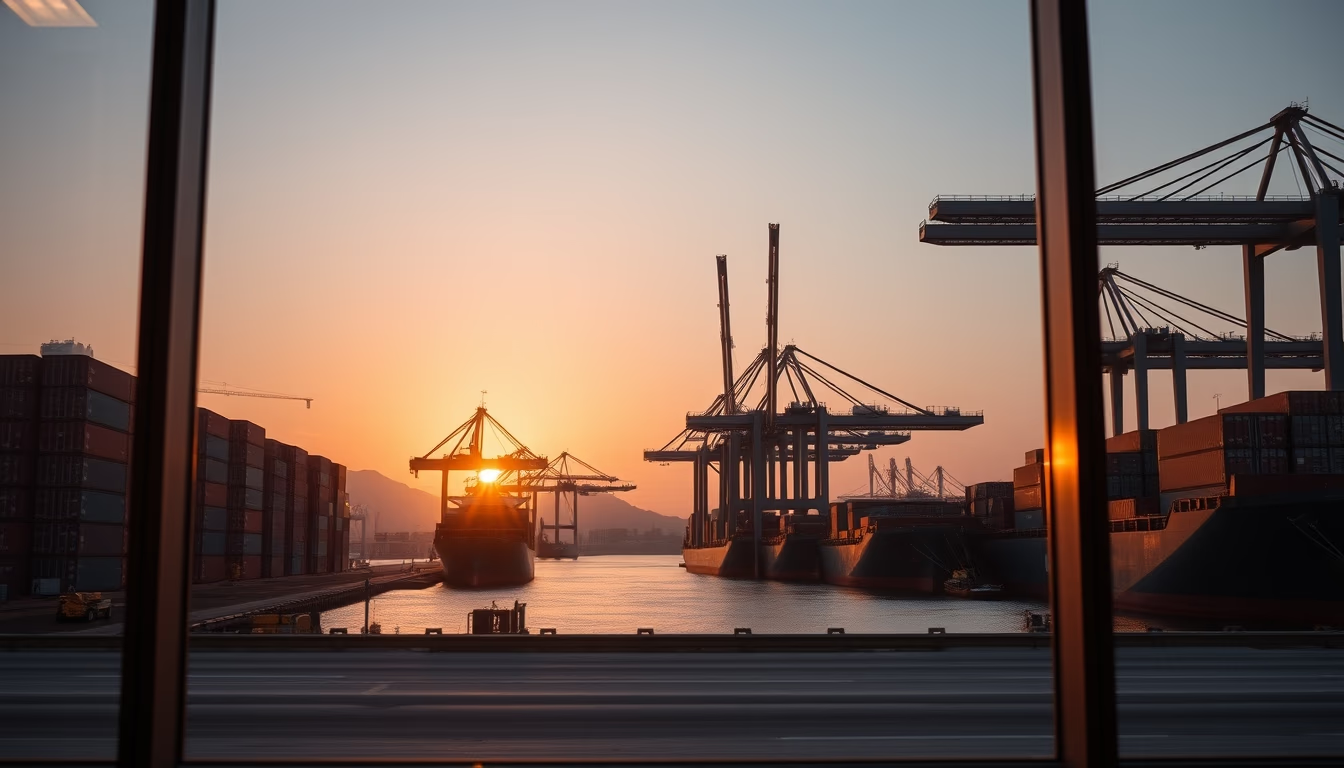
The Port of Santos, the largest port complex in Latin America, handles about 30% of Brazil's foreign trade, especially containers and bulk cargo.
About this subject
The Port of Santos, located on the coast of São Paulo state, is Brazil's main logistics hub and one of the busiest in the world. Its history dates back to the 16th century, when it began operating in a rudimentary way, but it was from the 19th century, with the coffee cycle, that it consolidated as a gateway for goods. Today, it accounts for about 30% of the total value of Brazil's foreign trade, moving over 120 million tons of cargo annually. The complex stretches for 15 km along the Santos estuary channel, encompassing specialized terminals for containers, solid bulk (such as soybeans and ore), liquid bulk (oil and derivatives), and general cargo.
The port's infrastructure includes modern gantry cranes, such as ship-to-shore cranes capable of handling next-generation vessels. The container terminal, operated by companies like Santos Brasil and TCP, moves over 4 million TEUs per year, connecting Brazil to more than 600 ports worldwide. Its strategic location, close to major production centers like São Paulo and Minas Gerais, and integration with highways and railways (such as the Centro-Atlântica Railway and MRS Logística) make it essential for national logistics.
The Port of Santos also faces challenges, such as the need for constant dredging to maintain the channel depth, currently around 15 meters, and the modernization of its land access. In recent years, investments in infrastructure, such as quay expansion and the construction of new terminals, aim to increase capacity and efficiency. Additionally, the port is a major generator of jobs and income for the region, with about 50,000 direct and indirect workers. The view of colorful containers and cranes at sunset is a symbol of Brazil's economic dynamism.
Frequently Asked Questions
What is the importance of the Port of Santos for the Brazilian economy?
The Port of Santos handles about 30% of Brazil's foreign trade, being essential for exporting commodities such as soybeans, coffee, and iron ore, as well as importing fertilizers and industrial products.
How many containers does the Port of Santos handle per year?
The port handles over 4 million TEUs (twenty-foot equivalent units) annually, making it the largest container terminal in Latin America.
What are the main challenges faced by the Port of Santos?
The main challenges include the need for constant dredging to maintain channel depth, modernization of road and rail access, and capacity expansion to meet growing demand.
Direct URL
https://pub-c7d6a6ea828543ac903a74a341ccb2e1.r2.dev/imagens/port-of-santos-with-cargo-containers-and-cranes-at-sunset-documentary-morning-3.avifHow to credit
Include a visible link back to UtilizAí. Copy one of the snippets below:
<a href="https://xn--utiliza-eza.com/en/midia/imagens/port-of-santos-with-cargo-containers-and-cranes-at-sunset-documentary-morning-3">Port of Santos with cargo containers and cranes at sunset</a> by <a href="https://xn--utiliza-eza.com">UtilizAí</a>, licensed under <a href="https://creativecommons.org/licenses/by/4.0/">CC BY 4.0</a>.
[Port of Santos with cargo containers and cranes at sunset](https://xn--utiliza-eza.com/en/midia/imagens/port-of-santos-with-cargo-containers-and-cranes-at-sunset-documentary-morning-3) by [UtilizAí](https://xn--utiliza-eza.com), CC BY 4.0
License: CC-BY-4.0