Port of Santos with cargo containers and cranes at sunset
1344×768 · AVIF · CC BY 4.0
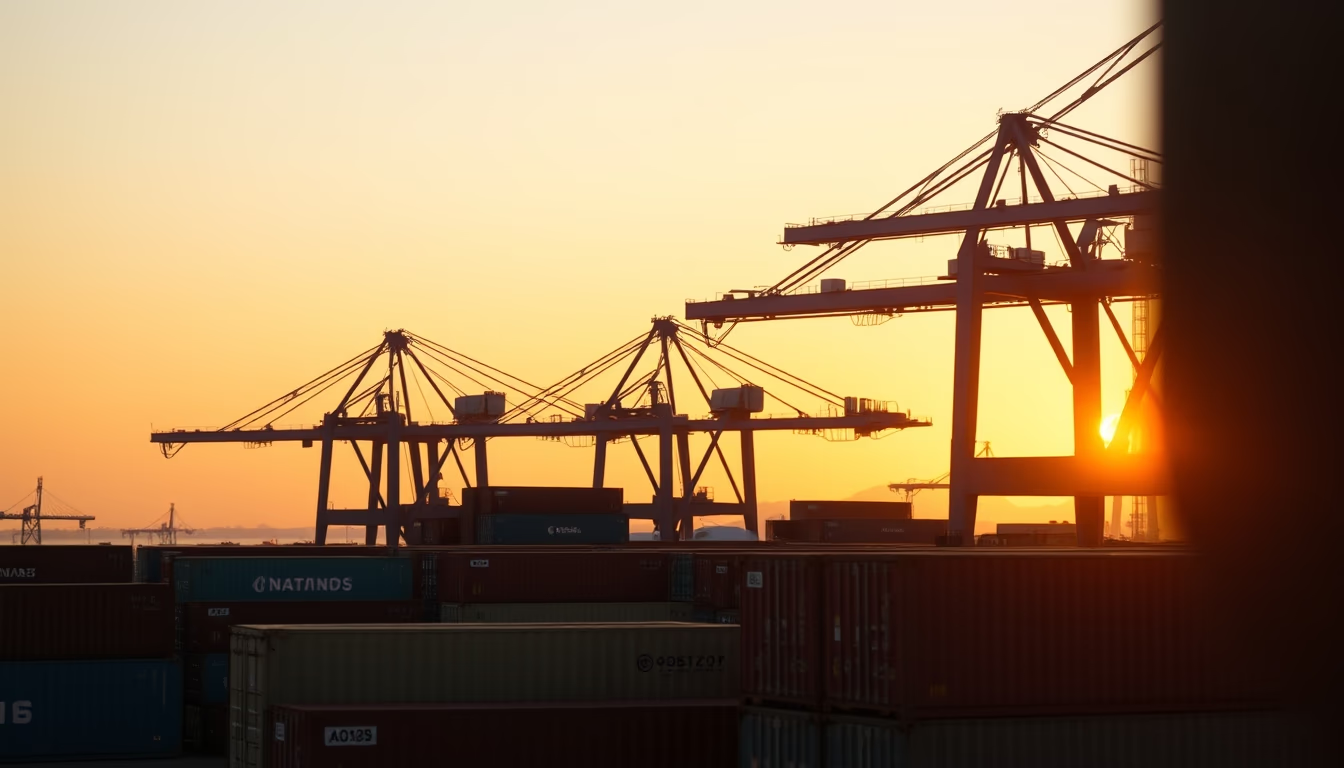
The Port of Santos, in São Paulo, is the largest port complex in Latin America, handling about 30% of Brazil's foreign trade.
About this subject
The Port of Santos, located on the southern coast of São Paulo state, is the largest and busiest port in Latin America. Inaugurated in 1892, the complex stretches 15 kilometers along the Santos estuary, covering the municipalities of Santos, Guarujá, and Cubatão. Its infrastructure includes 56 specialized terminals capable of handling cargo such as containers, grains, sugar, coffee, vehicles, and steel products. In 2023, the port recorded a record throughput of 173 million tons, consolidating its strategic position for the Brazilian economy.
Port activity is vital for the region, generating thousands of direct and indirect jobs. The Port of Santos is responsible for shipping much of the agricultural production from the Center-West, such as soybeans and corn, and is the main gateway for imported fertilizers and machinery. Continuous modernization, with investments in dredging, wharf expansion, and logistics management systems, seeks to meet the growing demand of global trade.
Beyond its economic importance, the port has a rich historical heritage. The historic center of Santos houses 19th-century buildings, such as the Coffee Exchange and the old warehouse, which are now tourist attractions. The sunset view over the containers and cranes, with the Santos Channel in the background, has become a symbol of the city, contrasting the colonial past with modern industrial strength.
Interestingly, the Port of Santos is also one of Brazil's largest nautical leisure hubs, with marinas and boat tours that allow close-up observation of port operations. The region faces environmental challenges, such as estuary pollution and heavy truck traffic, but sustainability initiatives, including the use of clean energy in terminals and environmental compensation programs, are underway to mitigate impacts.
Frequently Asked Questions
What is the handling capacity of the Port of Santos?
In 2023, the Port of Santos handled 173 million tons of cargo, a historical record. Its capacity has increased with investments in expansion and modernization.
What are the main products exported through the Port of Santos?
Main exports include soybeans, corn, sugar, coffee, meat, and iron ore. The port is also important for importing fertilizers and machinery.
Is the Port of Santos open to tourist visits?
Yes, boat tours along the port channel allow observation of operations. Additionally, the historic center of Santos offers museums and 19th-century buildings.
Direct URL
https://pub-c7d6a6ea828543ac903a74a341ccb2e1.r2.dev/imagens/port-of-santos-with-cargo-containers-and-cranes-at-sunset-closeup-twilight-4.avifHow to credit
Include a visible link back to UtilizAí. Copy one of the snippets below:
<a href="https://xn--utiliza-eza.com/en/midia/imagens/port-of-santos-with-cargo-containers-and-cranes-at-sunset-closeup-twilight-4">Port of Santos with cargo containers and cranes at sunset</a> by <a href="https://xn--utiliza-eza.com">UtilizAí</a>, licensed under <a href="https://creativecommons.org/licenses/by/4.0/">CC BY 4.0</a>.
[Port of Santos with cargo containers and cranes at sunset](https://xn--utiliza-eza.com/en/midia/imagens/port-of-santos-with-cargo-containers-and-cranes-at-sunset-closeup-twilight-4) by [UtilizAí](https://xn--utiliza-eza.com), CC BY 4.0
License: CC-BY-4.0