Pocket watch antique
1344×768 · AVIF · CC BY 4.0
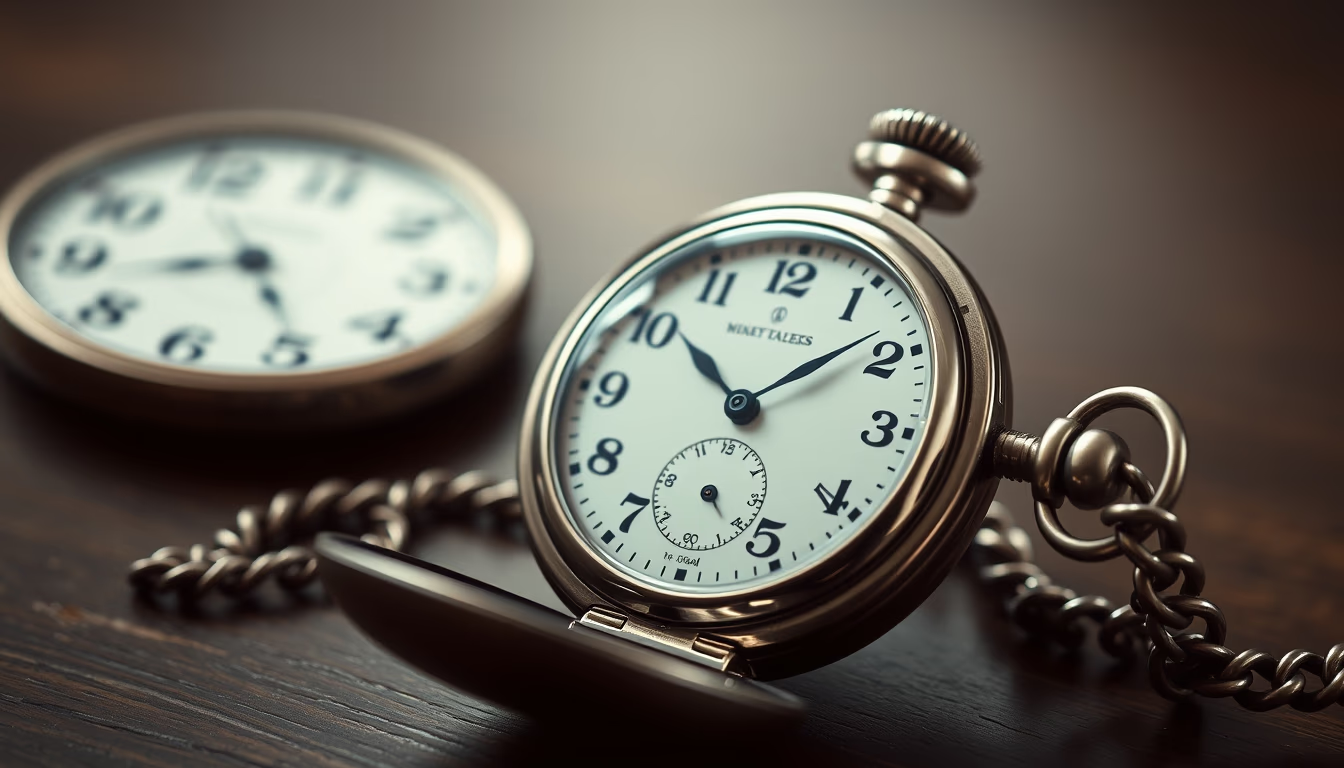
Antique pocket watch, a symbol of precision and elegance that shaped timekeeping history since the 16th century.
About this subject
Pocket watches originated in the early 16th century, evolving from the first portable timepieces known as 'Nuremberg eggs', created by Peter Henlein in Germany. Unlike modern wristwatches, these devices were worn hanging from chains or attached to vests, reflecting social status and technical craftsmanship. The key innovation was the escapement mechanism and mainspring, which allowed for better accuracy. In the 19th century, pocket chronometers became vital for navigation and railroads, such as the standardized models produced by the Webb C. Ball company in the United States, which were used to prevent accidents. The gear train system and enamel dial, often with Roman numerals, were typical features. One interesting fact: pocket watches often included a protective lid, which could be plain or engraved, and the use of chains called 'fobs' was common to prevent loss. Mass production in the late 19th century made watches more affordable, but World War I popularized wristwatches, leading to a decline in pocket watches. Today, they are collector's items, with pieces from brands like Patek Philippe, Vacheron Constantin, and Longines fetching high prices at auctions. Maintaining an antique pocket watch requires specialized knowledge, as many use manual winding mechanisms and need periodic cleaning to preserve accuracy.
Frequently Asked Questions
How did the mechanism of an antique pocket watch work?
It typically used manual winding, with a mainspring storing energy. Through a gear train and escapement, the energy was released in regular pulses, moving the hands. Accuracy depended on the balance wheel and hairspring.
Why were pocket watches important for railroads?
In the 19th and early 20th centuries, railroad time synchronization was critical to avoid collisions. Conductors used certified pocket chronometers, such as those from the Ball Watch Company, which could withstand temperature changes and shocks, ensuring punctuality.
What is the value of an antique pocket watch today?
Values vary widely: common pieces may cost hundreds of dollars, while rare models from brands like Patek Philippe or complicated watches (moon phase, chronograph) can reach millions at auction. Condition, originality, and provenance are key factors.
Direct URL
https://pub-c7d6a6ea828543ac903a74a341ccb2e1.r2.dev/imagens/pocket-watch-antique-lo-fi-disposable-camera-p9.avifHow to credit
Include a visible link back to UtilizAí. Copy one of the snippets below:
<a href="https://xn--utiliza-eza.com/en/midia/imagens/pocket-watch-antique-lo-fi-disposable-camera-p9">Pocket watch antique</a> by <a href="https://xn--utiliza-eza.com">UtilizAí</a>, licensed under <a href="https://creativecommons.org/licenses/by/4.0/">CC BY 4.0</a>.
[Pocket watch antique](https://xn--utiliza-eza.com/en/midia/imagens/pocket-watch-antique-lo-fi-disposable-camera-p9) by [UtilizAí](https://xn--utiliza-eza.com), CC BY 4.0
License: CC-BY-4.0