Pocket watch antique
1344×768 · AVIF · CC BY 4.0
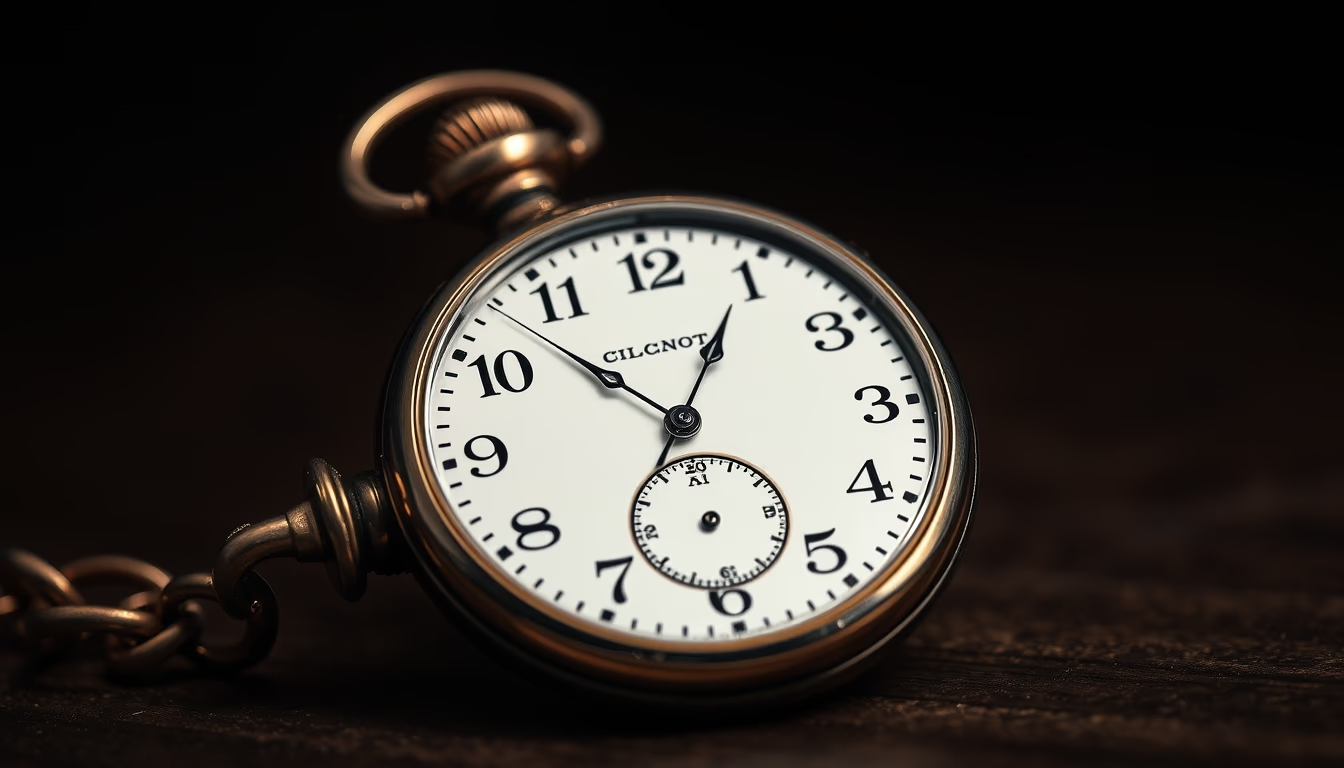
Antique pocket watch: a symbol of elegance and mechanical precision from the 19th century, now a collector's item.
About this subject
Antique pocket watches represent an era when timekeeping was both a practical necessity and a status statement. Emerging in the 16th century, they became popular among European nobility as portable accessories. Until the advent of wristwatches during World War I, pocket watches were the standard for personal timekeeping. Each piece reflects the craftsmanship of watchmakers who spent months constructing complex mechanisms, often adorned with hand engravings, enamels, and precious metals like gold and silver.
The internal mechanics of these watches are a marvel of miniature engineering. The manual winding system, lever escapement, and balance wheel regulator deliver remarkable precision for their time. Historic brands such as Patek Philippe, Vacheron Constantin, and Longines produced examples that now command astronomical prices at auctions. A 1933 model, the Patek Philippe Henry Graves Supercomplication, held the record for the world's most complicated watch for decades, featuring 24 complications.
In Brazil, pocket watches arrived with the Portuguese court in 1808 and became luxury items among the imperial elite. Today, collectors seek pieces with enamel dials, Roman numerals, and Breguet hands. Preservation requires special care, including avoiding moisture and periodic maintenance by a specialized watchmaker. For many, owning an antique pocket watch is a way to keep alive the history of chronometry and design.
Frequently Asked Questions
How to identify an original antique pocket watch?
Check the serial number on the movement and consult manufacturer archives. Brands like Patek Philippe and Longines keep historical records. Hallmarks and natural patina on the metal also help authenticate.
What is the average value of an antique pocket watch?
It ranges from hundreds to millions of dollars. Common early-20th-century models can cost $100 to $1,000, while rare pieces from renowned brands or with special complications exceed $100,000.
Does a pocket watch need to be kept running?
Not necessarily. Stopped, it avoids wear. But to preserve lubrication, it is recommended to wind and let it run a few minutes each month. Avoid rough movements and store in a padded case.
Direct URL
https://pub-c7d6a6ea828543ac903a74a341ccb2e1.r2.dev/imagens/pocket-watch-antique-fine-art-photography-p1.avifHow to credit
Include a visible link back to UtilizAí. Copy one of the snippets below:
<a href="https://xn--utiliza-eza.com/en/midia/imagens/pocket-watch-antique-fine-art-photography-p1">Pocket watch antique</a> by <a href="https://xn--utiliza-eza.com">UtilizAí</a>, licensed under <a href="https://creativecommons.org/licenses/by/4.0/">CC BY 4.0</a>.
[Pocket watch antique](https://xn--utiliza-eza.com/en/midia/imagens/pocket-watch-antique-fine-art-photography-p1) by [UtilizAí](https://xn--utiliza-eza.com), CC BY 4.0
License: CC-BY-4.0