Pocket watch antique
1344×768 · AVIF · CC BY 4.0
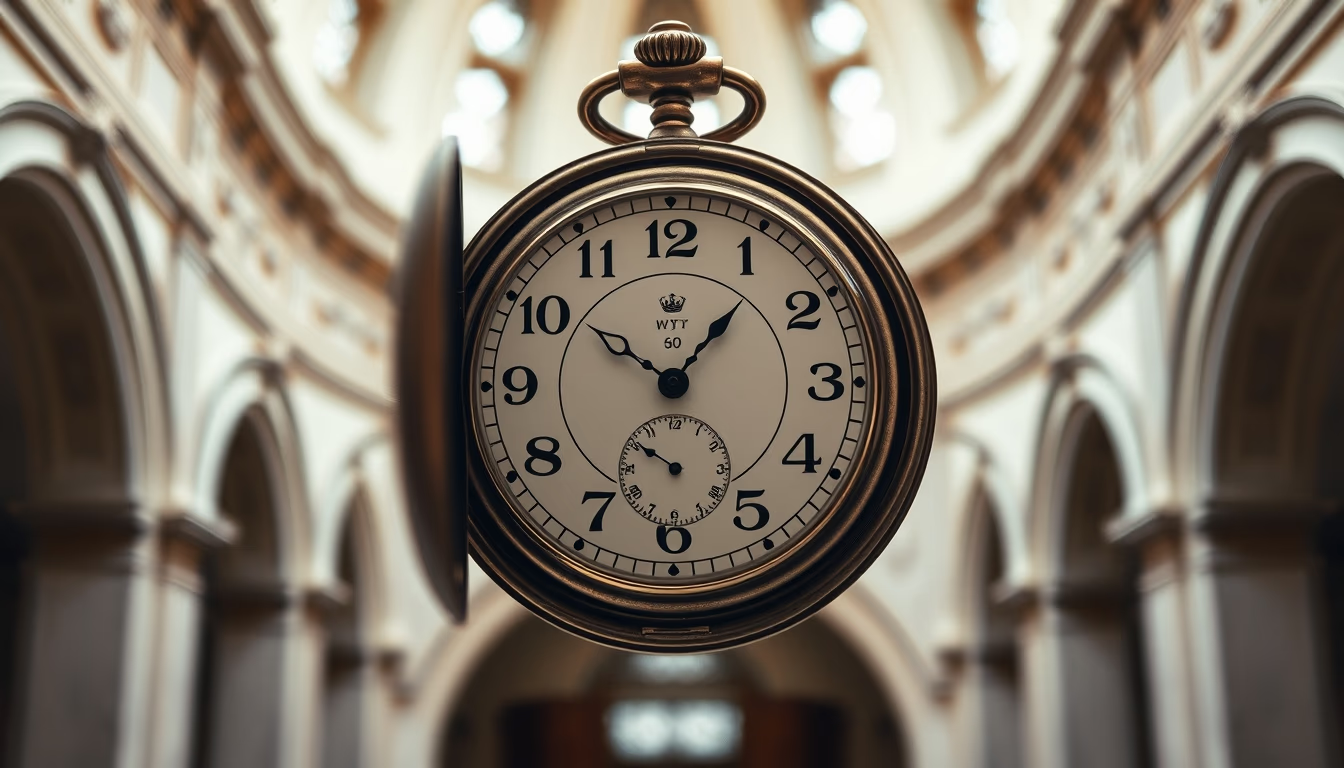
Antique pocket watches bear witness to the engineering and style of a bygone era, combining precision and artistry in portable pieces.
About this subject
Pocket watches first appeared in the 16th century, with the earliest models known as Nuremberg eggs, created by German clockmaker Peter Henlein. They were key-wound and often richly engraved or enameled, becoming symbols of status and refinement until the early 20th century.
The mechanical complexity of these watches is remarkable. Many feature escapements, fusee and chain mechanisms for precision, plus complications such as calendars, minute repeaters, and chronographs. The invention of stem-winding by John Harwood in 1923 simplified use, but earlier models required a separate key to wind and set the time.
Culturally, the pocket watch was essential for travelers and professionals, but it gradually gave way to wristwatches after World War I, when soldiers found them more convenient. Today, pocket watches are collectibles and study items, with pieces from American Elgin, Swiss Patek Philippe, and English Thomas Tompion highly prized at auctions.
Interesting fact: railroad pocket watches had to meet strict precision standards to prevent accidents. Companies like Ball Watch Company produced certified models for railways, with easy-to-read dials and shock-resistant movements.
Frequently Asked Questions
How does an antique pocket watch winding work?
Antique pocket watches typically use a manual winding mechanism, where the user turns a crown or inserts a key to wind the mainspring. Later models use the stem-winding system, which also allows setting the hands.
What is the difference between a pocket watch and a wristwatch?
The main difference is placement: a pocket watch is carried in a pocket, often attached to a chain, while a wristwatch is worn on the arm. Historically, pocket watches predate wristwatches and are known for their mechanical precision, though both can be high quality.
How can you tell if an antique pocket watch is valuable?
Value depends on factors such as brand, rarity, condition, materials (gold, silver, enamel), and complications. Brands like Patek Philippe, Vacheron Constantin, and certified railroad watches are particularly valuable. A professional appraisal is recommended.
Direct URL
https://pub-c7d6a6ea828543ac903a74a341ccb2e1.r2.dev/imagens/pocket-watch-antique-architectural-photography-p7.avifHow to credit
Include a visible link back to UtilizAí. Copy one of the snippets below:
<a href="https://xn--utiliza-eza.com/en/midia/imagens/pocket-watch-antique-architectural-photography-p7">Pocket watch antique</a> by <a href="https://xn--utiliza-eza.com">UtilizAí</a>, licensed under <a href="https://creativecommons.org/licenses/by/4.0/">CC BY 4.0</a>.
[Pocket watch antique](https://xn--utiliza-eza.com/en/midia/imagens/pocket-watch-antique-architectural-photography-p7) by [UtilizAí](https://xn--utiliza-eza.com), CC BY 4.0
License: CC-BY-4.0