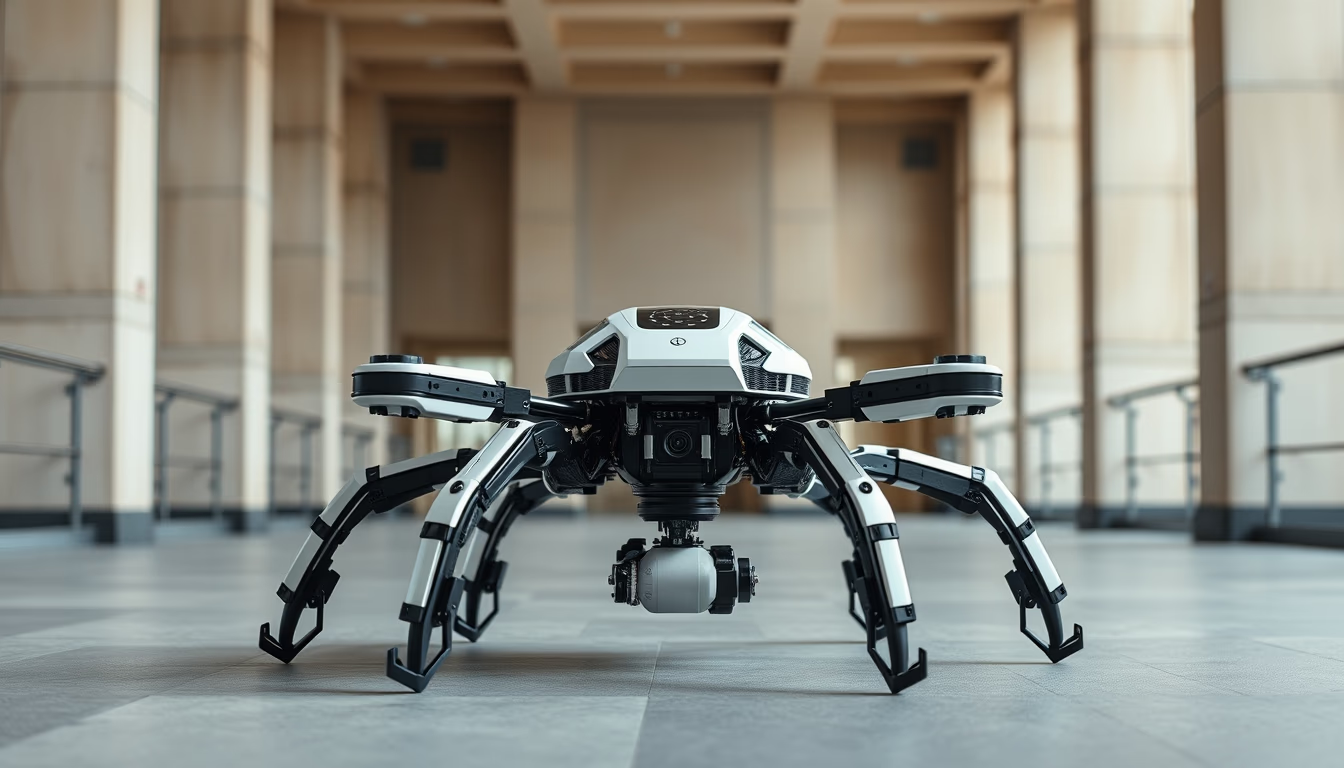
Pick and place robot
1344×768 · AVIF · CC BY 4.0

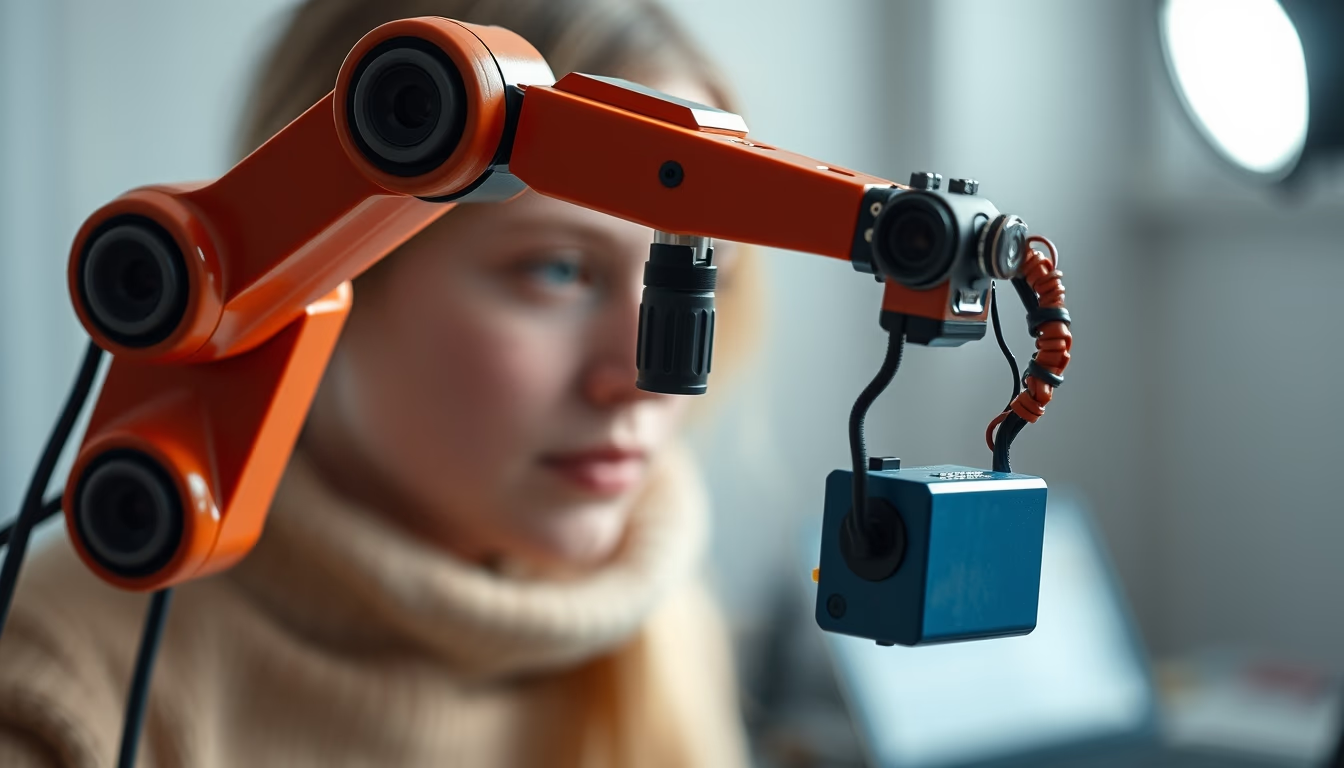
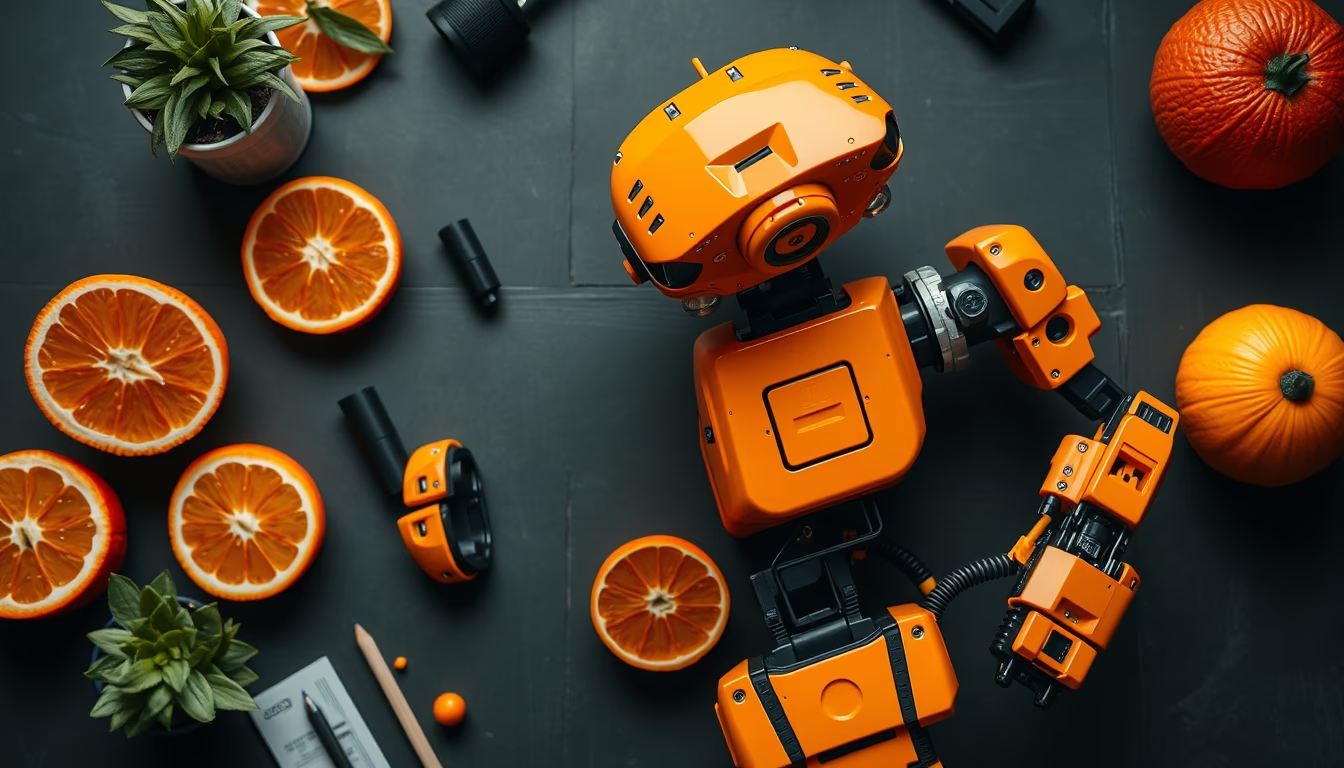
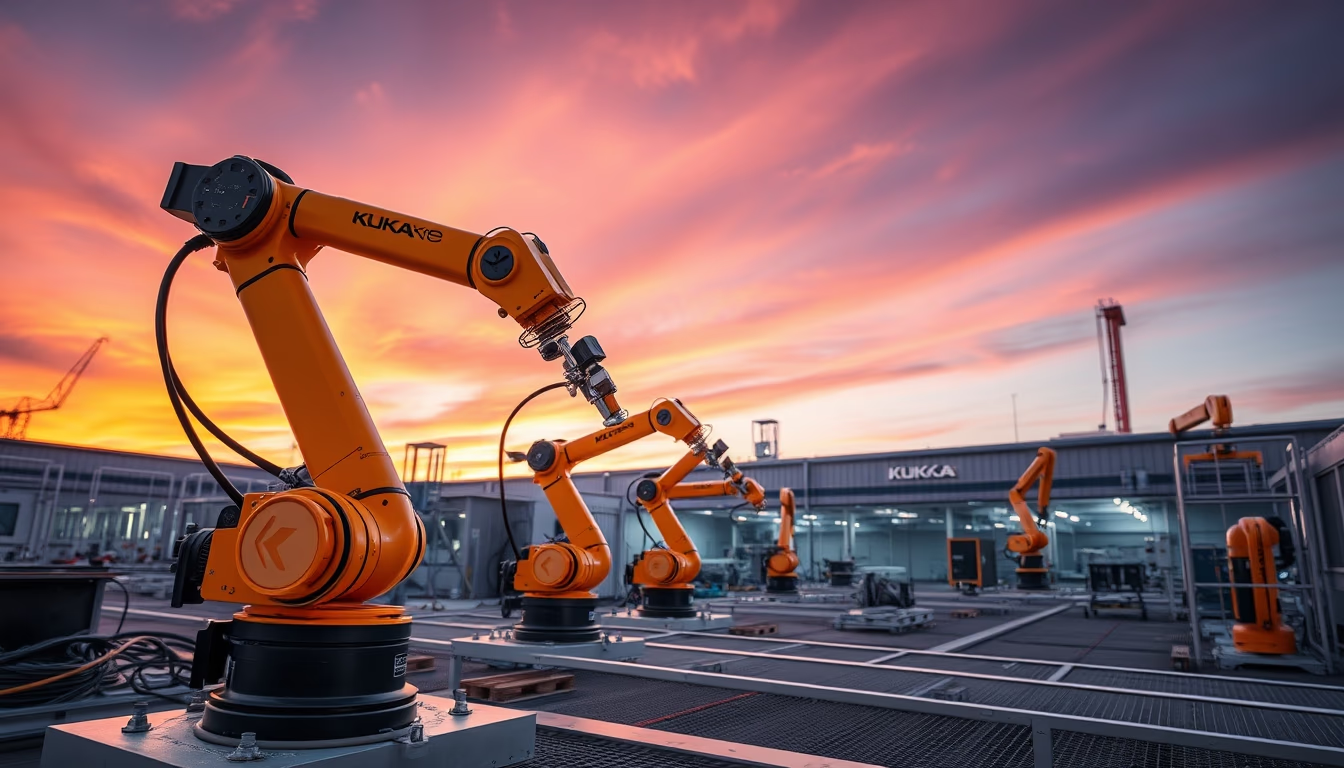
The pick and place robot is a programmable mechanical arm used to move objects from one point to another with high speed and precision, essential in industrial automation.
About this subject
A pick and place robot is an automation device designed to transfer objects from one position to another repeatedly and precisely. Its operation relies on sensors, actuators, and controllers that coordinate movements along X, Y, and Z axes, often including rotation. The main types include Cartesian, SCARA, delta, and articulated robots, each suited to different applications: delta robots are extremely fast for lightweight parts, while SCARA robots offer stiffness for precision assembly.
These robots are widely used in industries such as electronics, where they assemble printed circuit boards (PCBs) with tiny components; in the food industry for high-speed packaging; in pharmaceuticals for handling vials and blisters; and in logistics for sorting and organizing items in warehouses. Advantages include reduced human error, increased productivity, 24/7 operation, and improved safety by taking over repetitive or dangerous tasks.
The first commercial pick and place robot was the Unimate, introduced in 1961 by General Motors, which performed die-casting part transfers. Since then, technology has evolved with computer vision and artificial intelligence, enabling robots to identify and manipulate random objects. The global pick and place robot market grows at about 12% annually, driven by Industry 4.0.
Notable facts: some models achieve speeds over 200 parts per minute with positional accuracy in the micrometer range. Collaborative robots (cobots), such as those from Universal Robots, operate without safety cages, working alongside humans. Programming has become more intuitive with drag-and-drop interfaces, allowing small and medium enterprises to adopt automation.
Frequently Asked Questions
What is a pick and place robot?
It is an automated mechanical arm that picks and places objects from one location to another with high speed and repeatability. It is programmable and widely used in assembly and packaging lines.
What are the main types of pick and place robots?
Common types include Cartesian (linear motion), SCARA (rigid and fast), delta (high speed for lightweight parts), and articulated (multi-axis for flexibility).
Which industries use pick and place robots most?
The electronics, food, pharmaceutical, and logistics industries are the primary users. They are essential for PCB assembly, food packaging, drug handling, and parcel sorting.
Direct URL
https://pub-c7d6a6ea828543ac903a74a341ccb2e1.r2.dev/imagens/pick-and-place-robot-national-geographic-style-p2.avifHow to credit
Include a visible link back to UtilizAí. Copy one of the snippets below:
<a href="https://xn--utiliza-eza.com/en/midia/imagens/pick-and-place-robot-national-geographic-style-p2">Pick and place robot</a> by <a href="https://xn--utiliza-eza.com">UtilizAí</a>, licensed under <a href="https://creativecommons.org/licenses/by/4.0/">CC BY 4.0</a>.
[Pick and place robot](https://xn--utiliza-eza.com/en/midia/imagens/pick-and-place-robot-national-geographic-style-p2) by [UtilizAí](https://xn--utiliza-eza.com), CC BY 4.0
License: CC-BY-4.0