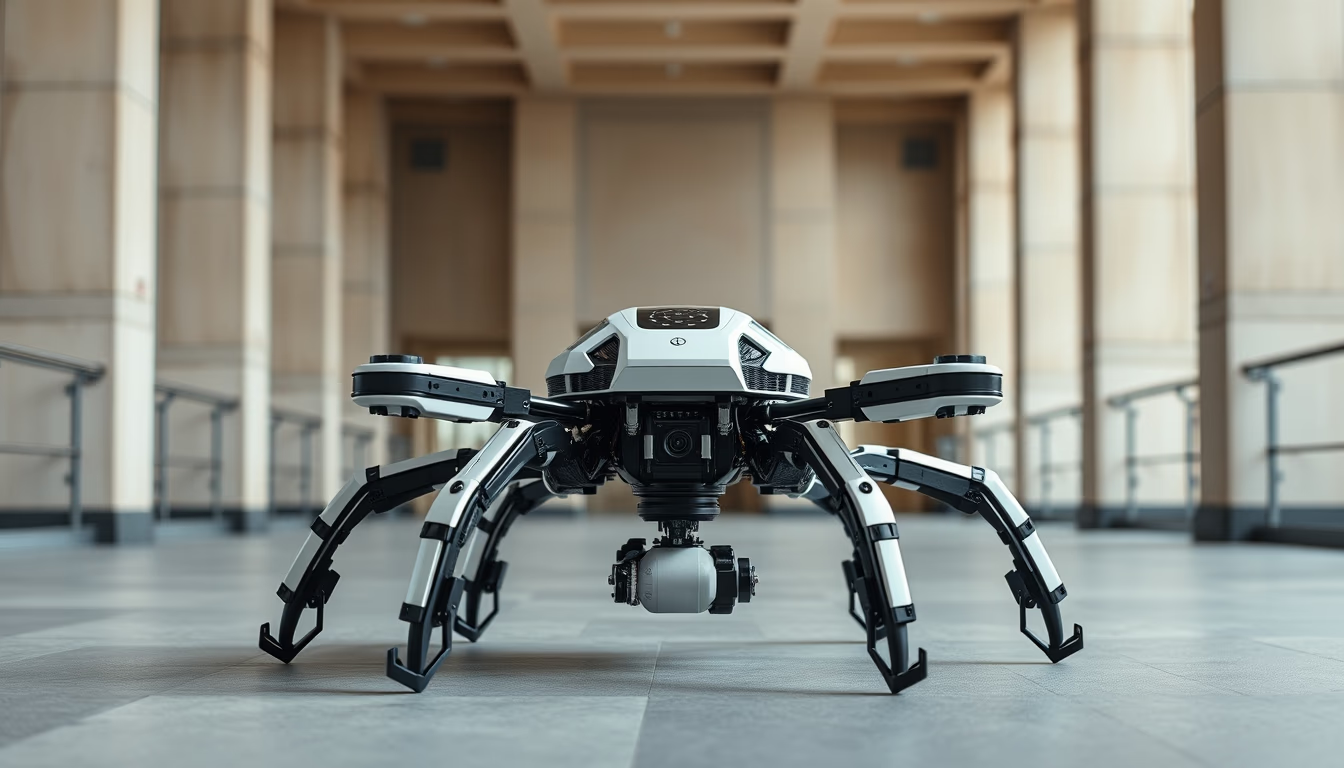
Pick and place robot
1344×768 · AVIF · CC BY 4.0

Pick and place robots are high-speed automated machines used to move objects in production lines with repetitive precision.
About this subject
Pick and place robots are a type of industrial automation designed to quickly and precisely pick up and place components. They are widely used in assembly lines, packaging, and inspection, especially in electronics, automotive, and food industries. For instance, in printed circuit board manufacturing, these robots place tiny microchips and other components onto exact positions at speeds far exceeding human capability.
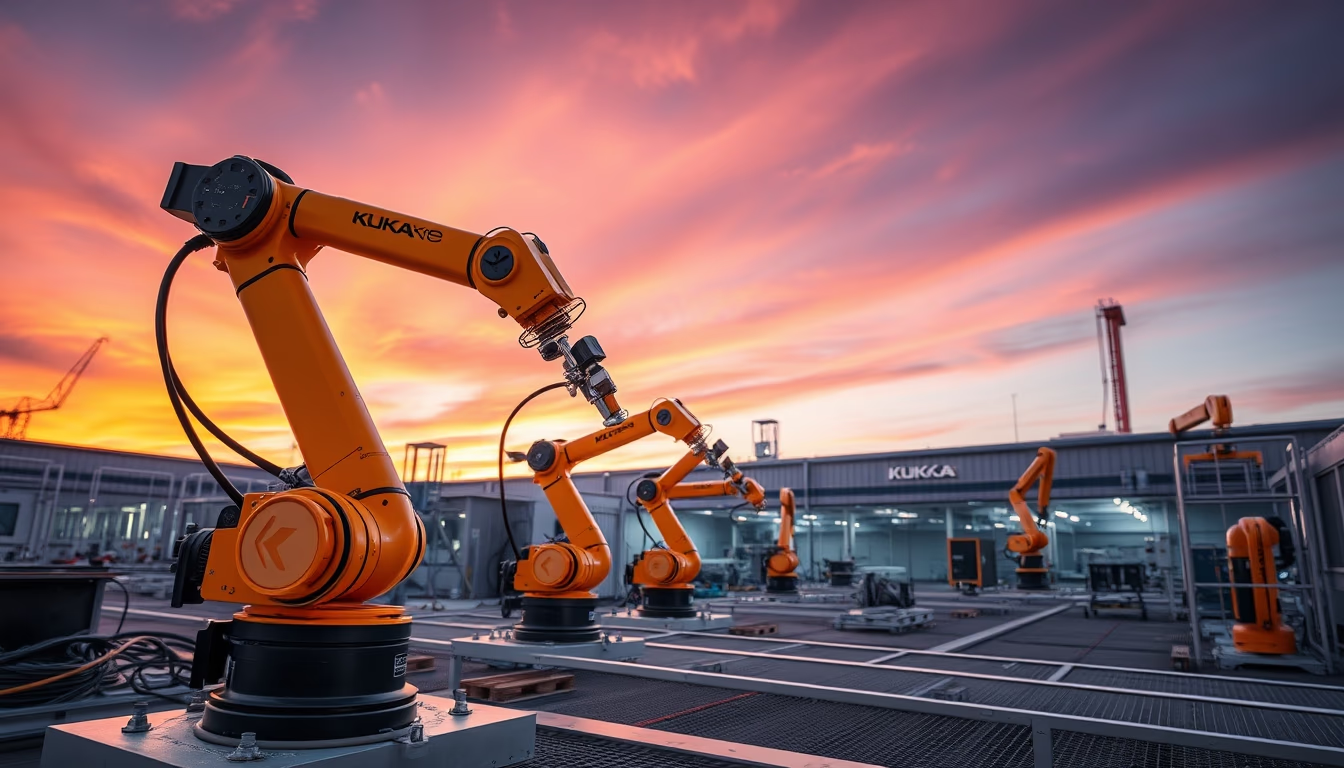
Several mechanical configurations exist to meet different needs. The delta robot, with its parallel arm structure, offers extremely fast and lightweight movements, ideal for picking small, light items at high rates. The SCARA robot is known for its rigidity and precision in horizontal movements, common in assembly tasks requiring screwing or fitting. Cartesian robots, with linear movements in X, Y, and Z axes, are simple and robust, used for palletizing and handling larger loads.
Programming these robots is typically done via teach pendant or offline software, allowing adjustments to path and speed. Vision and force sensors can be integrated to increase flexibility, enabling the robot to identify random parts or adapt to position variations. Typical precision ranges from tens of micrometers to millimeters, depending on model and application. Cycle speeds can exceed 200 picks per minute in specialized robots.
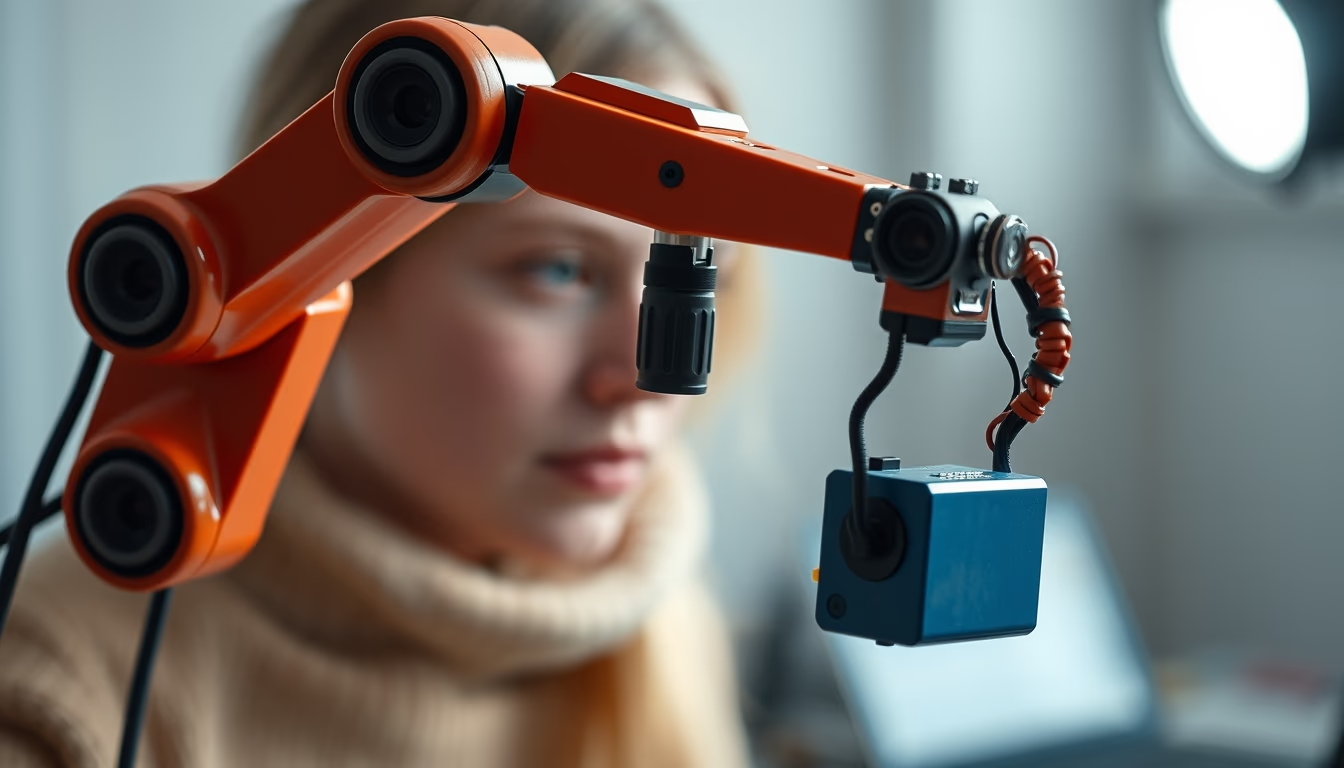
The use of pick and place robots reduces errors, boosts productivity, and improves safety by removing workers from repetitive, potentially injurious tasks. With Industry 4.0 advancements, these robots are becoming more connected and intelligent, capable of communicating with management systems and performing predictive maintenance. The long-exposure image likely highlights the robot's motion, but the focus here is on the technology and its impact on automation.
Frequently Asked Questions
What is the difference between a pick and place robot and a collaborative robot?
Pick and place robots are generally faster and more precise but operate in isolated areas for safety. Collaborative robots (cobots) are designed to work alongside humans, with sensors that limit force and speed to prevent accidents.
Which industries use pick and place robots the most?
The main industries are electronics (board assembly), automotive (component assembly), food and beverage (packaging and sorting), pharmaceuticals (drug handling), and logistics (item picking).
How is computer vision integrated with a pick and place robot?
Fixed or robot-mounted cameras capture images of parts. The software processes the image to find the exact position and orientation, sending coordinates to the robot so it adjusts its picking motion, allowing it to handle random parts.
Direct URL
https://pub-c7d6a6ea828543ac903a74a341ccb2e1.r2.dev/imagens/pick-and-place-robot-long-exposure-p8.avifHow to credit
Include a visible link back to UtilizAí. Copy one of the snippets below:
<a href="https://xn--utiliza-eza.com/en/midia/imagens/pick-and-place-robot-long-exposure-p8">Pick and place robot</a> by <a href="https://xn--utiliza-eza.com">UtilizAí</a>, licensed under <a href="https://creativecommons.org/licenses/by/4.0/">CC BY 4.0</a>.
[Pick and place robot](https://xn--utiliza-eza.com/en/midia/imagens/pick-and-place-robot-long-exposure-p8) by [UtilizAí](https://xn--utiliza-eza.com), CC BY 4.0
License: CC-BY-4.0