Pick and place robot
1344×768 · AVIF · CC BY 4.0

Pick and place robots automate repetitive pick-and-position tasks in industries with precision and speed.
About this subject
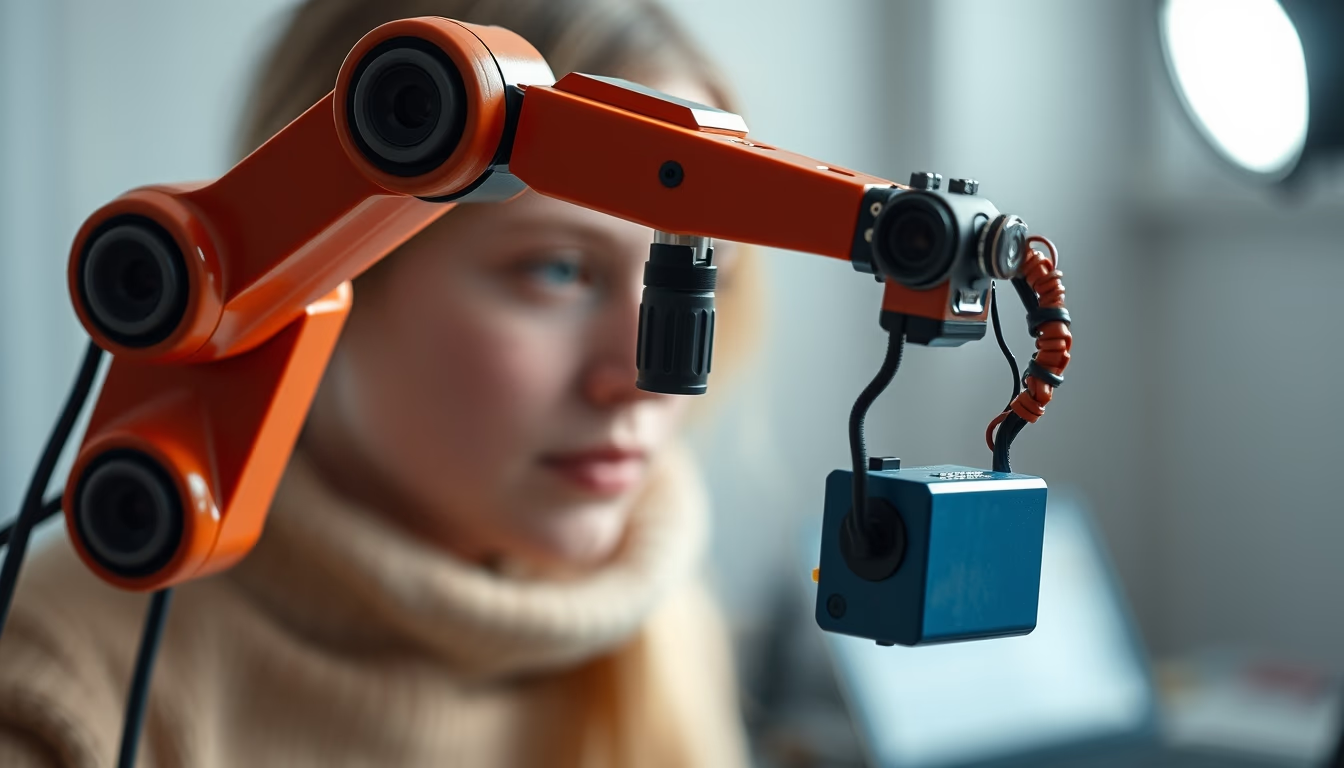
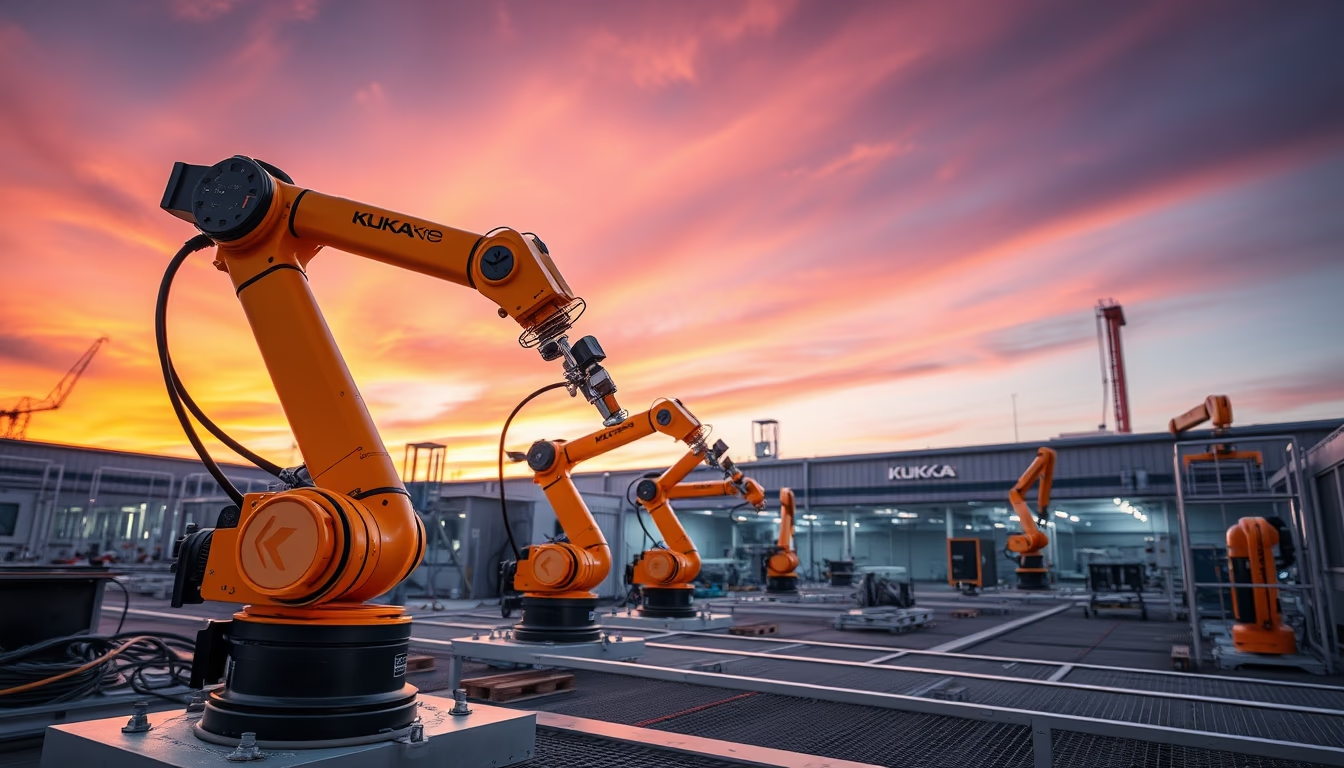
Pick and place robots are industrial equipment designed to perform repetitive operations of picking up objects and placing them at predetermined locations. They are widely used in assembly lines, packaging, sorting, and inspection, especially in the electronics, pharmaceutical, food, and logistics sectors. Their main advantage is high speed and precision, capable of processing tens to hundreds of parts per minute without fatigue. Common configurations include delta or SCARA arms, which allow fast and lightweight movements, along with end effectors such as suction cups, grippers, or clamps adapted to the product. The use of computer vision systems enables these robots to identify and handle items of different shapes and sizes without requiring fixed programming.
Historically, the first pick and place robots emerged in the 1970s, driven by automation in the automotive industry. Since then, they have evolved from purely mechanical systems to integrated platforms with artificial intelligence and machine learning. Modern robots can adapt to variations in position, orientation, and even part defects, increasing production flexibility. The technology has also expanded into areas such as medicine, where they assist in manipulating surgical instruments or laboratory samples.
In the image context, the fish-eye wide-angle lens provides a broad perspective of the workspace, highlighting the robot's integration with sensors, conveyors, and other surrounding equipment. This view is useful for sizing robotic cells and analyzing factory layouts. The global application of these robots drives Industry 4.0, contributing to cost reduction, productivity gains, and improved final product quality.
Frequently Asked Questions
What is a pick and place robot?
It is an industrial robotic arm designed to pick up objects from one location and place them in another with high speed and precision. Common in assembly, packaging, and sorting lines.
Which sectors use pick and place robots?
Electronics, pharmaceuticals, food, automotive, and logistics. They are also used in laboratories and medical industries for specimen handling.
How does computer vision help a pick and place robot?
Sensors and cameras allow the robot to identify the position, orientation, and type of part, adjusting movement in real time, enabling handling of unorganized or varied items.
Direct URL
https://pub-c7d6a6ea828543ac903a74a341ccb2e1.r2.dev/imagens/pick-and-place-robot-fish-eye-wide-angle-p10.avifHow to credit
Include a visible link back to UtilizAí. Copy one of the snippets below:
<a href="https://xn--utiliza-eza.com/en/midia/imagens/pick-and-place-robot-fish-eye-wide-angle-p10">Pick and place robot</a> by <a href="https://xn--utiliza-eza.com">UtilizAí</a>, licensed under <a href="https://creativecommons.org/licenses/by/4.0/">CC BY 4.0</a>.
[Pick and place robot](https://xn--utiliza-eza.com/en/midia/imagens/pick-and-place-robot-fish-eye-wide-angle-p10) by [UtilizAí](https://xn--utiliza-eza.com), CC BY 4.0
License: CC-BY-4.0