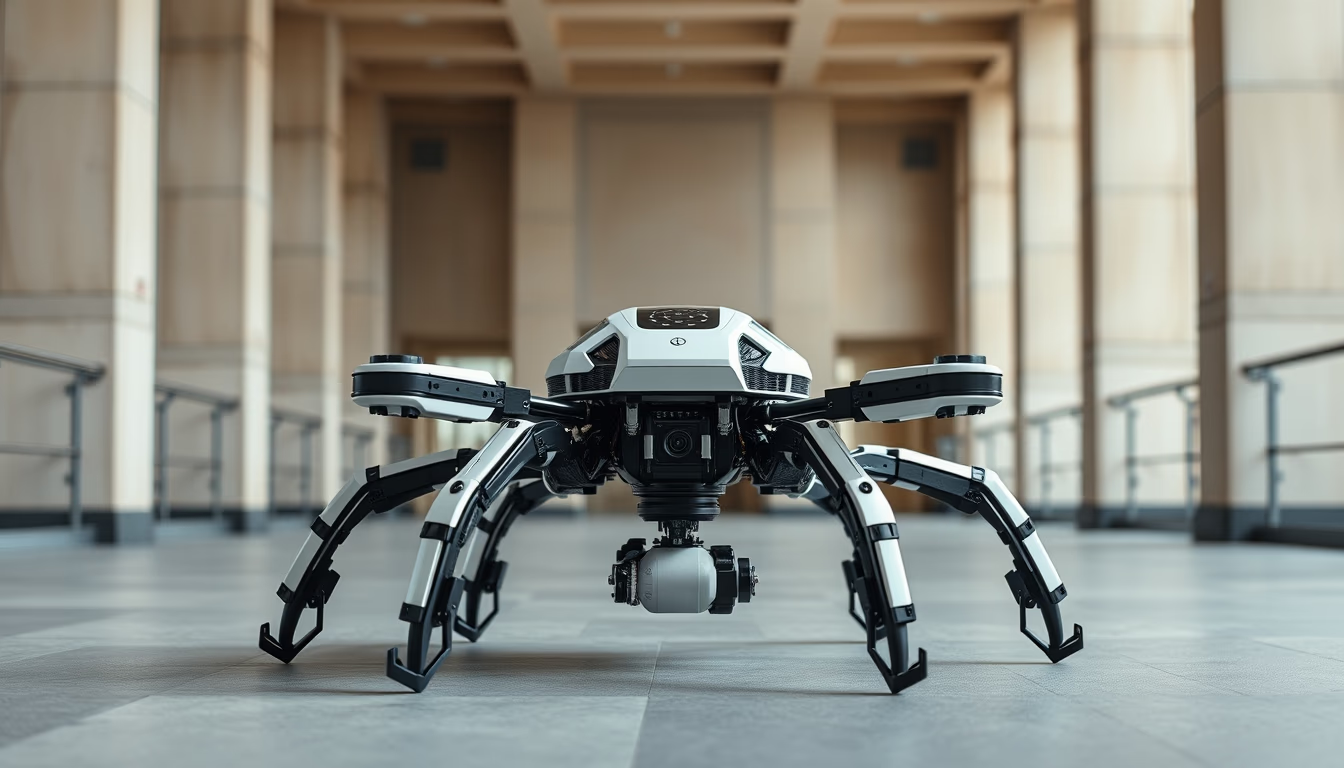
Pick and place robot
1344×768 · AVIF · CC BY 4.0

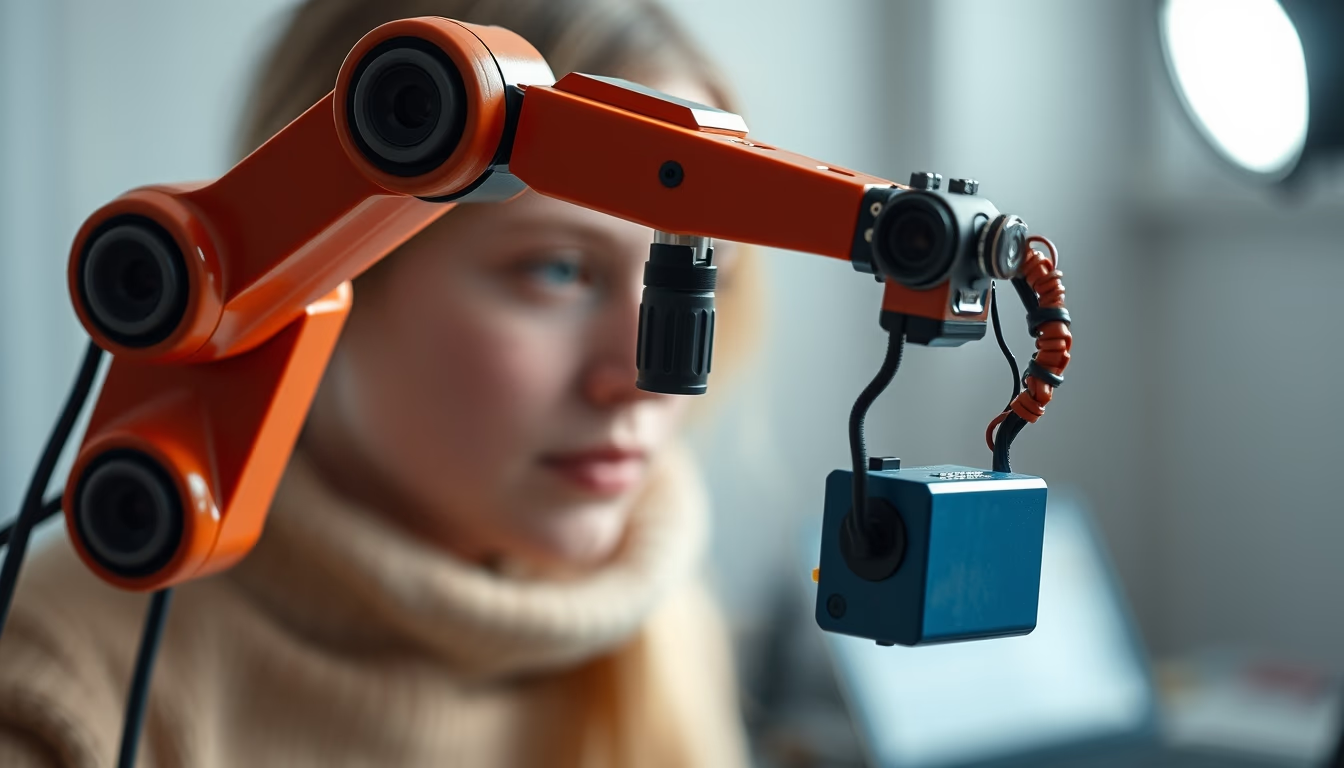
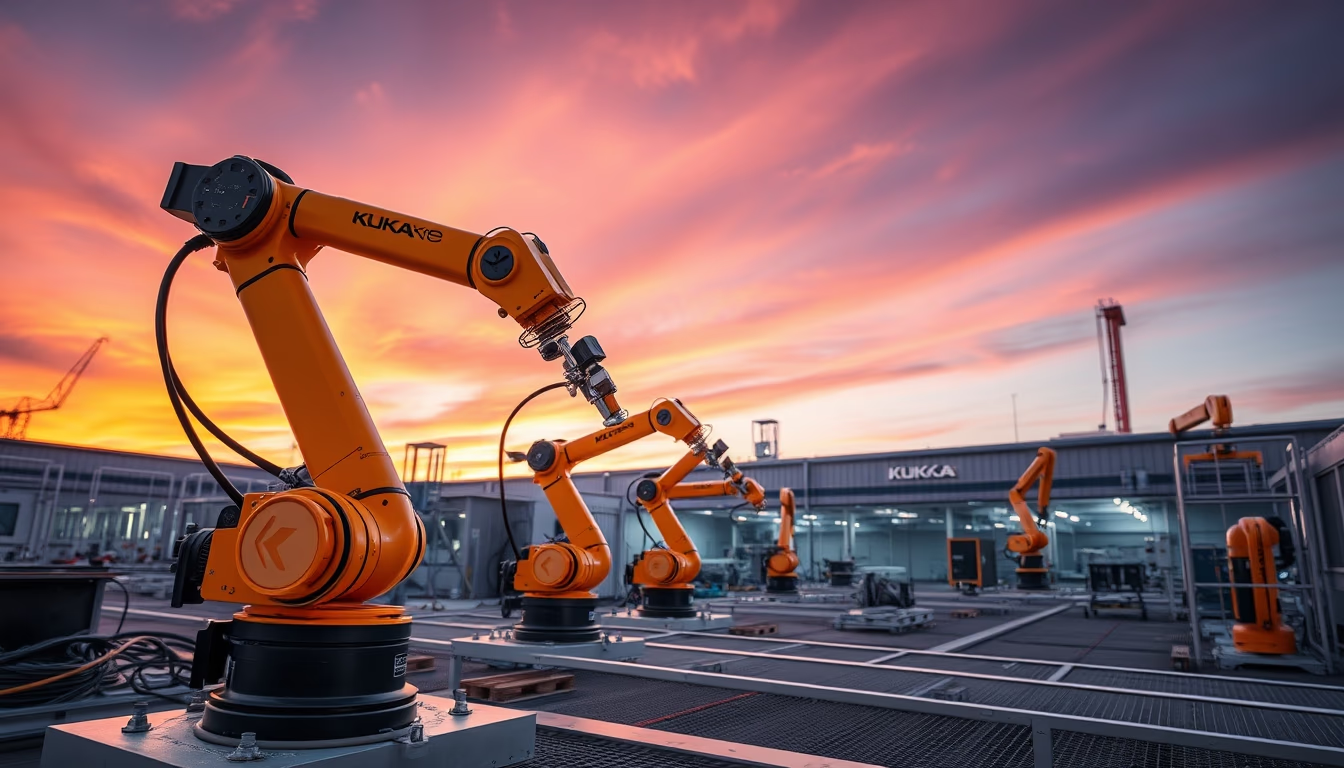
Pick and place robots are widely used in industry to move objects with speed and precision, automating packaging, assembly, and sorting processes.
About this subject
Pick and place robots, also known as pick-and-place manipulators, are automated devices designed to transfer objects from one location to another with high speed and accuracy. They are essential in modern production lines, particularly in the electronics, food, pharmaceutical, and logistics industries. These robots can be configured with different end effectors, such as vacuum suction cups, mechanical grippers, or magnets, allowing them to handle a variety of shapes and materials, from tiny electronic components to boxes and food items.
The technology behind pick and place robots has evolved significantly since the first industrial robotic arms in the 1960s. Current models use vision sensors and artificial intelligence to identify and position objects autonomously, even in unstructured environments. In the electronics industry, for example, pick and place machines can assemble thousands of components per hour onto printed circuit boards with micrometer tolerances. In logistics, collaborative robots perform sorting and packaging tasks alongside humans, increasing efficiency without compromising safety.
Interestingly, the global pick and place robot market was valued at approximately USD 2.5 billion in 2023 and is expected to grow at a compound annual rate of over 10% until 2030, driven by industrial automation and the demand for higher productivity. Leading manufacturers such as Fanuc, ABB, and Epson Robotics dominate the sector, offering solutions ranging from simple Cartesian models to SCARA and delta robots, each with specific advantages in speed and reach.
Frequently Asked Questions
What is the difference between a pick and place robot and a collaborative robot?
A pick and place robot is a type of industrial robot focused on moving objects quickly, while a collaborative robot (cobot) is designed to work safely alongside humans and may or may not perform pick and place functions.
Which industries most commonly use pick and place robots?
The main industries are electronics (PCB assembly), food (packaging and sorting), pharmaceuticals (handling medications), and logistics (order picking).
What is the typical speed of a pick and place robot?
Speed varies by model, but delta robots can achieve up to 200 cycles per minute in light applications, while SCARA and Cartesian robots operate between 30 and 100 cycles per minute.
Direct URL
https://pub-c7d6a6ea828543ac903a74a341ccb2e1.r2.dev/imagens/pick-and-place-robot-film-grain-authentic-p5.avifHow to credit
Include a visible link back to UtilizAí. Copy one of the snippets below:
<a href="https://xn--utiliza-eza.com/en/midia/imagens/pick-and-place-robot-film-grain-authentic-p5">Pick and place robot</a> by <a href="https://xn--utiliza-eza.com">UtilizAí</a>, licensed under <a href="https://creativecommons.org/licenses/by/4.0/">CC BY 4.0</a>.
[Pick and place robot](https://xn--utiliza-eza.com/en/midia/imagens/pick-and-place-robot-film-grain-authentic-p5) by [UtilizAí](https://xn--utiliza-eza.com), CC BY 4.0
License: CC-BY-4.0