Particle physics detector
1344×768 · AVIF · CC BY 4.0
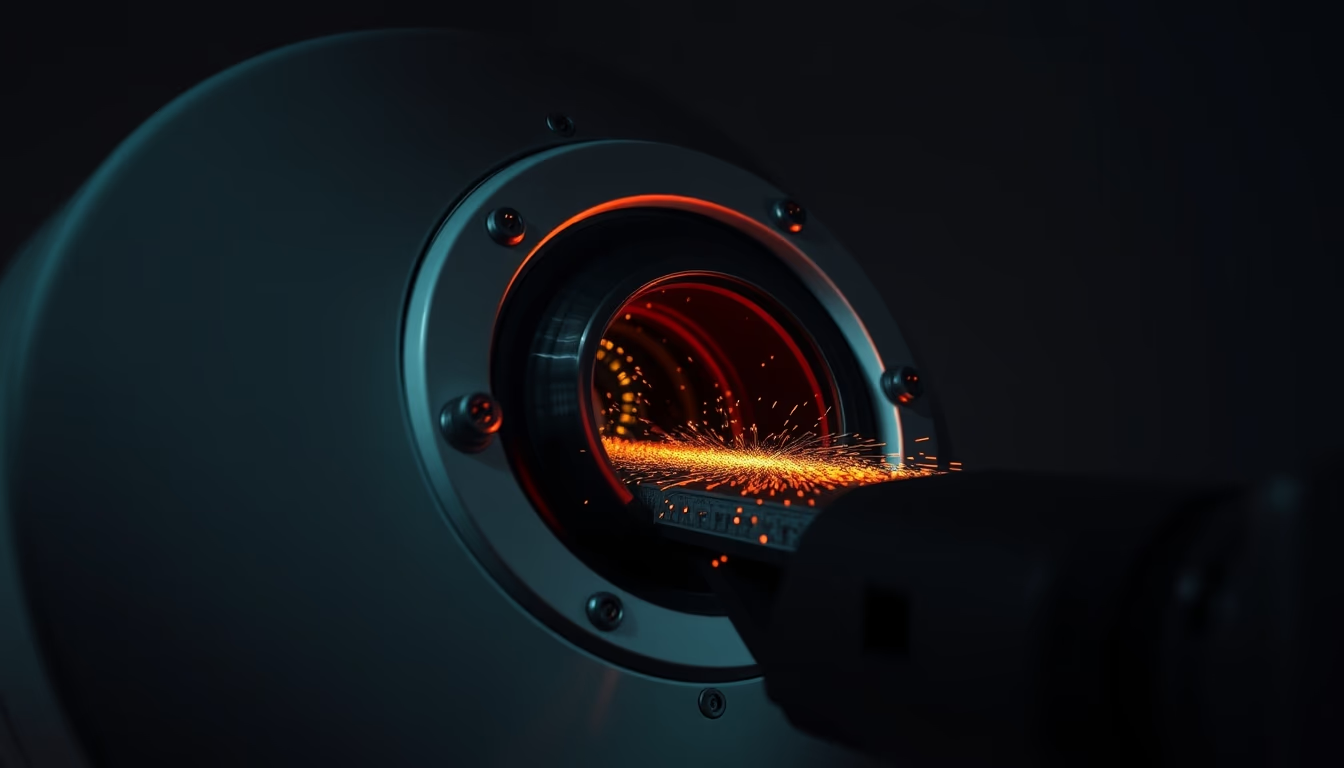
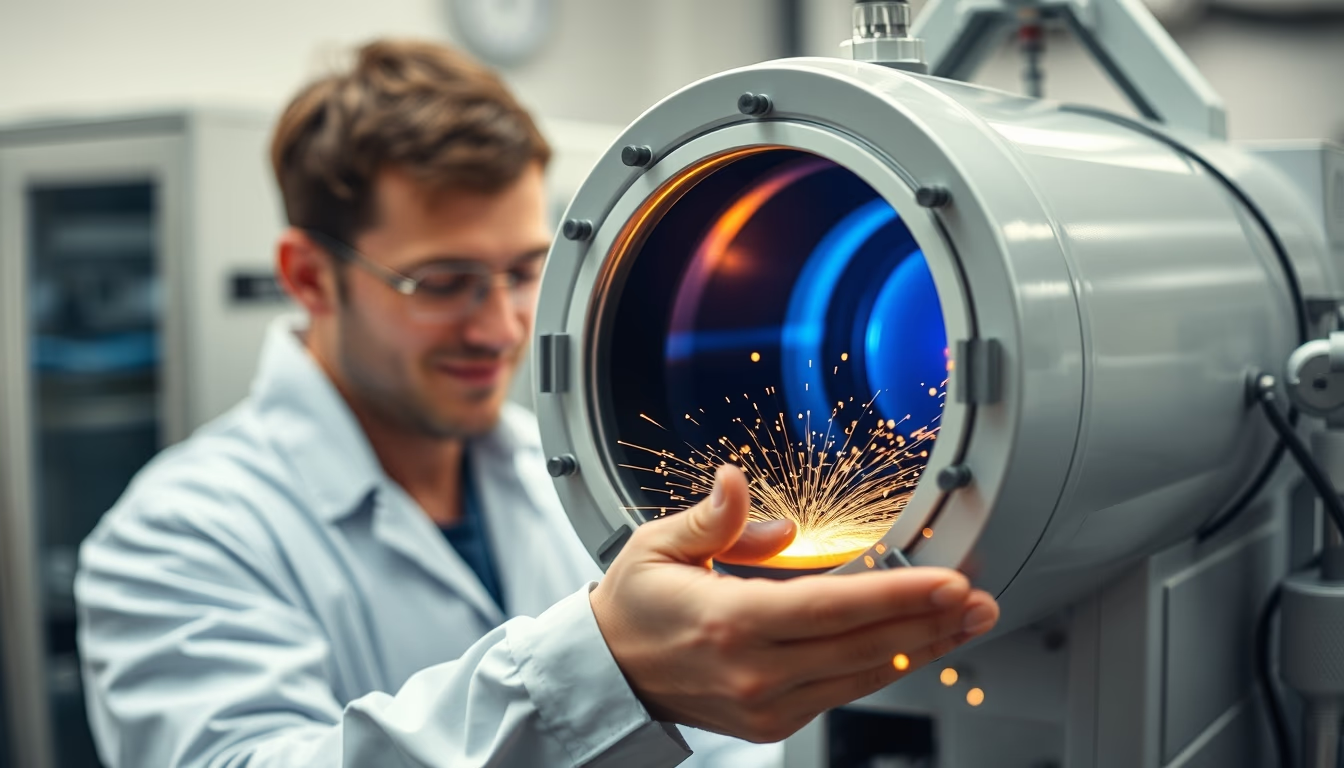
Particle detectors are scientific instruments used to observe and measure subatomic particles, crucial for high-energy physics.
About this subject
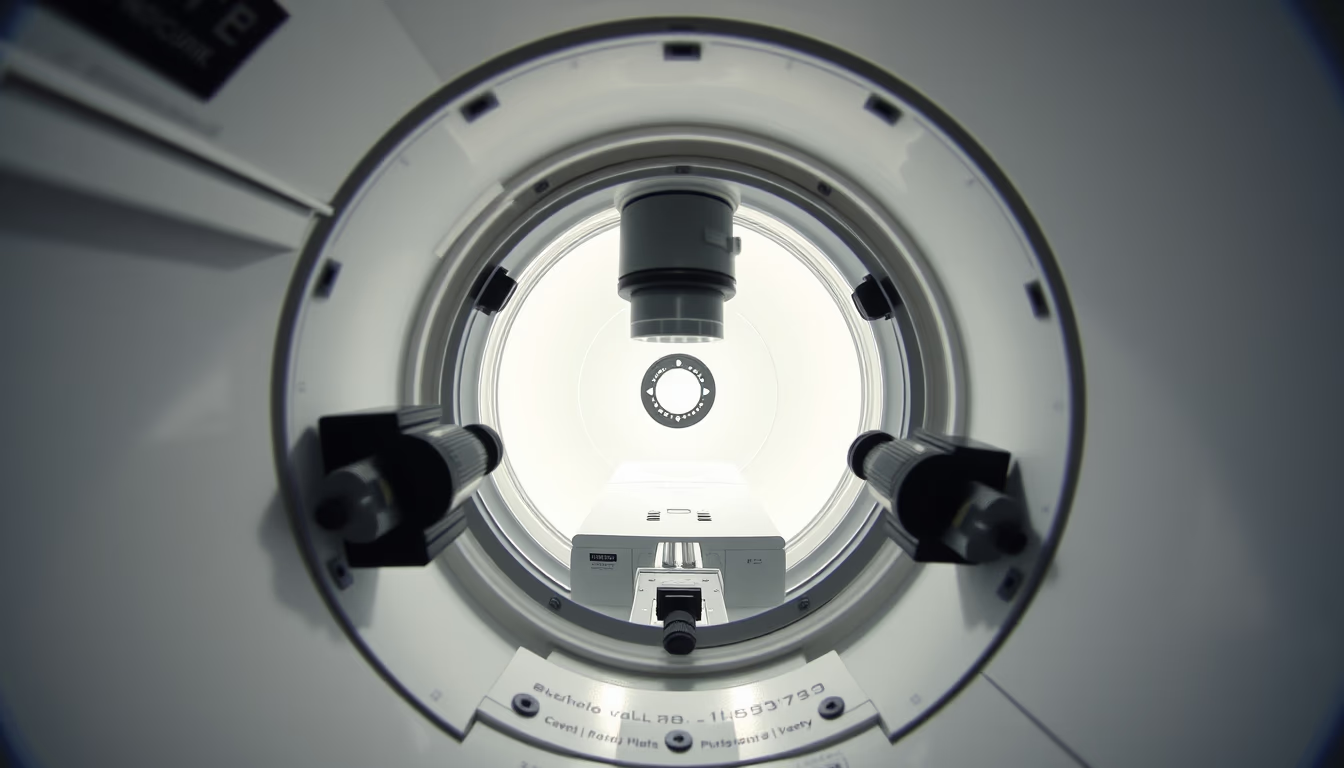
Particle detectors are essential instruments in high-energy physics experiments, such as those conducted at the Large Hadron Collider (LHC) at CERN. The LHC's main detectors, ATLAS and CMS, were designed to record proton collisions at energies up to 13 TeV, leading to the discovery of the Higgs boson in 2012. These detectors are cylindrical structures with multiple layers, each serving a specific function in identifying particles produced in collisions.
The operation of a particle detector combines different technologies. The innermost layer, typically made of silicon detectors, precisely tracks the trajectories of charged particles. Next, electromagnetic and hadronic calorimeters measure the energy deposited by electrons, photons, and hadrons. Finally, muon chambers identify these particles, which penetrate deeply into the detector. Each subdetector contributes to reconstructing the entire event.
One of the biggest operational challenges is the collision rate: about 40 million events per second, generating petabytes of data. Multi-level trigger systems select only the most promising events, reducing the volume for storage and later analysis. Without these filtering systems, it would be impossible to process all the generated information.
Beyond the Higgs discovery, particle detectors are crucial for searching for new particles, such as dark matter candidates, and for studying phenomena like CP violation and quark-gluon plasma. Specialized detectors, such as LHCb and ALICE, focus on specific aspects, expanding our understanding of the fundamental forces and components of matter.
Frequently Asked Questions
How does a particle detector work?
A particle detector has multiple layers: the inner layer tracks charged particles, calorimeters measure energy, and muon chambers identify muons. Combining this information allows the reconstruction of each particle's trajectory and nature.
What is the largest particle detector in the world?
The largest detector currently is ATLAS at CERN's LHC. It is 46 meters long, 25 meters in diameter, and weighs about 7,000 tonnes. It was one of the detectors that confirmed the existence of the Higgs boson.
What is a calorimeter in a particle detector?
A calorimeter is a subsystem that measures the total energy of particles by absorbing them and converting the energy into an electrical or light signal. Electromagnetic calorimeters measure electrons and photons, while hadronic calorimeters measure protons, neutrons, and pions.
Direct URL
https://pub-c7d6a6ea828543ac903a74a341ccb2e1.r2.dev/imagens/particle-physics-detector-rembrandt-lighting-dramatic-shadows-fresh16.avifHow to credit
Include a visible link back to UtilizAí. Copy one of the snippets below:
<a href="https://xn--utiliza-eza.com/en/midia/imagens/particle-physics-detector-rembrandt-lighting-dramatic-shadows-fresh16">Particle physics detector</a> by <a href="https://xn--utiliza-eza.com">UtilizAí</a>, licensed under <a href="https://creativecommons.org/licenses/by/4.0/">CC BY 4.0</a>.
[Particle physics detector](https://xn--utiliza-eza.com/en/midia/imagens/particle-physics-detector-rembrandt-lighting-dramatic-shadows-fresh16) by [UtilizAí](https://xn--utiliza-eza.com), CC BY 4.0
License: CC-BY-4.0