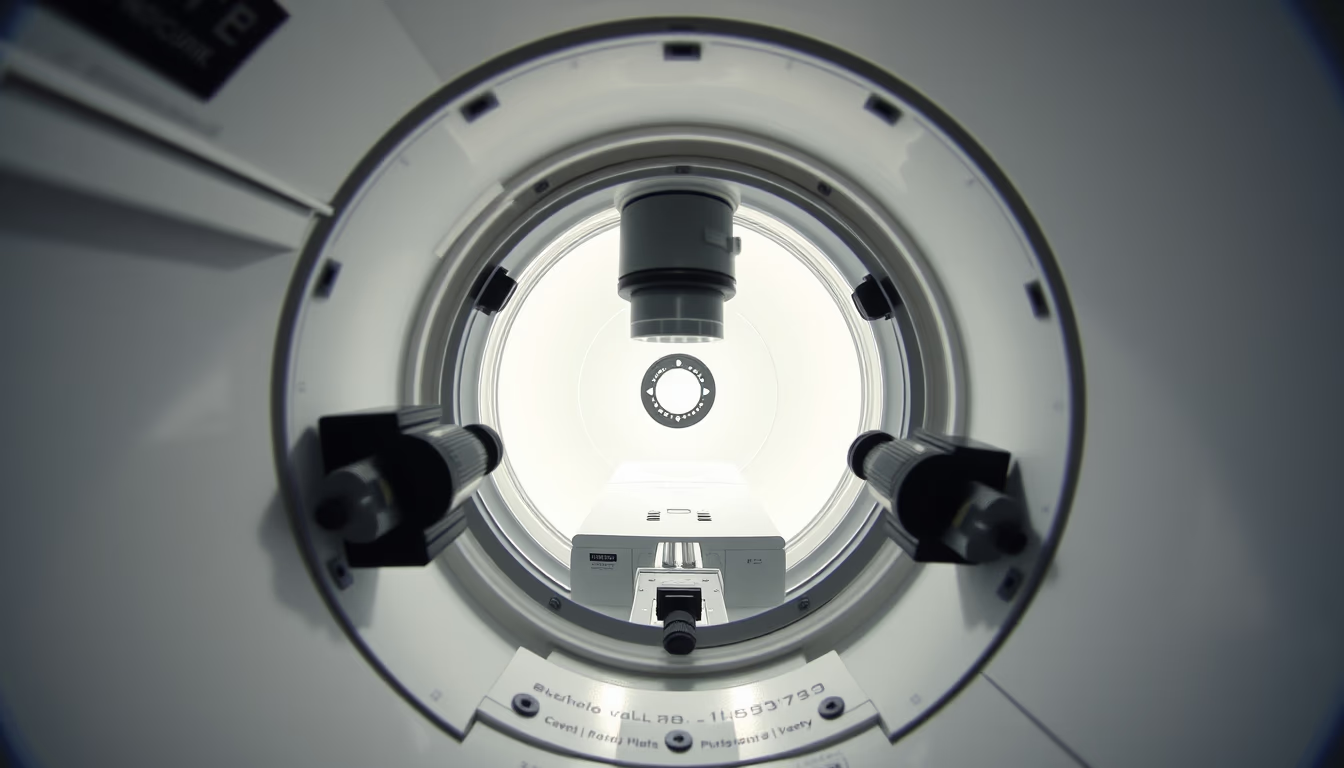
Particle physics detector
1344×768 · AVIF · CC BY 4.0
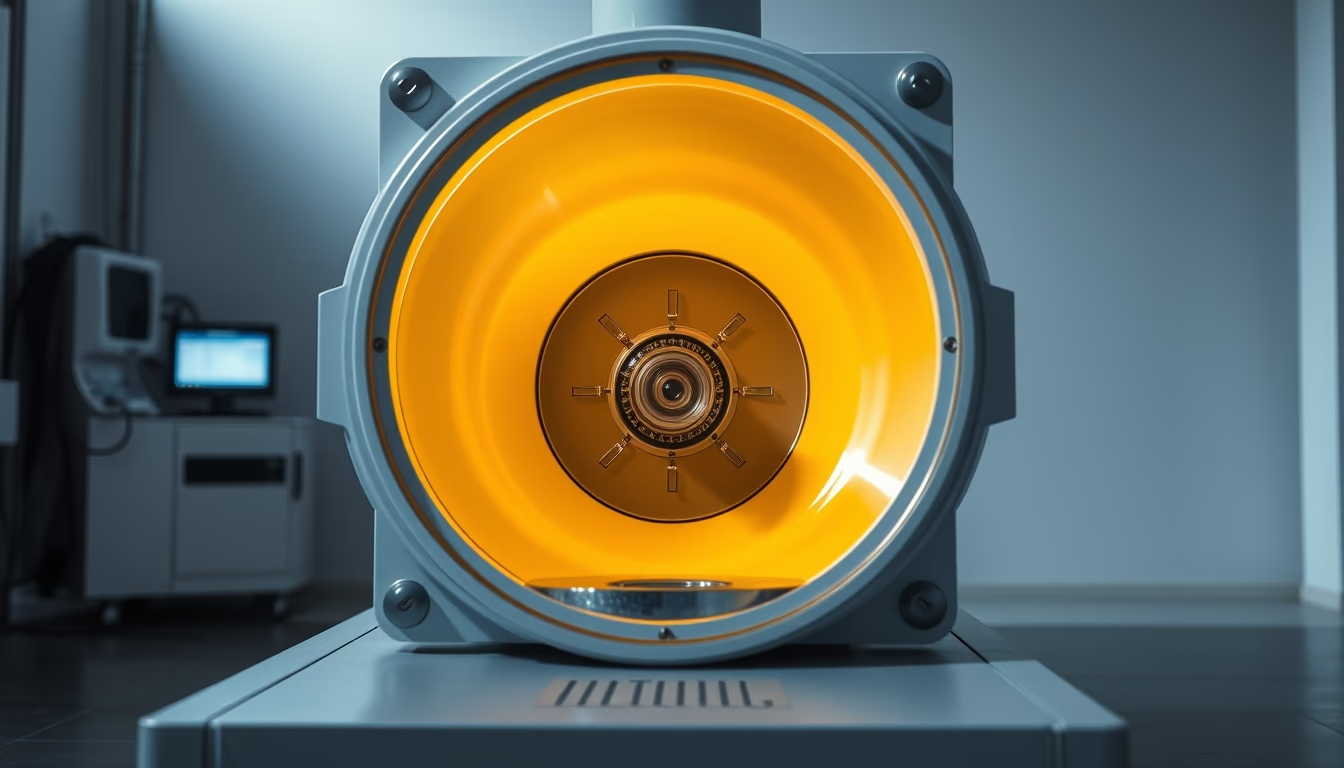
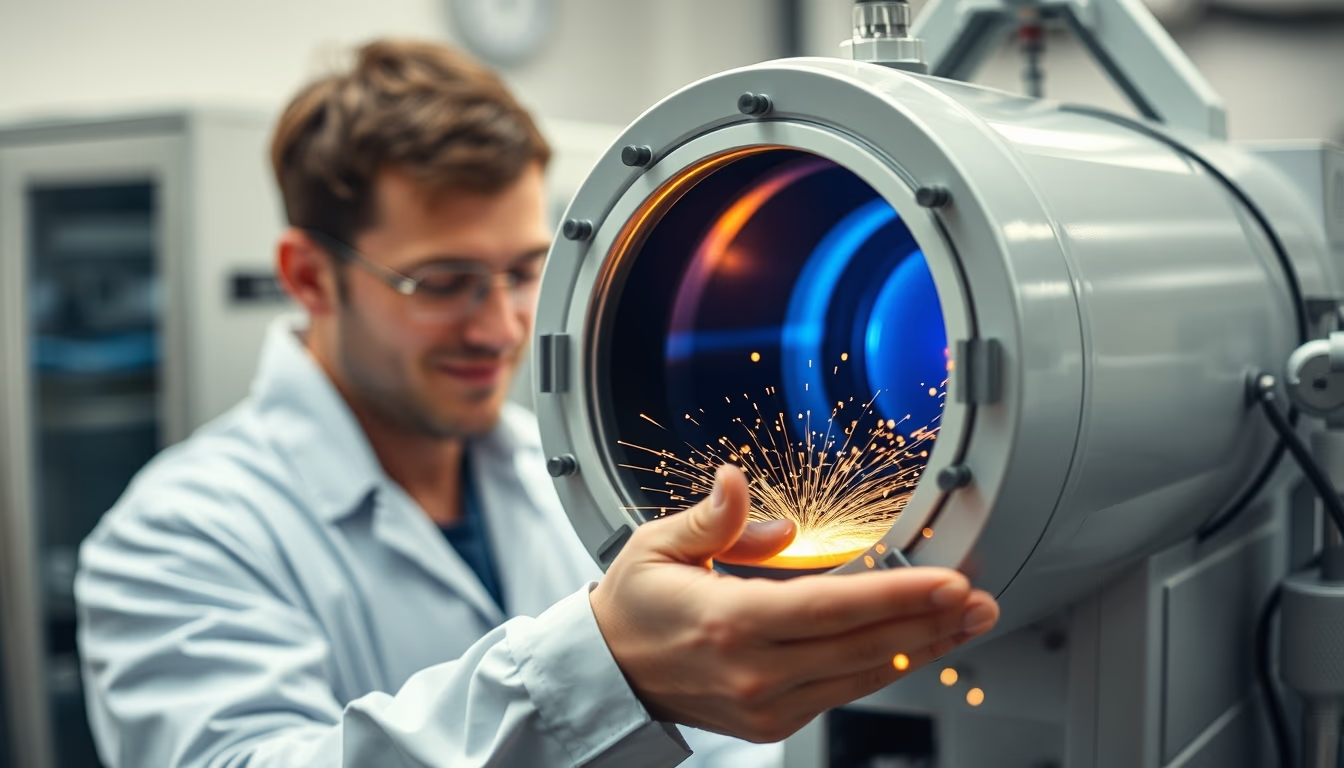
Particle physics detectors are complex instruments used in accelerators like the LHC to identify and measure subatomic particles.
About this subject
Particle physics detectors are highly specialized systems designed to observe and record the products of particle collisions in accelerators like the Large Hadron Collider (LHC) at CERN. These detectors act as giant three-dimensional cameras that capture the trajectories, energies, and types of particles generated in collisions at near-light speeds. They combine different technologies, such as calorimeters to measure energy, wire chambers to track charged particles, and time-of-flight detectors to identify mass. The modular, layered design is essential: each layer specializes in detecting a specific type of particle or property. For example, the ATLAS detector, one of the largest ever built, is 44 meters long and 25 meters tall, weighing 7,000 tonnes. It uses a superconducting magnetic field to bend the paths of charged particles, allowing calculation of their charge-to-mass ratio. Another example is CMS, which uses a 4 Tesla solenoid magnet to achieve precise measurements of muons and electrons. The data collected by these detectors is processed by trigger systems that select rare events, such as the production of the Higgs boson, discovered in 2012. Without these detectors, it would be impossible to test the Standard Model of particle physics or search for new physics beyond it. Miniaturization and the use of silicon in vertex detectors allow pinpointing decay points of short-lived particles like bottom quarks. Constant calibration and shielding against background radiation are ongoing technical challenges.
Frequently Asked Questions
How does a particle detector work?
It records the trajectories and energies of particles created in collisions using different sensitive layers, such as calorimeters and tracking chambers, and a magnetic field to bend charged particles, allowing identification of their momentum and charge.
What is the largest particle detector in the world?
The ATLAS detector at CERN's LHC is one of the largest, measuring 44 meters in length, 25 meters in height, and weighing 7,000 tonnes. It played a key role in the discovery of the Higgs boson.
What are the main types of detectors used at the LHC?
The main ones are general-purpose detectors like ATLAS and CMS, plus specialized detectors such as LHCb (for bottom quark physics) and ALICE (for quark-gluon plasma).
Direct URL
https://pub-c7d6a6ea828543ac903a74a341ccb2e1.r2.dev/imagens/particle-physics-detector-minimalist-composition-fresh2.avifHow to credit
Include a visible link back to UtilizAí. Copy one of the snippets below:
<a href="https://xn--utiliza-eza.com/en/midia/imagens/particle-physics-detector-minimalist-composition-fresh2">Particle physics detector</a> by <a href="https://xn--utiliza-eza.com">UtilizAí</a>, licensed under <a href="https://creativecommons.org/licenses/by/4.0/">CC BY 4.0</a>.
[Particle physics detector](https://xn--utiliza-eza.com/en/midia/imagens/particle-physics-detector-minimalist-composition-fresh2) by [UtilizAí](https://xn--utiliza-eza.com), CC BY 4.0
License: CC-BY-4.0