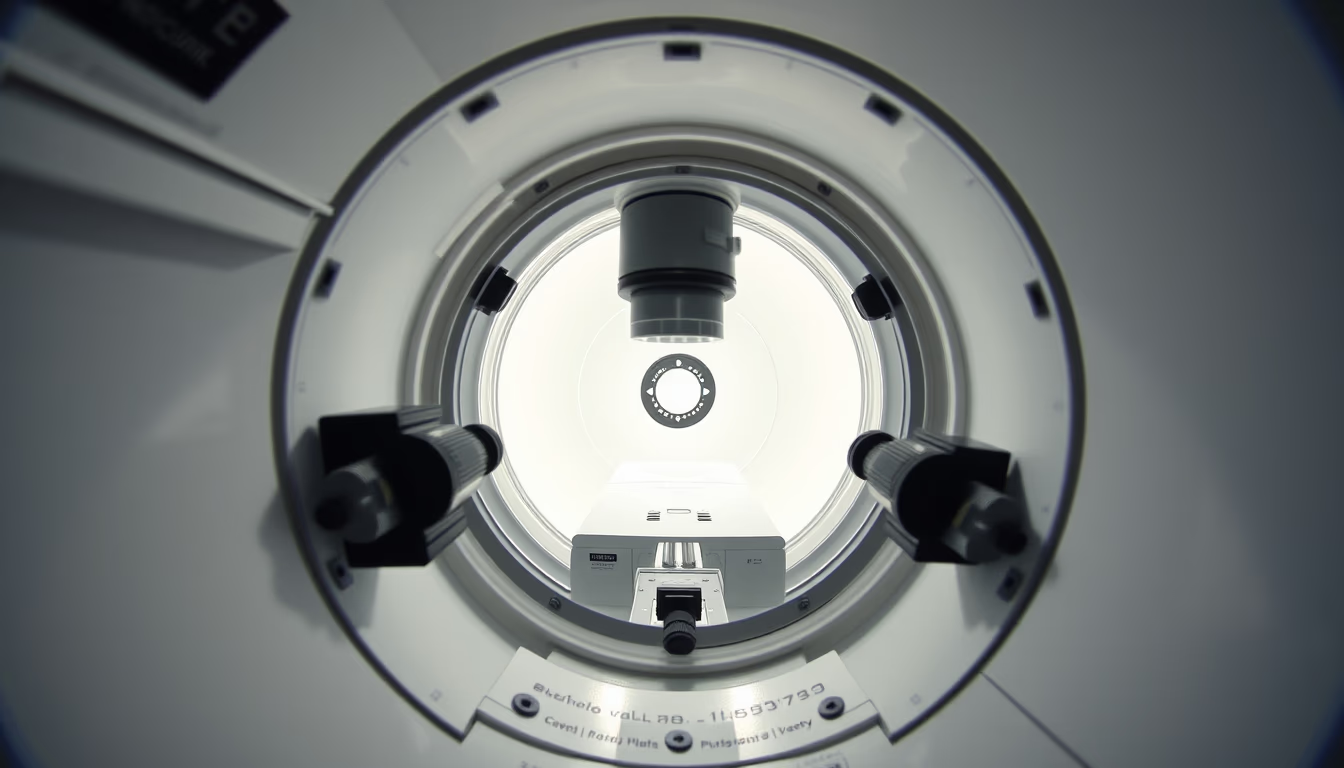
Particle physics detector
1344×768 · AVIF · CC BY 4.0
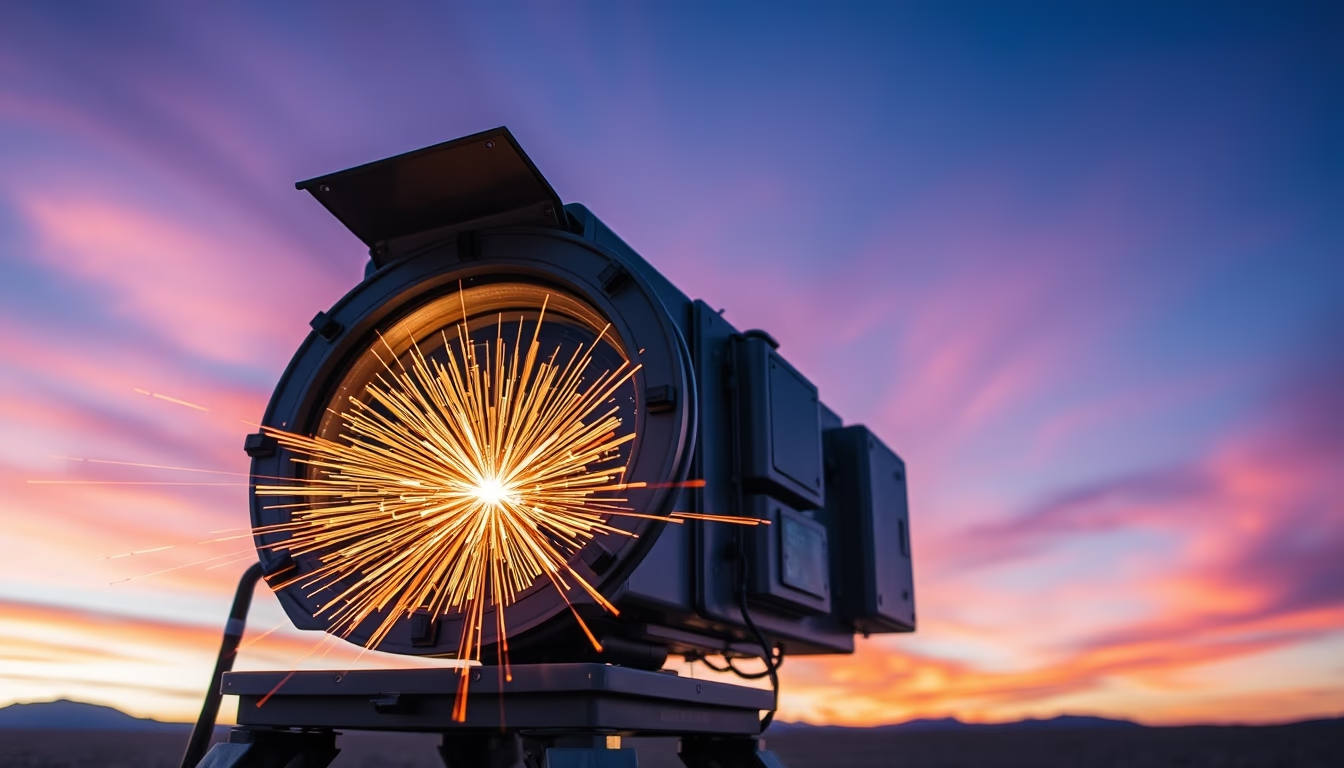
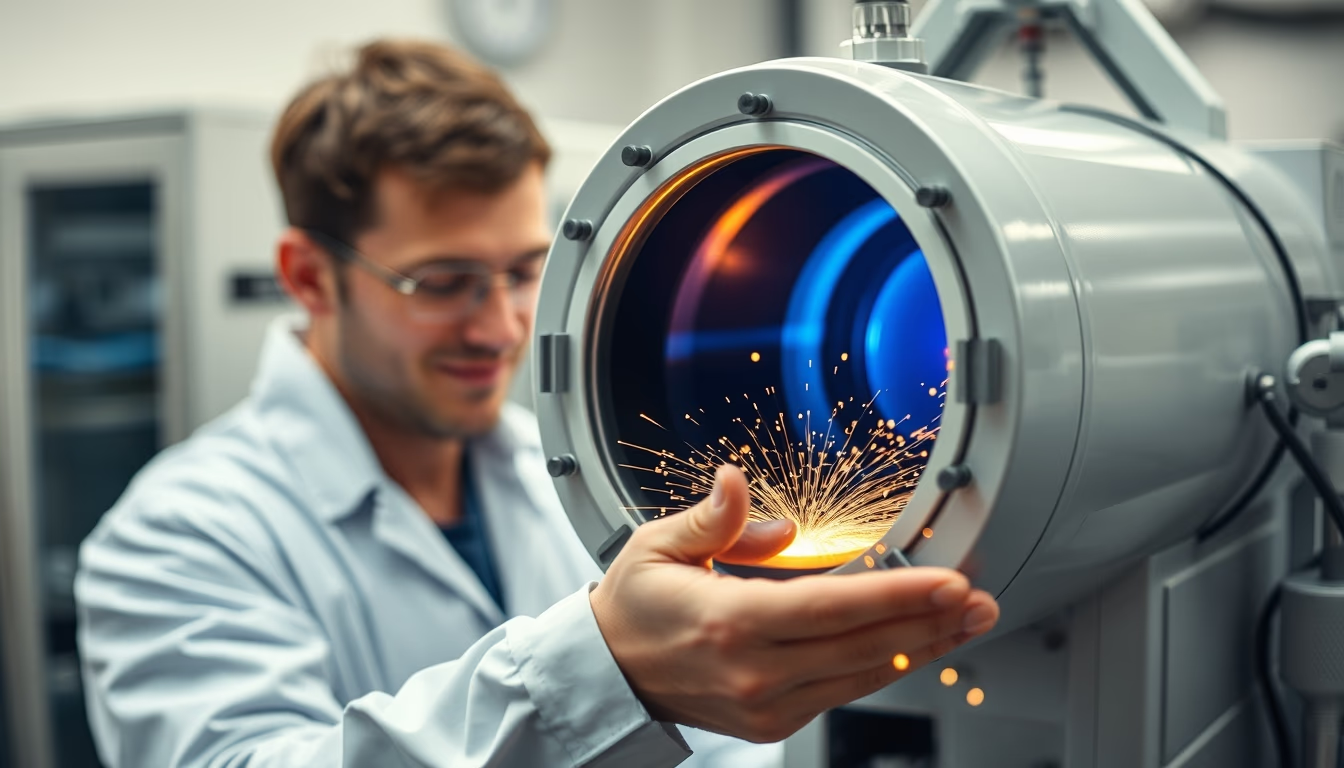
Particle physics detectors are complex instruments that record subatomic particle collisions in accelerators like the LHC.
About this subject
Particle physics detectors are sophisticated systems designed to measure and identify particles resulting from high-energy collisions. They are essential for experiments at accelerators like the Large Hadron Collider (LHC) at CERN, where protons collide at near-light speeds. Each detector comprises multiple layers of subsystems specialized in detecting different particles, such as electrons, muons, quarks, and neutrinos.
Modern detectors employ technologies like time projection chambers (TPC), electromagnetic and hadronic calorimeters, and silicon trackers for precise tracking. For instance, the ATLAS detector, one of the largest ever built, measures 46 meters in length and 25 meters in height, weighing 7,000 tonnes. It uses a superconducting magnetic field to bend charged particle trajectories, allowing momentum measurement. CMS, even more compact and heavy at 14,000 tonnes, uses a solenoidal magnet.
In addition to the ATLAS and CMS giants, specialized detectors exist, such as ALICE, designed to study quark-gluon plasma, and LHCb, focusing on Z boson physics and matter-antimatter asymmetry. These instruments generate enormous data volumes: the LHC produces about 30 petabytes of data per year, requiring sophisticated trigger systems and grid computing to filter relevant events. The discovery of the Higgs boson in 2012, which earned the Nobel Prize for Higgs and Englert, was made possible by these detectors.
Culturally, particle detectors represent the pinnacle of engineering and scientific collaboration, involving thousands of researchers from dozens of countries. CERN houses the world's largest detectors, CMS and ATLAS, which are landmarks of human curiosity about the fundamental constituents of matter. Notably, each detector also contributes to technological advances in areas like medical imaging (PET scans derive from detection techniques) and distributed computing.
Frequently Asked Questions
How does a particle detector work?
A particle detector records the trajectories, energies, and identities of particles produced in collisions. It combines multiple subsystems, such as trackers and calorimeters, to reconstruct each event. Each particle interacts differently with materials, enabling identification.
What is the largest particle detector in the world?
The largest particle detector in operation is the CMS (Compact Muon Solenoid) at the LHC, with 21 m in length, 15 m in diameter, and 14,000 tonnes. ATLAS is slightly larger in length (46 m) and diameter (25 m) but less heavy (7,000 tonnes).
What important discoveries have been made with particle detectors?
The most famous is the Higgs boson in 2012 by ATLAS and CMS. Others include the top quark observation, matter-antimatter asymmetry at LHCb, and quark-gluon plasma study at ALICE. These detectors also confirmed the Standard Model.
Direct URL
https://pub-c7d6a6ea828543ac903a74a341ccb2e1.r2.dev/imagens/particle-physics-detector-long-exposure-fresh12.avifHow to credit
Include a visible link back to UtilizAí. Copy one of the snippets below:
<a href="https://xn--utiliza-eza.com/en/midia/imagens/particle-physics-detector-long-exposure-fresh12">Particle physics detector</a> by <a href="https://xn--utiliza-eza.com">UtilizAí</a>, licensed under <a href="https://creativecommons.org/licenses/by/4.0/">CC BY 4.0</a>.
[Particle physics detector](https://xn--utiliza-eza.com/en/midia/imagens/particle-physics-detector-long-exposure-fresh12) by [UtilizAí](https://xn--utiliza-eza.com), CC BY 4.0
License: CC-BY-4.0