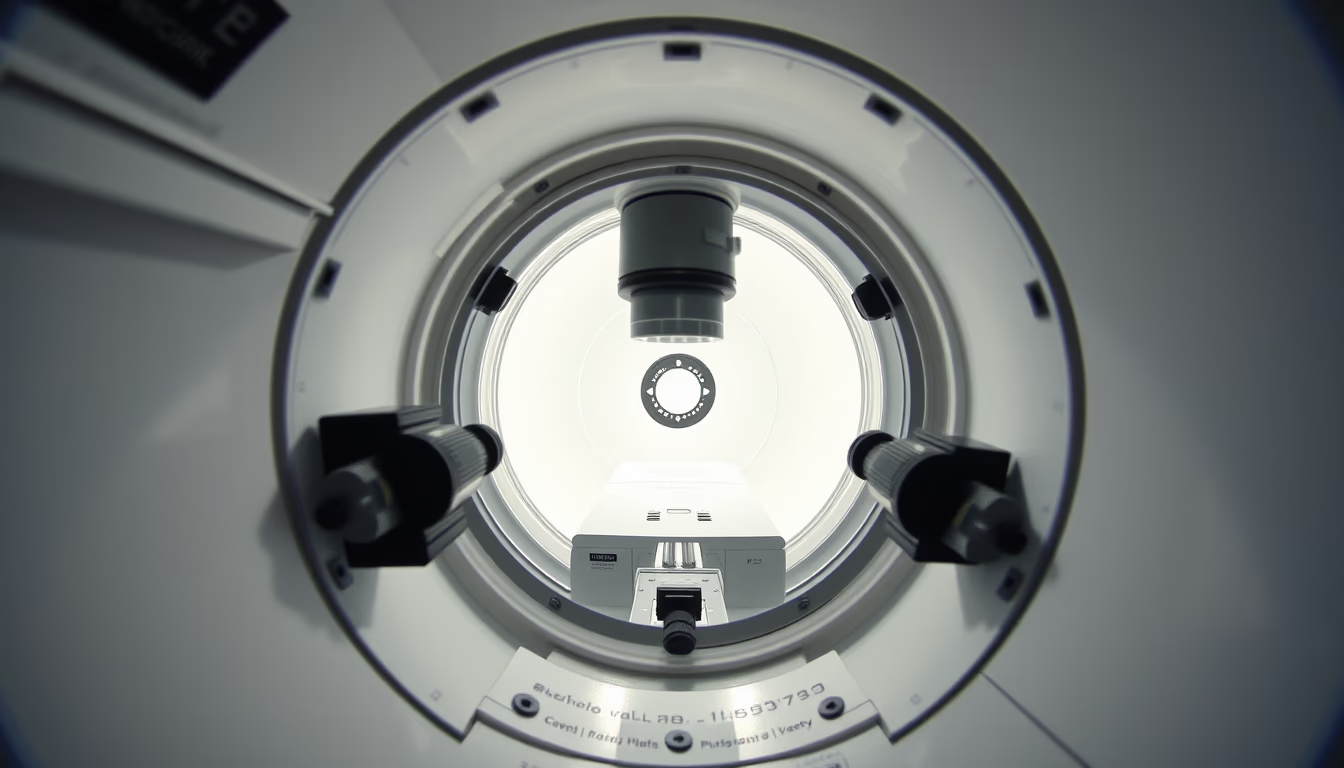
Particle physics detector
1344×768 · AVIF · CC BY 4.0
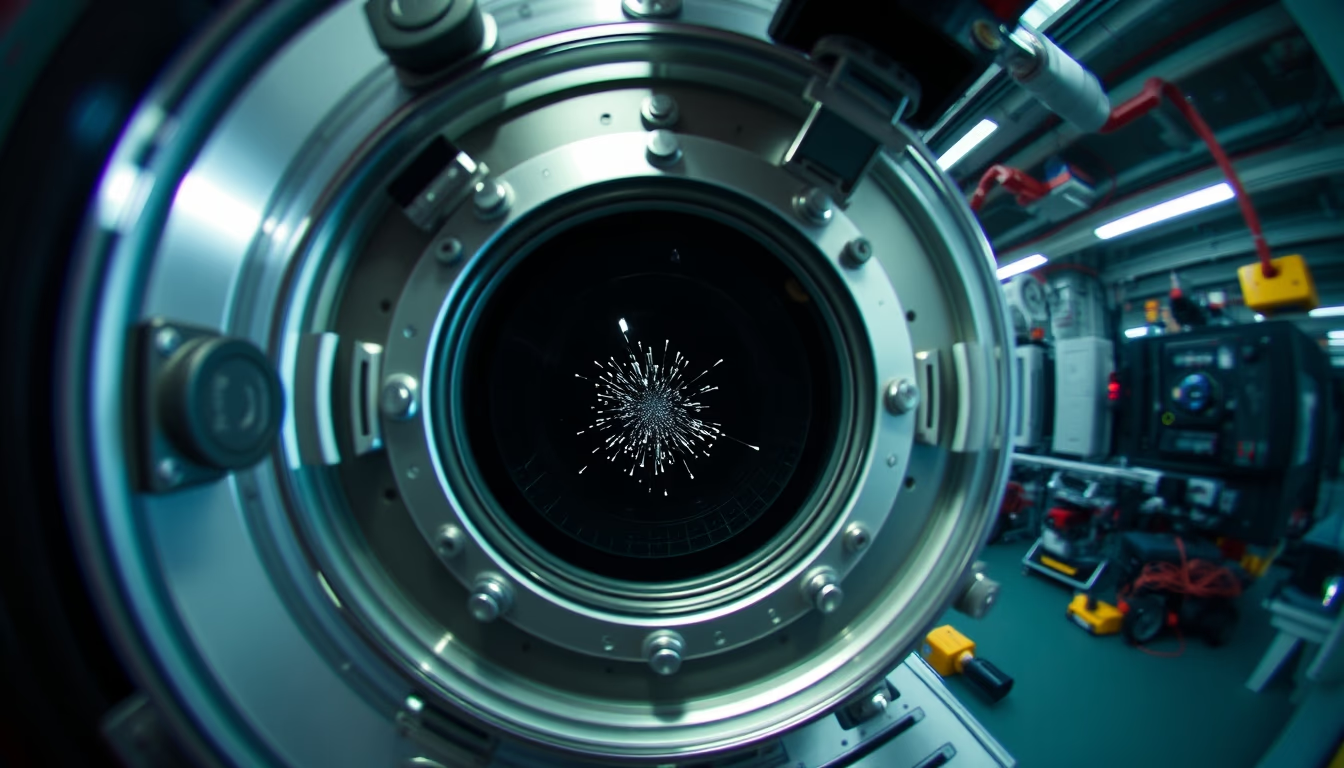
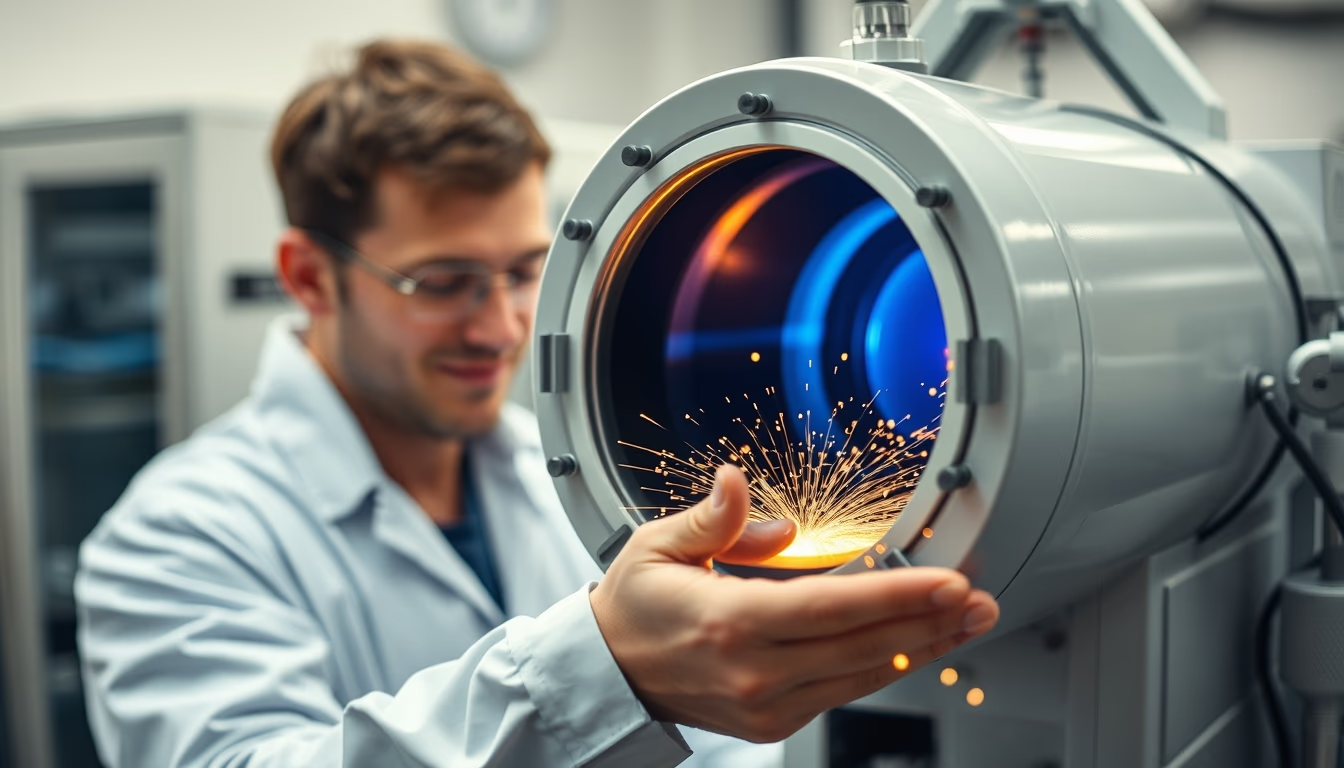
Particle detectors like ATLAS at CERN's LHC are colossal instruments that capture proton collisions to study fundamental physics.
About this subject
Particle detectors are key components at accelerators like the Large Hadron Collider (LHC) at CERN, straddling the French-Swiss border. They function as ultra-precise three-dimensional cameras, recording the trajectories and energies of particles produced in collisions at near-light speed. The ATLAS detector, for instance, measures 46 meters in length, 25 meters in diameter, and weighs 7,000 tonnes. Its layered concentric structure identifies different particles: the calorimeter measures energy, the muon spectrometer detects penetrating particles, and the inner tracker reconstructs paths. In 2012, the ATLAS and CMS detectors announced the discovery of the Higgs boson, a particle that gives mass to others, confirming the Standard Model of physics. Every second, the LHC produces 40 million collisions, but only a fraction is stored for analysis. The generated data amounts to 30 petabytes per year, processed by a global computing grid. Beyond fundamental physics, detector technologies have applications in medicine (PET scans), security, and industry.
Frequently Asked Questions
What is a particle detector?
It is a scientific instrument used in accelerators to identify and measure the properties of subatomic particles produced in high-energy collisions.
How does a detector like ATLAS work?
It has concentric layers of sensors that track trajectories, measure energy, and identify particles such as electrons, muons, and photons, recording each collision event.
Where are the world's largest particle detectors located?
The largest are at CERN's LHC on the French-Swiss border, including ATLAS, CMS, ALICE, and LHCb, each tens of meters in diameter and weighing thousands of tonnes.
Direct URL
https://pub-c7d6a6ea828543ac903a74a341ccb2e1.r2.dev/imagens/particle-physics-detector-fish-eye-wide-angle-fresh14.avifHow to credit
Include a visible link back to UtilizAí. Copy one of the snippets below:
<a href="https://xn--utiliza-eza.com/en/midia/imagens/particle-physics-detector-fish-eye-wide-angle-fresh14">Particle physics detector</a> by <a href="https://xn--utiliza-eza.com">UtilizAí</a>, licensed under <a href="https://creativecommons.org/licenses/by/4.0/">CC BY 4.0</a>.
[Particle physics detector](https://xn--utiliza-eza.com/en/midia/imagens/particle-physics-detector-fish-eye-wide-angle-fresh14) by [UtilizAí](https://xn--utiliza-eza.com), CC BY 4.0
License: CC-BY-4.0