Paper texture fiber macro
1344×768 · AVIF · CC BY 4.0
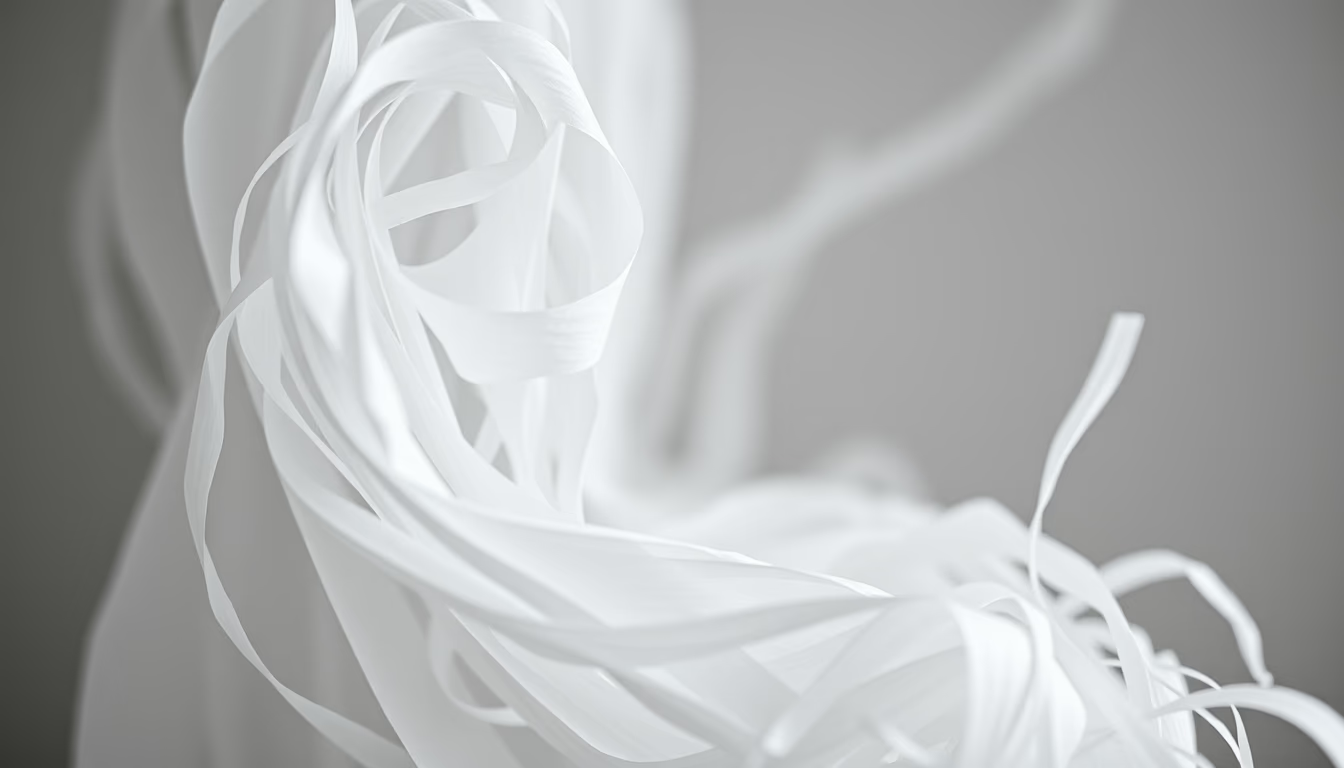
Details of cellulose fibers that make up paper, revealed through macro photography exposing the textile complexity of the material.
About this subject
Cellulose fibers form the structural basis of paper, primarily extracted from trees such as pine and eucalyptus. At macro scale, the intertwined morphology of these fibers becomes visible, varying in length, thickness, and orientation depending on pulp type and manufacturing process. Paper quality is directly linked to fiber homogeneity and strength: fine printing papers, like those used in art books, require long, well-dispersed fibers, while packaging papers prioritize shorter, more compressed fibers.
The paper manufacturing process involves dispersing fibers in water to form a suspension that is spread over a screen. As water drains, fibers randomly interlace to create a sheet. Macro photography reveals this fibrous network, also showing mineral fillers (e.g., calcium carbonate) and sizing agents that affect ink absorption and surface smoothness. Fiber orientation influences properties like tear resistance and stiffness: in folding papers, fibers are preferentially aligned in one direction.
Historically, paper was invented in China by Cai Lun in the 2nd century AD, using fibers from mulberry bark, hemp, and rags. The Industrial Revolution and the development of the Fourdrinier machine in the 19th century enabled mass production with wood fibers. Today, paper recycling involves rehydration and refining of fibers, which shorten with each cycle, limiting recycled paper quality. Macro photography of these fibers not only appeals aesthetically to designers and artists but also serves as a quality control tool in the paper industry.
Frequently Asked Questions
What are cellulose fibers in paper?
Cellulose fibers are chains of glucose molecules extracted from plants, such as trees, that form the basic structure of paper. They interlace during manufacturing to create a strong sheet.
How does macro photography help understand paper?
Macro photography reveals details invisible to the naked eye, such as fiber orientation, mineral fillers, and defects, aiding quality control and surface design for printing.
Why are recycled paper fibers different?
Each recycling cycle shortens and damages cellulose fibers, reducing their strength and interlacing ability. Thus, recycled paper is often lower quality and mixed with virgin fibers.
Direct URL
https://pub-c7d6a6ea828543ac903a74a341ccb2e1.r2.dev/imagens/paper-texture-fiber-macro-studio-editorial-portrait-p2.avifHow to credit
Include a visible link back to UtilizAí. Copy one of the snippets below:
<a href="https://xn--utiliza-eza.com/en/midia/imagens/paper-texture-fiber-macro-studio-editorial-portrait-p2">Paper texture fiber macro</a> by <a href="https://xn--utiliza-eza.com">UtilizAí</a>, licensed under <a href="https://creativecommons.org/licenses/by/4.0/">CC BY 4.0</a>.
[Paper texture fiber macro](https://xn--utiliza-eza.com/en/midia/imagens/paper-texture-fiber-macro-studio-editorial-portrait-p2) by [UtilizAí](https://xn--utiliza-eza.com), CC BY 4.0
License: CC-BY-4.0