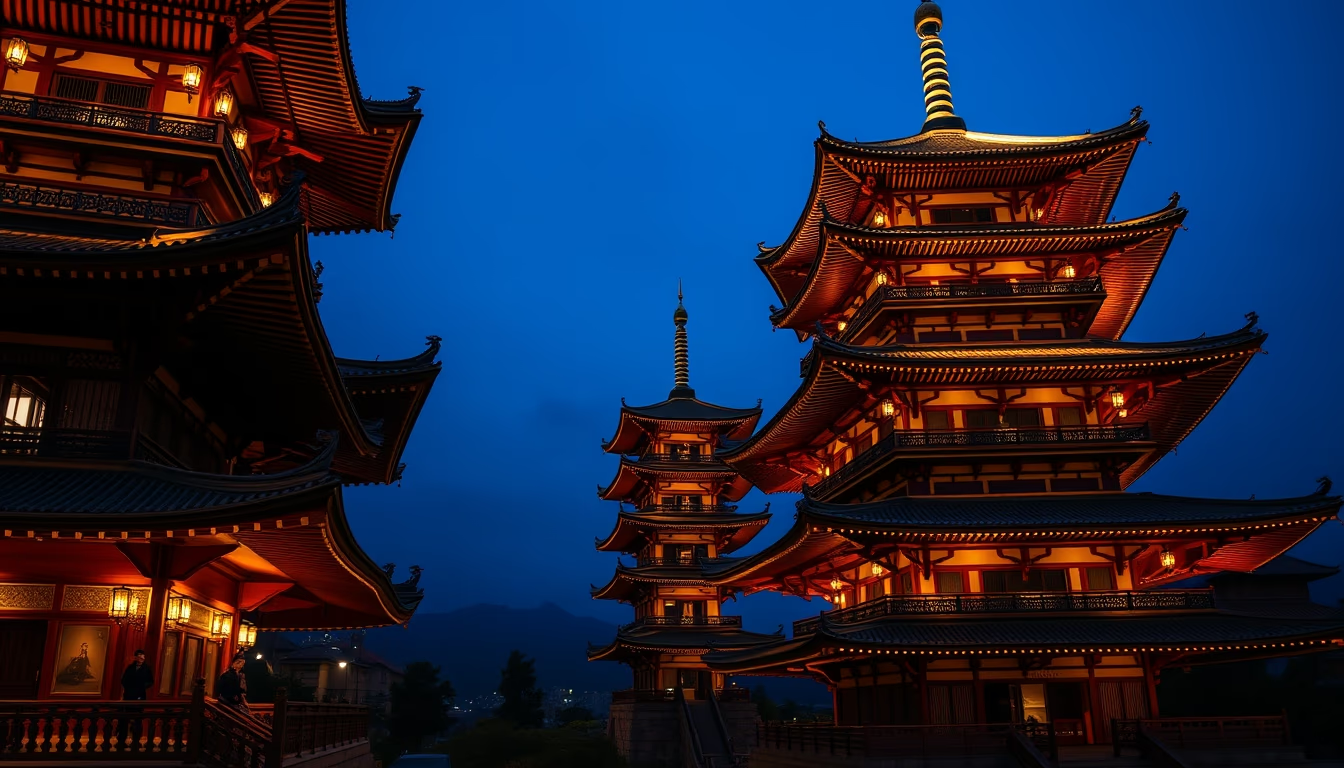
Pagoda multiple stories
1344×768 · AVIF · CC BY 4.0
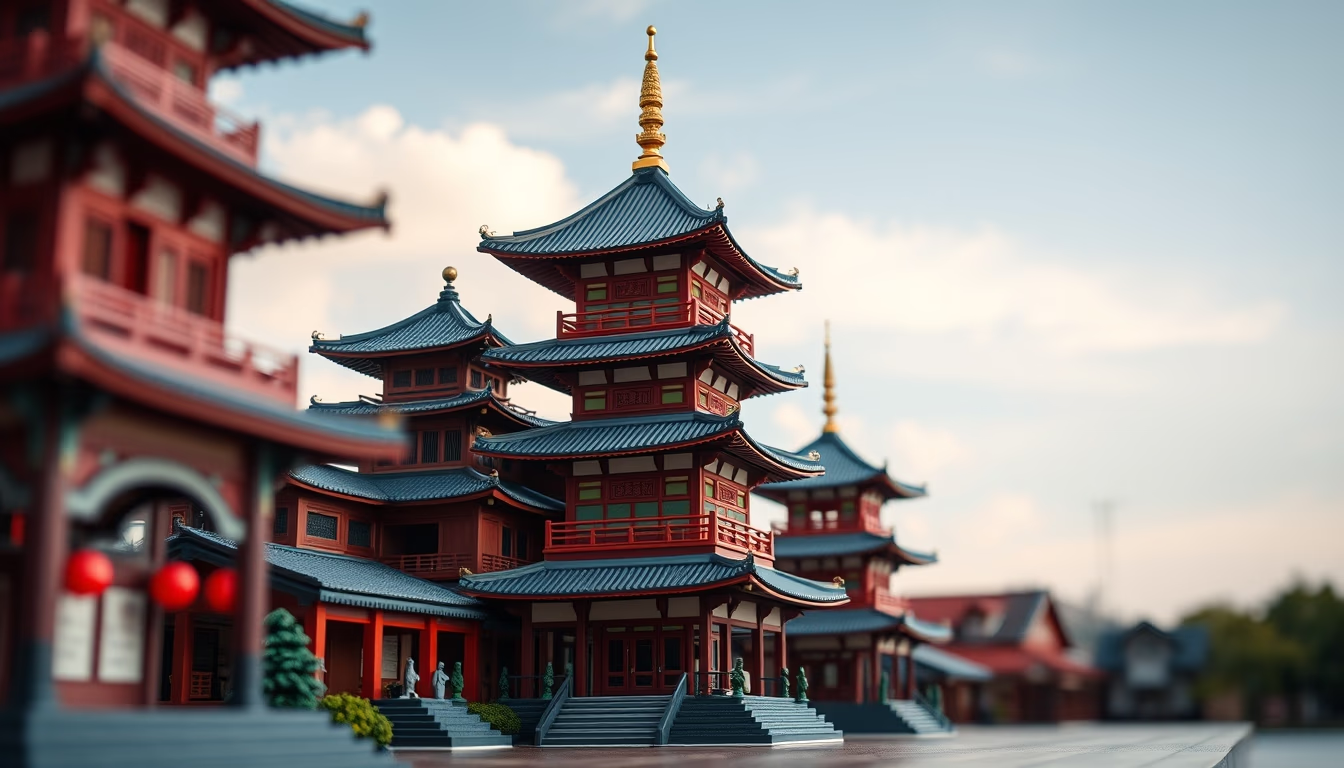
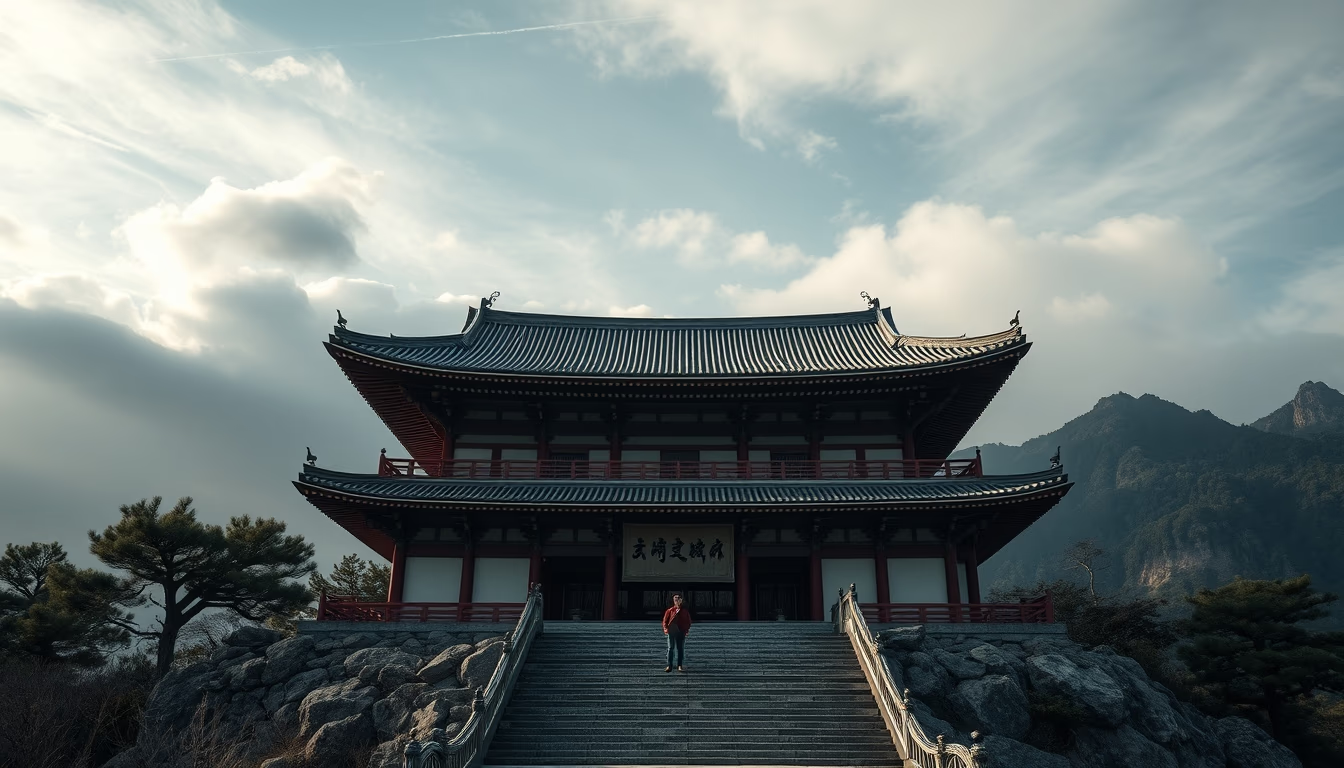
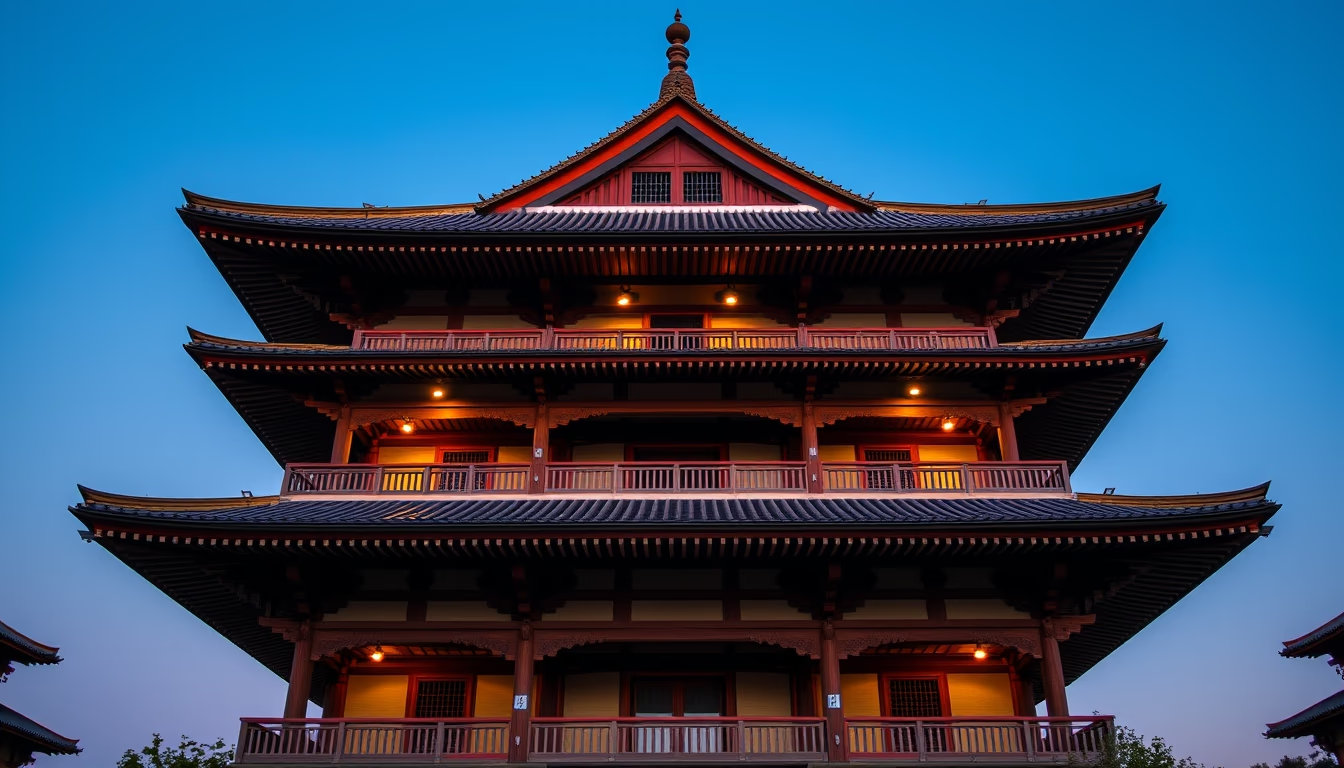
A multi-storied pagoda is an iconic structure of Asian religious architecture, symbolizing harmony and spirituality.
About this subject
Pagodas trace their origins to Indian stupas, Buddhist funerary mounds that enshrined relics. As Buddhism spread to China around the 1st century CE, stupas evolved into multi-storied towers, incorporating Chinese architectural elements such as curved roofs and projecting eaves. From China, the pagoda style spread to Korea, Japan, and other East Asian countries, adapting to local materials and traditions.
Architecturally, pagodas follow symbolic principles. The number of stories is usually odd, ranging from three to thirteen, each representing stages of enlightenment or Buddhist cosmology. Early buildings were made of wood, using flexible joinery and central pillars to withstand earthquakes. Notable examples include the Giant Wild Goose Pagoda in Xi'an, with seven stories, and the Iron Pagoda in Kaifeng, clad in glazed ceramic tiles.
In Japan, pagodas (tō) are typically three or five stories, with roofs that decrease in size, creating an elegant silhouette. The five-story pagoda at Toji Temple in Kyoto, at 55 meters, is the country's tallest. In Korea, stone pagodas (tap) are simpler and more geometric, such as the Dabotap at Bulguksa Temple in Gyeongju, known for its symmetry and carved details.
Culturally, pagodas serve not only as religious structures but also as landscape landmarks and artistic inspiration. They symbolize the connection between heaven and earth, often serving as focal points in Zen gardens and traditional paintings. Even modern architecture occasionally reinterprets their form, demonstrating their lasting influence on global design.
Frequently Asked Questions
Why do pagodas have an odd number of stories?
The odd number of stories, usually from 3 to 13, carries symbolic meaning in Buddhism, representing stages of enlightenment or cosmological elements. Odd numbers are considered sacred and balanced.
How do wooden pagodas withstand earthquakes?
Wooden pagodas use flexible joinery and central pillars that allow the structure to sway and dissipate seismic energy without breaking. This Japanese technique is called 'shinbashira'.
What is the difference between a Chinese and a Japanese pagoda?
Chinese pagodas are generally taller, with glazed ceramic roofs and projecting eaves, while Japanese pagodas (tō) have curved wooden roofs that decrease in size, creating a more compact and elegant profile.
Direct URL
https://pub-c7d6a6ea828543ac903a74a341ccb2e1.r2.dev/imagens/pagoda-multiple-stories-tilt-shift-miniature-fresh4.avifHow to credit
Include a visible link back to UtilizAí. Copy one of the snippets below:
<a href="https://xn--utiliza-eza.com/en/midia/imagens/pagoda-multiple-stories-tilt-shift-miniature-fresh4">Pagoda multiple stories</a> by <a href="https://xn--utiliza-eza.com">UtilizAí</a>, licensed under <a href="https://creativecommons.org/licenses/by/4.0/">CC BY 4.0</a>.
[Pagoda multiple stories](https://xn--utiliza-eza.com/en/midia/imagens/pagoda-multiple-stories-tilt-shift-miniature-fresh4) by [UtilizAí](https://xn--utiliza-eza.com), CC BY 4.0
License: CC-BY-4.0