Old map parchment
1344×768 · AVIF · CC BY 4.0
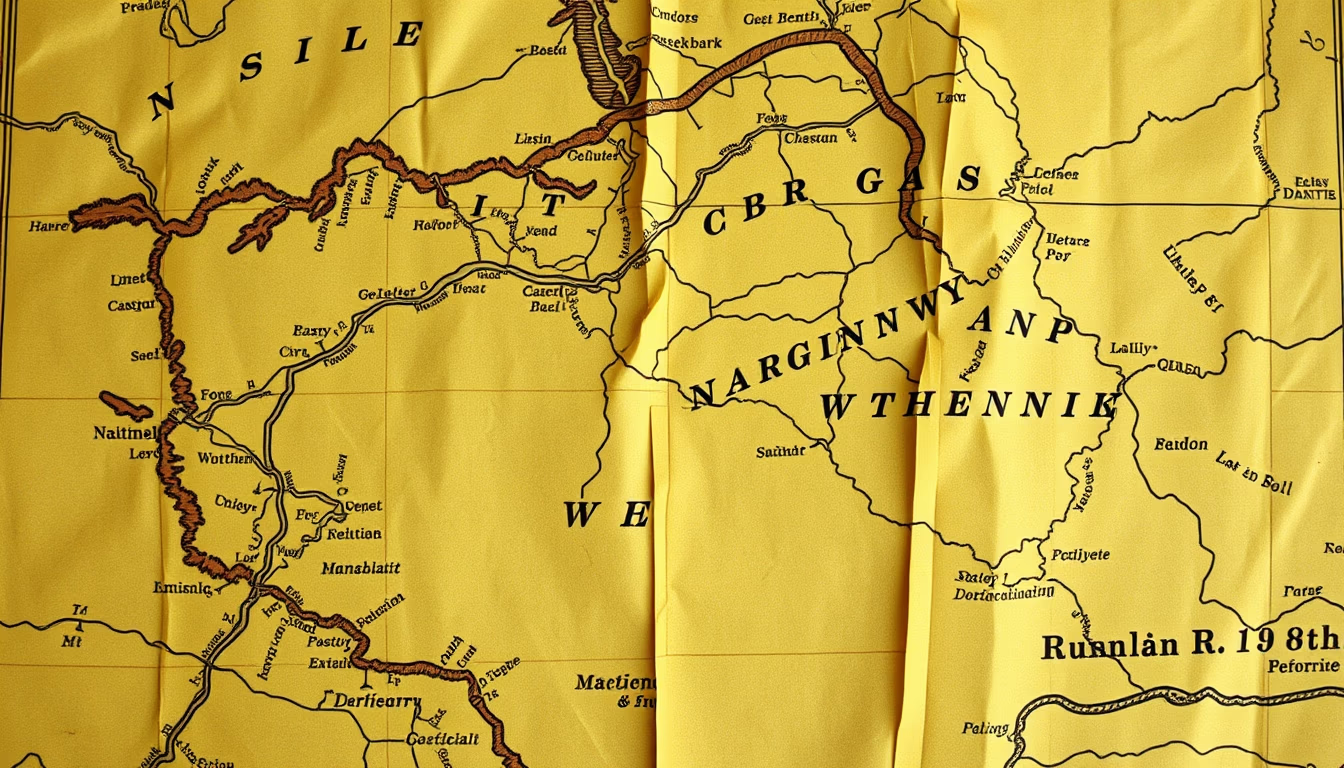
Old map parchments are historical documents that reveal geographical knowledge of past eras, their production and uses.
About this subject
Parchment maps were essential to cartography before paper became widespread. Parchment, made from animal skin (usually sheep, goat, or calf), provided a durable surface for detailed drawings. The preparation process involved washing, stretching, and scraping the skin to create a smooth surface that could accept carbon- or iron-gall-based ink.
During the Middle Ages and the Renaissance, these maps were often hand-illuminated with vibrant colors and ornamental details. Famous examples include the Hereford Mappa Mundi (13th century), depicting the known world with Jerusalem at its center, and the maps of Ptolemy, rediscovered in the 15th century, which influenced European exploration. Many parchment rolls were used in maritime travel, such as portolan charts that mapped ports and coastlines with surprising accuracy for the time.
Preserving parchment maps is challenging due to susceptibility to humidity and insect damage. Today, they are stored under controlled conditions in archives and libraries, such as the National Library of France and the National Archives of Brazil. Studying these documents provides clues about trade, politics, and the worldview of the people who created them, making them invaluable sources for historians and geographers. Interestingly, the word "parchment" derives from Pergamon, a city in Asia Minor where the material was allegedly perfected.
Frequently Asked Questions
How were maps on parchment made?
They were produced from animal skin, which underwent washing, hair removal, stretching, and scraping to create a smooth surface. Then, outlines were drawn with a quill and carbon- or iron-gall-based ink, and often colorful decorations were added using natural pigments.
How durable is parchment compared to paper?
Parchment is much more durable than ordinary paper, lasting for centuries if stored properly away from moisture and pests. Many parchment maps have survived over 500 years, while paper can deteriorate faster due to acidity and fungi.
Why are old parchment maps valuable?
They are valuable due to their rarity, antiquity, and the unique historical information they provide about geography, trade, and medieval knowledge. Additionally, many are artworks with illuminations, increasing their cultural and financial worth.
Direct URL
https://pub-c7d6a6ea828543ac903a74a341ccb2e1.r2.dev/imagens/old-map-parchment-lo-fi-disposable-camera-p6.avifHow to credit
Include a visible link back to UtilizAí. Copy one of the snippets below:
<a href="https://xn--utiliza-eza.com/en/midia/imagens/old-map-parchment-lo-fi-disposable-camera-p6">Old map parchment</a> by <a href="https://xn--utiliza-eza.com">UtilizAí</a>, licensed under <a href="https://creativecommons.org/licenses/by/4.0/">CC BY 4.0</a>.
[Old map parchment](https://xn--utiliza-eza.com/en/midia/imagens/old-map-parchment-lo-fi-disposable-camera-p6) by [UtilizAí](https://xn--utiliza-eza.com), CC BY 4.0
License: CC-BY-4.0