Northeast wind farm turbines against scrubland vegetation
1344×768 · AVIF · CC BY 4.0
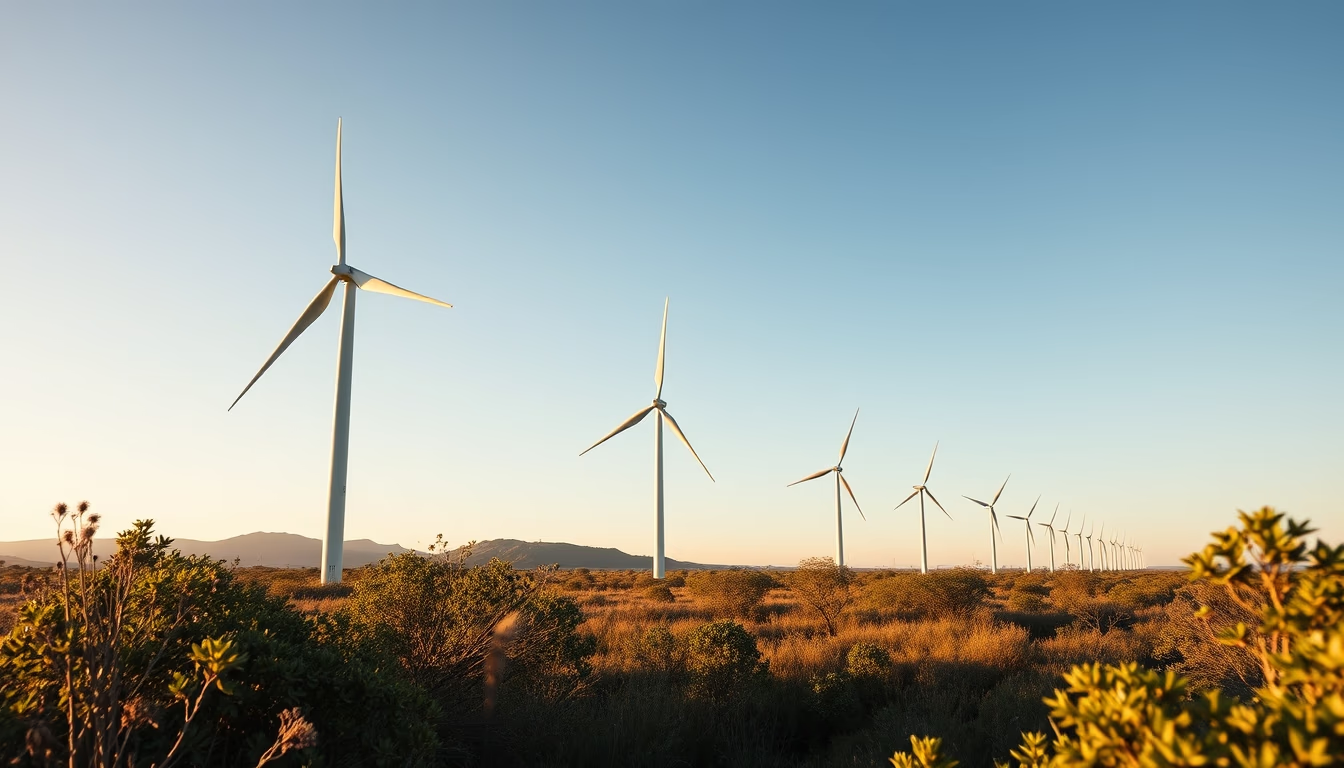
Wind farm in Northeast Brazil with turbines against Caatinga vegetation in the late afternoon.
About this subject
The image shows a wind farm in Northeast Brazil, with modern wind turbines contrasting against the typical vegetation of the Caatinga. The Caatinga is an exclusively Brazilian biome, covering about 10% of the national territory, stretching across states such as Bahia, Pernambuco, Rio Grande do Norte, and Ceará. Its vegetation is adapted to the semi-arid climate, with xerophytic plants like cacti, bromeliads, and small trees that shed leaves during the dry season.
Wind farms in the Northeast take advantage of strong and constant winds, especially during winter, to generate clean energy. The region accounts for over 80% of Brazil's installed wind capacity, with Rio Grande do Norte being the national leader in this sector. Modern turbines can reach up to 100 meters in height with blades over 50 meters long, capable of generating megawatts of electricity.
The combination of wind energy and the Caatinga presents environmental and logistical challenges. Installing wind towers requires controlled deforestation, but studies show that well-planned parks can coexist with local wildlife, such as birds and small mammals. The late afternoon landscape highlights the contrast between the gray turbines and the grayish-green vegetation.
Interestingly, the Caatinga is one of the least protected biomes in Brazil, with less than 8% of its territory in conservation units. The expansion of wind power in the region has sparked debates about socio-environmental impacts but also boosts the local economy through jobs and royalties for municipalities.
Frequently Asked Questions
What is the Caatinga and where is it located?
The Caatinga is an exclusively Brazilian biome characterized by vegetation adapted to semi-arid climates. It covers about 10% of the national territory, mainly in the Northeast, in states such as Bahia, Pernambuco, Ceará, and Rio Grande do Norte.
Why is Northeast Brazil ideal for wind energy?
The region has strong and constant winds, especially during winter, with average speeds ideal for power generation. About 80% of Brazil's installed wind capacity is in the Northeast, with Rio Grande do Norte leading.
What are the environmental impacts of wind farms in the Caatinga?
Installation requires controlled deforestation, but well-planned parks can minimize impacts. Studies show local wildlife, such as birds, can adapt. However, the Caatinga is poorly protected, with less than 8% in conservation units.
Direct URL
https://pub-c7d6a6ea828543ac903a74a341ccb2e1.r2.dev/imagens/northeast-wind-farm-turbines-against-caatinga-vegetation-wide-late-afternoon-5.avifHow to credit
Include a visible link back to UtilizAí. Copy one of the snippets below:
<a href="https://xn--utiliza-eza.com/en/midia/imagens/northeast-wind-farm-turbines-against-caatinga-vegetation-wide-late-afternoon-5">Northeast wind farm turbines against scrubland vegetation</a> by <a href="https://xn--utiliza-eza.com">UtilizAí</a>, licensed under <a href="https://creativecommons.org/licenses/by/4.0/">CC BY 4.0</a>.
[Northeast wind farm turbines against scrubland vegetation](https://xn--utiliza-eza.com/en/midia/imagens/northeast-wind-farm-turbines-against-caatinga-vegetation-wide-late-afternoon-5) by [UtilizAí](https://xn--utiliza-eza.com), CC BY 4.0
License: CC-BY-4.0