Northeast wind farm turbines against scrubland vegetation
1344×768 · AVIF · CC BY 4.0
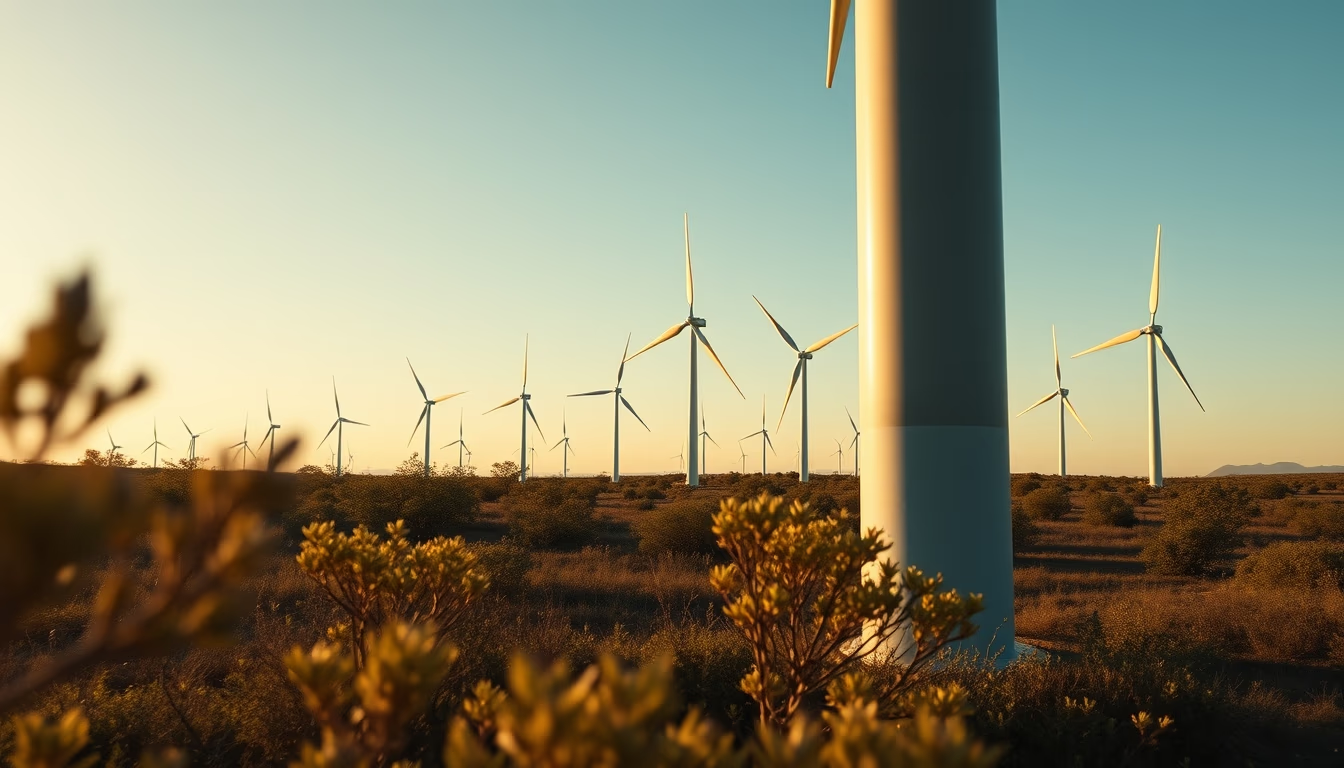
Wind turbines in Brazil's Northeast contrast with Caatinga vegetation, merging renewable energy and a unique biome.
About this subject
Wind farms in Brazil's Northeast, especially in Rio Grande do Norte, Bahia, and Ceará, have reshaped the Caatinga landscape. This region, characterized by prolonged droughts and constant winds, has become one of the world's largest wind energy hubs. By 2023, Brazil reached 30 GW of installed wind capacity, with over 80% in the Northeast. The Caatinga, a uniquely Brazilian biome, features drought-adapted vegetation such as xique-xique, mandacaru, and juazeiro trees. Concrete towers up to 100 meters tall and blades up to 60 meters contrast sharply with the low, thorny scrubland. Installing wind turbines requires controlled clearing and environmental studies to minimize impact on local wildlife, including armadillos, guinea pigs, and migratory birds. The generated energy supplies both the domestic market and the Northeast, reducing reliance on hydroelectric dams during droughts. Wind, once seen as an obstacle to agriculture, is now a strategic resource for sustainable development. Balancing clean energy and biome preservation remains a challenge, requiring technologies like bird collision sensors and soil monitoring.
Frequently Asked Questions
Why is Brazil's Northeast ideal for wind energy?
The region has constant strong winds, especially from June to December, averaging 8 m/s, ideal for power generation. Flat topography and low population density also facilitate wind farm installation.
How does turbine installation affect the Caatinga?
It requires controlled clearing and environmental impact studies. Main concerns include habitat fragmentation, bird collisions, and soil alteration. Measures like collision sensors and ecological corridors help mitigate damage.
What is the installed wind capacity in the Northeast?
As of 2024, the Northeast holds over 25 GW of installed capacity, about 85% of Brazil's total. Rio Grande do Norte leads with over 7 GW, followed by Bahia and Ceará.
Direct URL
https://pub-c7d6a6ea828543ac903a74a341ccb2e1.r2.dev/imagens/northeast-wind-farm-turbines-against-caatinga-vegetation-wide-late-afternoon-3.avifHow to credit
Include a visible link back to UtilizAí. Copy one of the snippets below:
<a href="https://xn--utiliza-eza.com/en/midia/imagens/northeast-wind-farm-turbines-against-caatinga-vegetation-wide-late-afternoon-3">Northeast wind farm turbines against scrubland vegetation</a> by <a href="https://xn--utiliza-eza.com">UtilizAí</a>, licensed under <a href="https://creativecommons.org/licenses/by/4.0/">CC BY 4.0</a>.
[Northeast wind farm turbines against scrubland vegetation](https://xn--utiliza-eza.com/en/midia/imagens/northeast-wind-farm-turbines-against-caatinga-vegetation-wide-late-afternoon-3) by [UtilizAí](https://xn--utiliza-eza.com), CC BY 4.0
License: CC-BY-4.0