Northeast wind farm turbines against scrubland vegetation
1344×768 · AVIF · CC BY 4.0
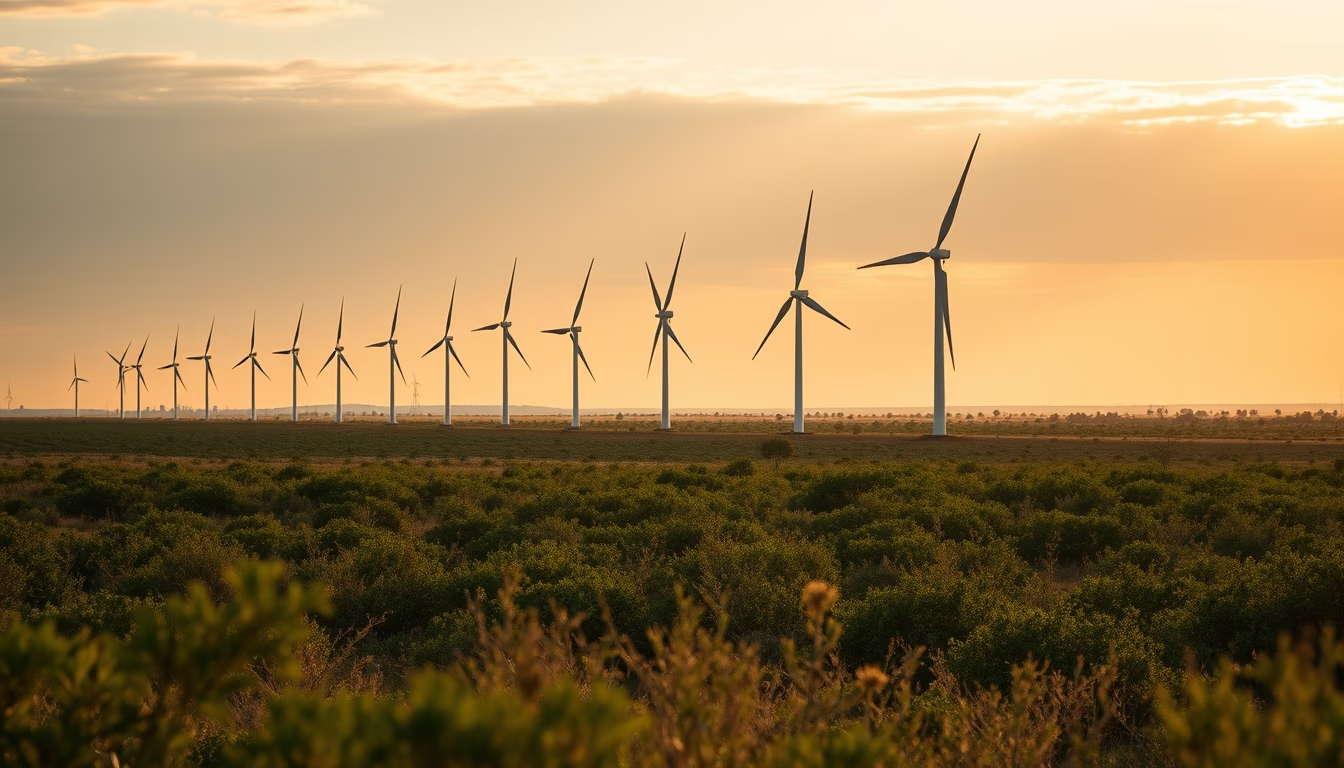
Wind turbines in the Brazilian Northeast contrast with the caatinga scrubland vegetation at late afternoon, generating clean energy in one of the country's most promising regions for renewable power.
About this subject
The Brazilian Northeast concentrates about 85% of the country's installed wind power capacity, with highlights in the states of Rio Grande do Norte, Bahia, Ceará, and Piauí. The sertão region, once known for drought and caatinga scrubland, has become a hub for renewable energy generation thanks to constant and strong winds, especially during the second half of the year. Wind turbines, which can reach up to 100 meters in height, harness winds with average speeds between 7 and 9 m/s, ideal for electricity production. The caatinga, an exclusively Brazilian biome, covers about 10% of the national territory and is adapted to long dry spells. Its vegetation, composed of thorny shrubs and cacti, contrasts with the imposing rotating blades. The installation of wind farms in the region has brought economic development to local communities, generating jobs and income, but also raises questions about environmental impacts and the need for sustainable coexistence with the biome. The late afternoon, as depicted in the image, is a time of diffused light that highlights the shadows of the towers on the dry ground.
Frequently Asked Questions
Why is the Northeast ideal for wind power?
The Brazilian Northeast has constant and strong winds, especially from July to December, with average speeds between 7 and 9 m/s. Additionally, the flat topography and low population density in caatinga areas facilitate the installation of wind farms.
What is the impact of wind turbines on the caatinga?
The installation of turbines can cause suppression of native vegetation and habitat fragmentation, but mitigation measures such as ecological corridors and bird monitoring are adopted. Studies show that the impact is lower compared to other energy sources.
How many wind farms are there in the Northeast?
In 2023, Brazil had over 800 wind farms in operation, most in the Northeast. Rio Grande do Norte leads with about 200 farms, followed by Bahia with over 150.
Direct URL
https://pub-c7d6a6ea828543ac903a74a341ccb2e1.r2.dev/imagens/northeast-wind-farm-turbines-against-caatinga-vegetation-wide-late-afternoon.avifHow to credit
Include a visible link back to UtilizAí. Copy one of the snippets below:
<a href="https://xn--utiliza-eza.com/en/midia/imagens/northeast-wind-farm-turbines-against-caatinga-vegetation-wide-late-afternoon">Northeast wind farm turbines against scrubland vegetation</a> by <a href="https://xn--utiliza-eza.com">UtilizAí</a>, licensed under <a href="https://creativecommons.org/licenses/by/4.0/">CC BY 4.0</a>.
[Northeast wind farm turbines against scrubland vegetation](https://xn--utiliza-eza.com/en/midia/imagens/northeast-wind-farm-turbines-against-caatinga-vegetation-wide-late-afternoon) by [UtilizAí](https://xn--utiliza-eza.com), CC BY 4.0
License: CC-BY-4.0