Northeast wind farm turbines against scrubland vegetation
1344×768 · AVIF · CC BY 4.0
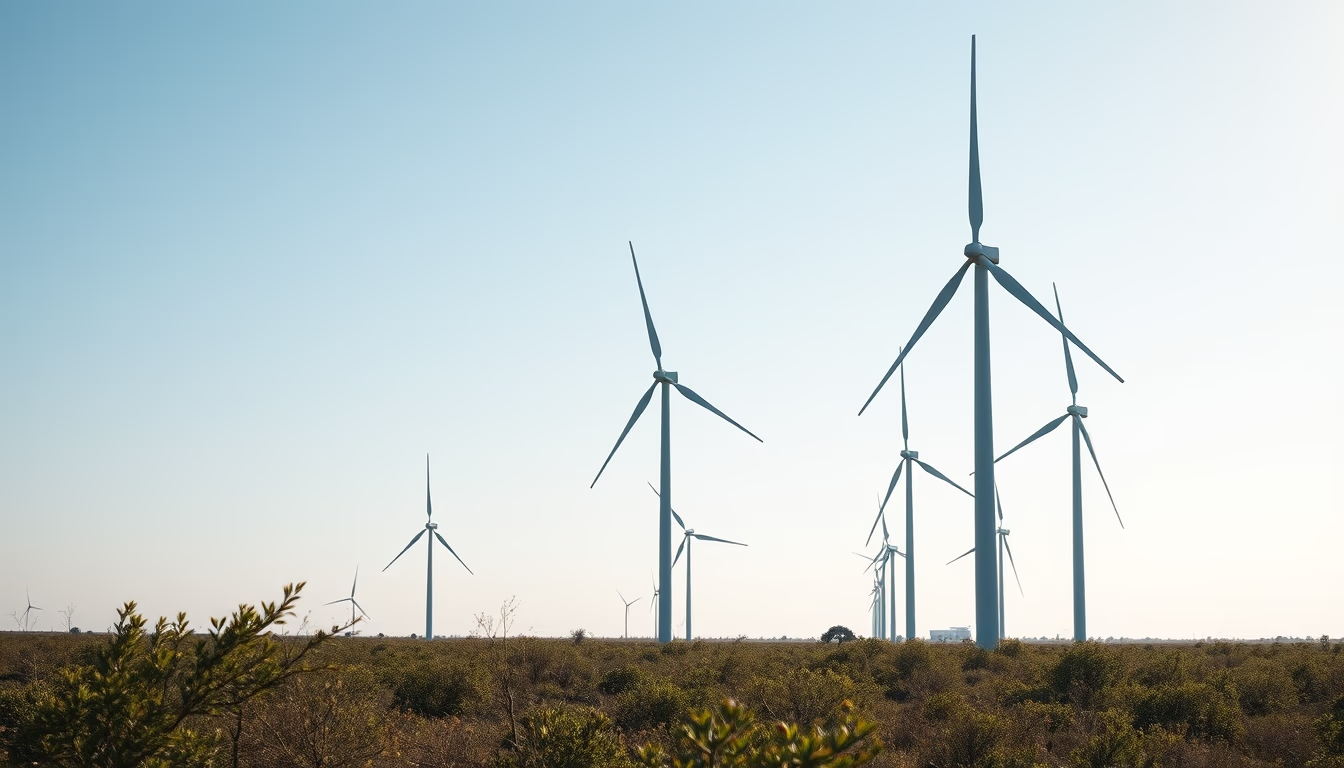
Wind turbines in Brazil's Northeast contrast with Caatinga vegetation, merging clean energy and a unique biome.
About this subject
Northeast Brazil concentrates most of the country's wind power generation, with farms installed in Caatinga areas, a unique Brazilian biome. The Caatinga covers about 10% of the national territory, a dry tropical forest with vegetation adapted to water scarcity, including cacti and thorny shrubs. Installing turbines in this environment requires environmental impact studies to minimize damage to local fauna and flora, such as conserving endemic species.
Wind in the Northeast is strongest between June and December, during trade winds, making the region ideal for wind generation. States like Rio Grande do Norte, Bahia, and Ceará lead installed capacity, notably the Lagoa do Barro Wind Complex in Piauí, one of the largest in Latin America. Each turbine can generate up to 2 MW, enough to power about 1,500 homes.
Wind energy accounts for approximately 12% of Brazil's electricity matrix (2023 data), with potential for growth through new plant investments. Coexistence between infrastructure and Caatinga requires planning, such as ecological corridors for wildlife. The image shows a bright sunny day typical of the semi-arid region, where turbines stand out against the dry landscape and low vegetation.
Frequently Asked Questions
Why is Northeast Brazil ideal for wind energy?
The region has constant strong winds, especially from June to December, due to trade winds. Flat topography and low population density in Caatinga areas facilitate wind farm installation.
Does installing turbines in the Caatinga affect the environment?
Yes, it can impact local fauna and flora, such as birds and endemic species. Environmental studies and mitigation measures, like ecological corridors and monitoring, are required.
What is the typical capacity of a wind turbine in Brazil?
Modern turbines range from 1.5 to 3 MW. In the Northeast, 2 MW turbines are common, enough to power about 1,500 homes each.
Direct URL
https://pub-c7d6a6ea828543ac903a74a341ccb2e1.r2.dev/imagens/northeast-wind-farm-turbines-against-caatinga-vegetation-symmetric-bright-midday-4.avifHow to credit
Include a visible link back to UtilizAí. Copy one of the snippets below:
<a href="https://xn--utiliza-eza.com/en/midia/imagens/northeast-wind-farm-turbines-against-caatinga-vegetation-symmetric-bright-midday-4">Northeast wind farm turbines against scrubland vegetation</a> by <a href="https://xn--utiliza-eza.com">UtilizAí</a>, licensed under <a href="https://creativecommons.org/licenses/by/4.0/">CC BY 4.0</a>.
[Northeast wind farm turbines against scrubland vegetation](https://xn--utiliza-eza.com/en/midia/imagens/northeast-wind-farm-turbines-against-caatinga-vegetation-symmetric-bright-midday-4) by [UtilizAí](https://xn--utiliza-eza.com), CC BY 4.0
License: CC-BY-4.0