Northeast wind farm turbines against scrubland vegetation
1344×768 · AVIF · CC BY 4.0
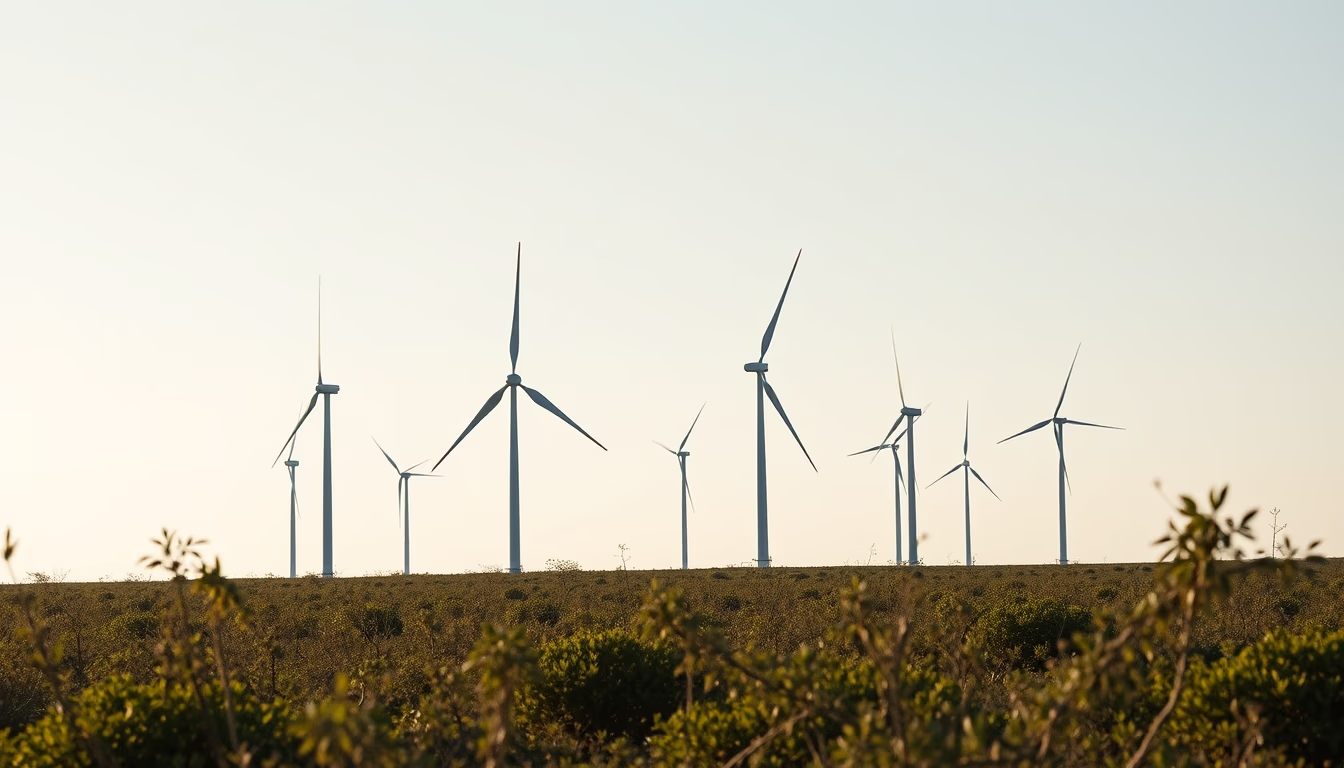
Wind farms in Northeast Brazil combine modern turbines with Caatinga vegetation, generating clean energy and regional development.
About this subject
Brazil has one of the largest wind power potentials in the world, and the Northeast region concentrates most of the country's wind farms. The Caatinga, an exclusively Brazilian biome covering about 10% of the national territory, is the setting for many of these projects. Caatinga vegetation, adapted to the semi-arid climate, includes species such as jurema, mandacaru cactus, and palm, which coexist with towers up to 100 meters tall and blades rotating at controlled speeds.
Installing wind turbines in the Caatinga requires rigorous environmental studies to minimize impacts on local fauna and flora. Common measures include bird and bat monitoring, maintenance of ecological corridors, and use of low-noise technologies. The region's constant winds, especially along the coast of Rio Grande do Norte, Ceará, and Bahia, ensure an average capacity factor above 40%, one of the highest in the world.
The development of wind energy in the Northeast has brought significant economic benefits. Rural communities receive royalties for installing turbines on their land, and direct and indirect job creation boosts the local economy. In 2023, wind power accounted for about 12% of Brazil's electricity matrix, with over 800 wind farms in operation, mostly in the Northeast. The region also leads in solar power generation, forming a renewable energy hub.
One of the largest wind complexes in Latin America, the Lagoa do Barro Wind Complex in Piauí, has an installed capacity of 1.2 GW, enough to power millions of homes. The combination of white turbines with the green and brown of the Caatinga creates a unique landscape, symbolizing Brazil's energy transition.
Frequently Asked Questions
Does wind energy in the Caatinga affect local wildlife?
Yes, but wind farms adopt mitigation measures such as bird and bat monitoring, blade rotation adjustments during migration periods, and creation of ecological corridors to minimize impacts.
How many wind farms are there in Northeast Brazil?
In 2023, Brazil had over 800 wind farms in operation, most in the Northeast. States like Rio Grande do Norte, Ceará, and Bahia lead in installed capacity.
What is the economic importance of wind farms for local communities?
Wind farms generate direct and indirect jobs, pay royalties to landowners, and contribute to regional development, especially in rural areas of the semi-arid region.
Direct URL
https://pub-c7d6a6ea828543ac903a74a341ccb2e1.r2.dev/imagens/northeast-wind-farm-turbines-against-caatinga-vegetation-symmetric-bright-midday-3.avifHow to credit
Include a visible link back to UtilizAí. Copy one of the snippets below:
<a href="https://xn--utiliza-eza.com/en/midia/imagens/northeast-wind-farm-turbines-against-caatinga-vegetation-symmetric-bright-midday-3">Northeast wind farm turbines against scrubland vegetation</a> by <a href="https://xn--utiliza-eza.com">UtilizAí</a>, licensed under <a href="https://creativecommons.org/licenses/by/4.0/">CC BY 4.0</a>.
[Northeast wind farm turbines against scrubland vegetation](https://xn--utiliza-eza.com/en/midia/imagens/northeast-wind-farm-turbines-against-caatinga-vegetation-symmetric-bright-midday-3) by [UtilizAí](https://xn--utiliza-eza.com), CC BY 4.0
License: CC-BY-4.0