Northeast wind farm turbines against scrubland vegetation
1344×768 · AVIF · CC BY 4.0
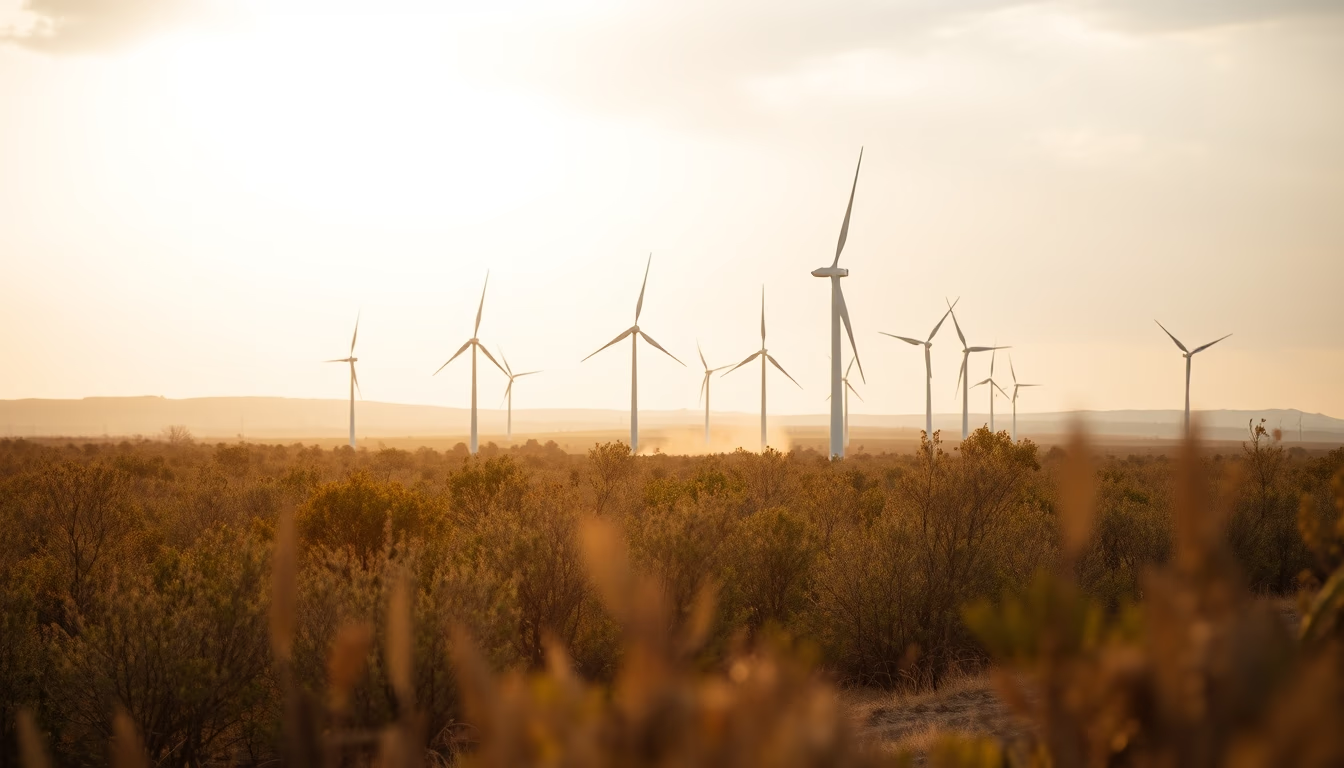
Wind farms in northeastern Brazil reshape the Caatinga landscape with turbines generating clean energy amid drought-adapted vegetation.
About this subject
Northeastern Brazil concentrates around 85% of the country's installed wind capacity, led by the states of Rio Grande do Norte, Bahia, Ceará, and Piauí. These wind farms are installed in Caatinga areas, a biome exclusive to Brazil that covers approximately 10% of the national territory. The Caatinga is characterized by xerophytic vegetation, such as cacti, thorny shrubs, and small trees that lose their leaves during the dry season. The choice of these regions is not random: constant and strong winds, especially in the second half of the year, provide an average capacity factor above 40%, one of the highest in the world.
Wind energy has become essential for the Brazilian electricity matrix, especially during the dry period when hydroelectric plants reduce generation. In 2023, wind power accounted for about 12% of the country's generated electricity, with installed capacity exceeding 25 GW. Modern wind turbines, like those shown in the image, have towers over 100 meters tall and blades over 50 meters long, capable of generating up to 2 MW each. The installation of these farms generates socio-environmental impacts, such as community displacement and landscape change, but also benefits like job creation and local development.
The coexistence between turbines and the Caatinga raises environmental concerns. Studies indicate that bird mortality from collisions is lower than in other biomes, but habitat fragmentation can affect endemic species. On the other hand, the presence of farms inhibits deforestation for agriculture and livestock in some areas. The image portrays an overcast day, common on the northeastern coast, where cloudiness reduces solar efficiency but does not affect wind generation. The combination of strong winds and low population density makes the region ideal for expanding this renewable source, which is expected to grow by another 10 GW by 2026.
Frequently Asked Questions
Why is northeastern Brazil ideal for wind energy?
The region has constant and strong winds, especially in the second half of the year, with an average capacity factor above 40%, one of the highest in the world. Additionally, low population density and flat terrain facilitate wind farm installation.
Does wind energy in the Caatinga cause environmental impacts?
Yes, but they are considered minor compared to other sources. Bird mortality from collisions is low, but habitat fragmentation can affect endemic species. On the other hand, farms inhibit deforestation for agriculture in some areas.
What is Brazil's installed wind power capacity?
In 2023, Brazil surpassed 25 GW of installed wind capacity, accounting for about 12% of the country's electricity generation. Another 10 GW are expected by 2026, with expansion concentrated in the Northeast.
Direct URL
https://pub-c7d6a6ea828543ac903a74a341ccb2e1.r2.dev/imagens/northeast-wind-farm-turbines-against-caatinga-vegetation-editorial-overcast-daytime-7.avifHow to credit
Include a visible link back to UtilizAí. Copy one of the snippets below:
<a href="https://xn--utiliza-eza.com/en/midia/imagens/northeast-wind-farm-turbines-against-caatinga-vegetation-editorial-overcast-daytime-7">Northeast wind farm turbines against scrubland vegetation</a> by <a href="https://xn--utiliza-eza.com">UtilizAí</a>, licensed under <a href="https://creativecommons.org/licenses/by/4.0/">CC BY 4.0</a>.
[Northeast wind farm turbines against scrubland vegetation](https://xn--utiliza-eza.com/en/midia/imagens/northeast-wind-farm-turbines-against-caatinga-vegetation-editorial-overcast-daytime-7) by [UtilizAí](https://xn--utiliza-eza.com), CC BY 4.0
License: CC-BY-4.0