Northeast wind farm turbines against scrubland vegetation
1344×768 · AVIF · CC BY 4.0
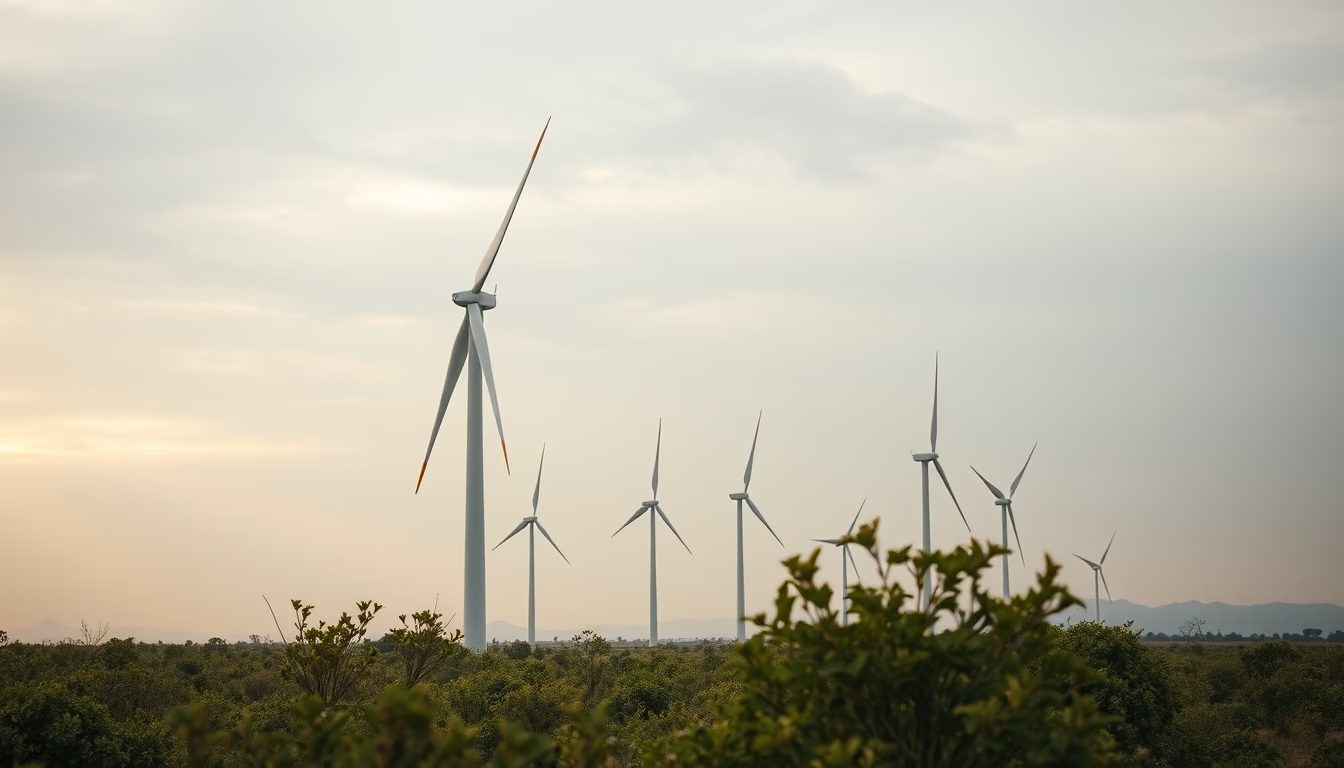
Wind farms in Northeast Brazil combine renewable energy with Caatinga vegetation, a unique Brazilian biome.
About this subject
Wind farms in Northeast Brazil represent one of the country's greatest potentials for renewable energy generation. The region, especially the states of Rio Grande do Norte, Ceará, and Bahia, has constant and strong winds, ideal for electricity production. The turbines, like those shown in the image, are installed amidst the typical vegetation of the Caatinga, a biome exclusive to Brazil that covers about 11% of the national territory. The Caatinga is characterized by thorny shrubs, cacti, and small trees adapted to the semi-arid climate, with long dry periods.
Wind energy in the Northeast has grown exponentially since the 2000s. In 2022, the region accounted for over 80% of Brazil's installed wind capacity, with Rio Grande do Norte standing out as the state with the largest wind farm in the country. The towers, which can exceed 100 meters in height, are designed to withstand winds of up to 200 km/h. The installation of these parks generates environmental and social impacts, such as suppression of native vegetation and conflicts with local communities, but also brings economic development and jobs.
The Caatinga, in turn, is a biome threatened by deforestation and climate change. About 46% of its original area has already been cleared, mainly for agriculture and livestock. The installation of wind farms can be an opportunity for conservation, provided there is proper planning and environmental compensation. The image depicts this coexistence between technology and nature, a symbol of Brazil's energy transition.
Curiosity: Northeast Brazil has the highest wind capacity factor in the world, with averages above 40%, while the global average is around 25%. This means that turbines in the region generate more energy per installed capacity than anywhere else.
Frequently Asked Questions
What is the installed wind energy capacity in Northeast Brazil?
In 2022, the Northeast concentrated over 80% of Brazil's installed wind capacity, about 20 GW, according to the Brazilian Wind Energy Association (ABEEólica).
Does the installation of wind farms affect the Caatinga vegetation?
Yes, installation may require suppression of native vegetation and impact local fauna. However, environmental compensation measures and proper planning can minimize these effects.
Why is Northeast Brazil ideal for wind energy?
The region has constant and strong winds, with a capacity factor above 40%, the highest in the world. This is due to the combination of air masses from the Atlantic Ocean and the continent, as well as favorable topography.
Direct URL
https://pub-c7d6a6ea828543ac903a74a341ccb2e1.r2.dev/imagens/northeast-wind-farm-turbines-against-caatinga-vegetation-editorial-overcast-daytime-5.avifHow to credit
Include a visible link back to UtilizAí. Copy one of the snippets below:
<a href="https://xn--utiliza-eza.com/en/midia/imagens/northeast-wind-farm-turbines-against-caatinga-vegetation-editorial-overcast-daytime-5">Northeast wind farm turbines against scrubland vegetation</a> by <a href="https://xn--utiliza-eza.com">UtilizAí</a>, licensed under <a href="https://creativecommons.org/licenses/by/4.0/">CC BY 4.0</a>.
[Northeast wind farm turbines against scrubland vegetation](https://xn--utiliza-eza.com/en/midia/imagens/northeast-wind-farm-turbines-against-caatinga-vegetation-editorial-overcast-daytime-5) by [UtilizAí](https://xn--utiliza-eza.com), CC BY 4.0
License: CC-BY-4.0