Mosaic tile detail
1344×768 · AVIF · CC BY 4.0
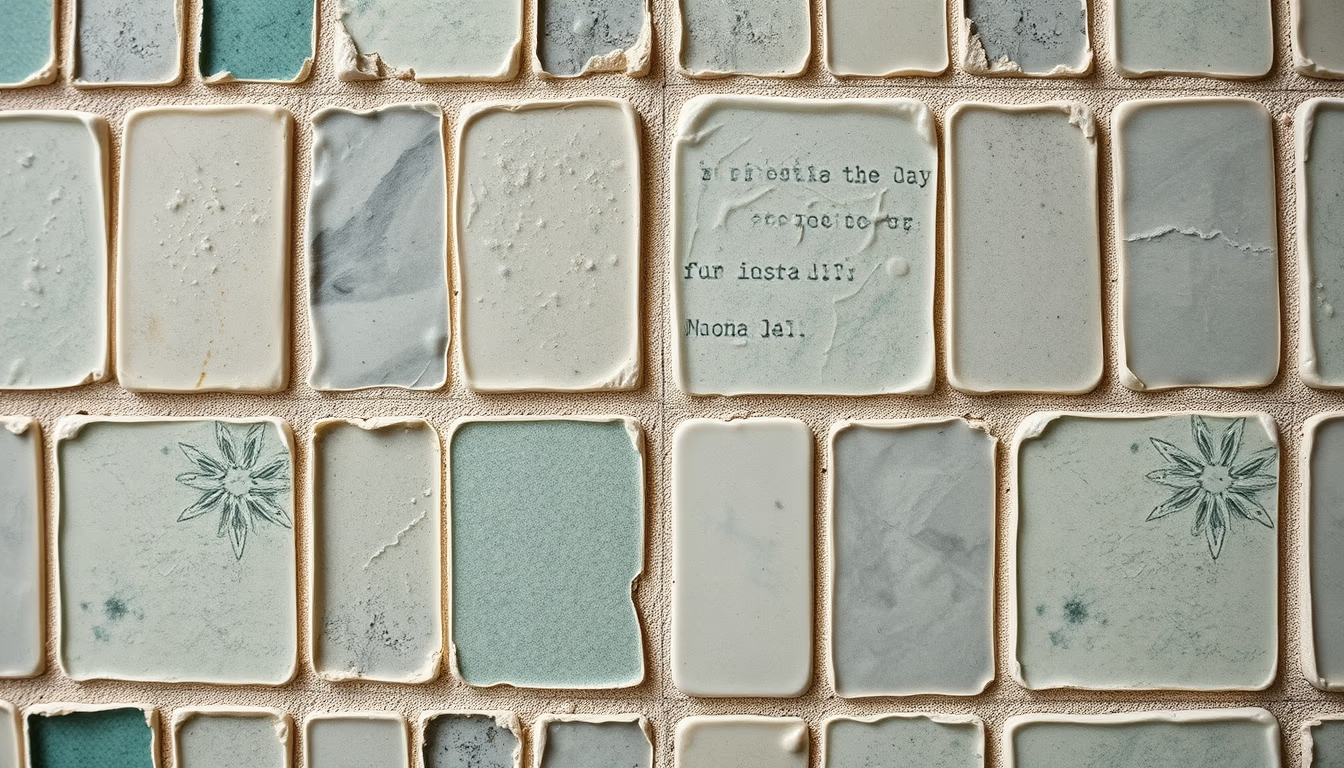
A mosaic tile detail reveals the meticulous art of combining small colored pieces to create complex patterns and figures.
About this subject
Mosaics are an ancient art form that involves assembling images or patterns from small pieces called tesserae, typically made of stone, glass, ceramic, or marble. This technique flourished across various civilizations, from the ancient Greeks and Romans to the Byzantines and Islamic cultures. Roman mosaics, for example, adorned floors and walls of villas and public baths, depicting mythological, everyday, or geometric scenes. Byzantine mosaics, such as those in the Basilica of San Vitale in Ravenna, are renowned for their gold backgrounds and sacred figures, influencing religious art for centuries.
In the Iberian Peninsula, Islamic heritage left intricate geometric mosaics, like those at the Alhambra in Spain. In ancient Mexico, the Aztecs and Mayas created mosaics using turquoise and shells, such as ceremonial masks and shields. Today, mosaic art remains vibrant in many cultures, with contemporary artists exploring new materials and styles. Cities like Barcelona, with Antoni Gaudí's mosaics at Park Güell, and the Santa Maria Novella district in Florence showcase how this art integrates into public spaces.
Techniques such as opus vermiculatum (very small pieces for fine details) and opus tessellatum (larger pieces for expansive areas) demonstrate the versatility of mosaic. Materials like colored glass, gold, and semi-precious stones were used for light and color effects. Mosaics also have practical functions: they resist moisture and wear, making them ideal for floors and wet areas. In Brazil, notable examples include the Copacabana boardwalk mosaic in Rio de Janeiro and panels in modernist buildings like the Palácio da Alvorada.
Frequently Asked Questions
What is the difference between mosaic and stained glass?
Mosaic is made of small solid pieces (tesserae) fixed on a base, while stained glass consists of colored glass pieces assembled with lead and typically used in windows. Both use light, but mosaic is opaque and stained glass is translucent.
Where can I see famous mosaics in Brazil?
On the Copacabana boardwalk (Rio de Janeiro), with black and white waves; at the Palácio da Alvorada (Brasília), with panels by Athos Bulcão; and in baroque churches like São Francisco de Assis (Ouro Preto), with Portuguese tiles.
How are modern mosaics made?
Artists use materials from ceramic, glass, and stone to recycled items like plastic and metals. They draw the pattern, cut the pieces, and fix them with mortar or cement. Techniques include direct (on the final surface) and indirect (on paper, then transferred).
Direct URL
https://pub-c7d6a6ea828543ac903a74a341ccb2e1.r2.dev/imagens/mosaic-tile-detail-national-geographic-style-p3.avifHow to credit
Include a visible link back to UtilizAí. Copy one of the snippets below:
<a href="https://xn--utiliza-eza.com/en/midia/imagens/mosaic-tile-detail-national-geographic-style-p3">Mosaic tile detail</a> by <a href="https://xn--utiliza-eza.com">UtilizAí</a>, licensed under <a href="https://creativecommons.org/licenses/by/4.0/">CC BY 4.0</a>.
[Mosaic tile detail](https://xn--utiliza-eza.com/en/midia/imagens/mosaic-tile-detail-national-geographic-style-p3) by [UtilizAí](https://xn--utiliza-eza.com), CC BY 4.0
License: CC-BY-4.0