Mosaic tile detail
1344×768 · AVIF · CC BY 4.0
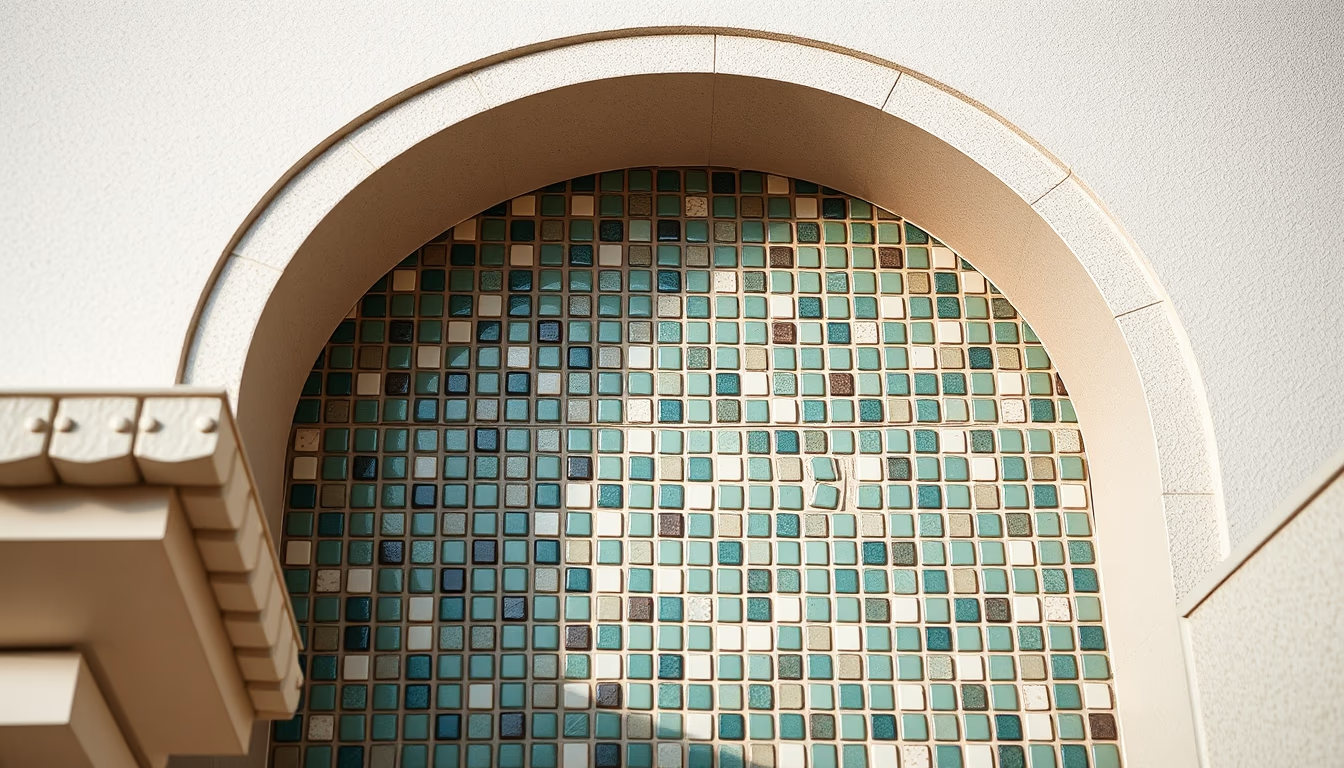
Mosaic tile detail showcasing the artisanal precision of colorful tiles, an ancient technique used in architecture worldwide.
About this subject
The art of mosaic dates back over 4,000 years, with examples found in Mesopotamia and ancient Greece, where colored stones and shells formed geometric and figurative patterns. During the Roman Empire, mosaics became more sophisticated with the use of tesserae (small cubes of stone, glass, or ceramic) and became a status symbol in villas and public baths. The technique reached its peak in the Byzantine period, as seen in the famous mosaics of Ravenna, Italy, depicting emperors and saints with gold backgrounds that glow in candlelight.
In the Islamic world, geometric and floral mosaics (zellige) decorate mosques and palaces, such as the Alhambra in Granada, combining mathematics and aesthetics. In modern times, architects like Antoni Gaudí reinvented mosaic with the trencadís technique, using irregular ceramic fragments to cover organic surfaces, as in Park Güell in Barcelona. Today, contemporary mosaics appear in public and private spaces, from subway stations to building facades.
In Brazil, mosaic has a strong presence in Portuguese tiles and modernist panels. Works by Athos Bulcão in Brasília and Burle Marx panels in Rio de Janeiro exemplify the tropical adaptation of the technique. The durability and versatility of mosaics keep them relevant, whether in historic restorations or new artistic installations.
Frequently Asked Questions
What is the historical origin of mosaics?
The oldest known mosaics date back to around 3000 BCE in Mesopotamia, made with colored clay cones. The technique developed in ancient Greece and Rome, reaching great refinement in the Byzantine period.
How are traditional mosaics made?
Mosaics are made with tesserae (small cubes of stone, glass, ceramic, or enamel) cut and manually fitted onto a mortar base. The technique requires precision to create detailed patterns and figures.
Where can I see famous mosaics in Brazil?
In Brazil, notable mosaics include Athos Bulcão's panels in Brasília, historic tiles in Salvador's Pelourinho district, and Burle Marx's works along Copacabana beach in Rio de Janeiro.
Direct URL
https://pub-c7d6a6ea828543ac903a74a341ccb2e1.r2.dev/imagens/mosaic-tile-detail-architectural-photography-p5.avifHow to credit
Include a visible link back to UtilizAí. Copy one of the snippets below:
<a href="https://xn--utiliza-eza.com/en/midia/imagens/mosaic-tile-detail-architectural-photography-p5">Mosaic tile detail</a> by <a href="https://xn--utiliza-eza.com">UtilizAí</a>, licensed under <a href="https://creativecommons.org/licenses/by/4.0/">CC BY 4.0</a>.
[Mosaic tile detail](https://xn--utiliza-eza.com/en/midia/imagens/mosaic-tile-detail-architectural-photography-p5) by [UtilizAí](https://xn--utiliza-eza.com), CC BY 4.0
License: CC-BY-4.0