Metal corrosion patina
1344×768 · AVIF · CC BY 4.0
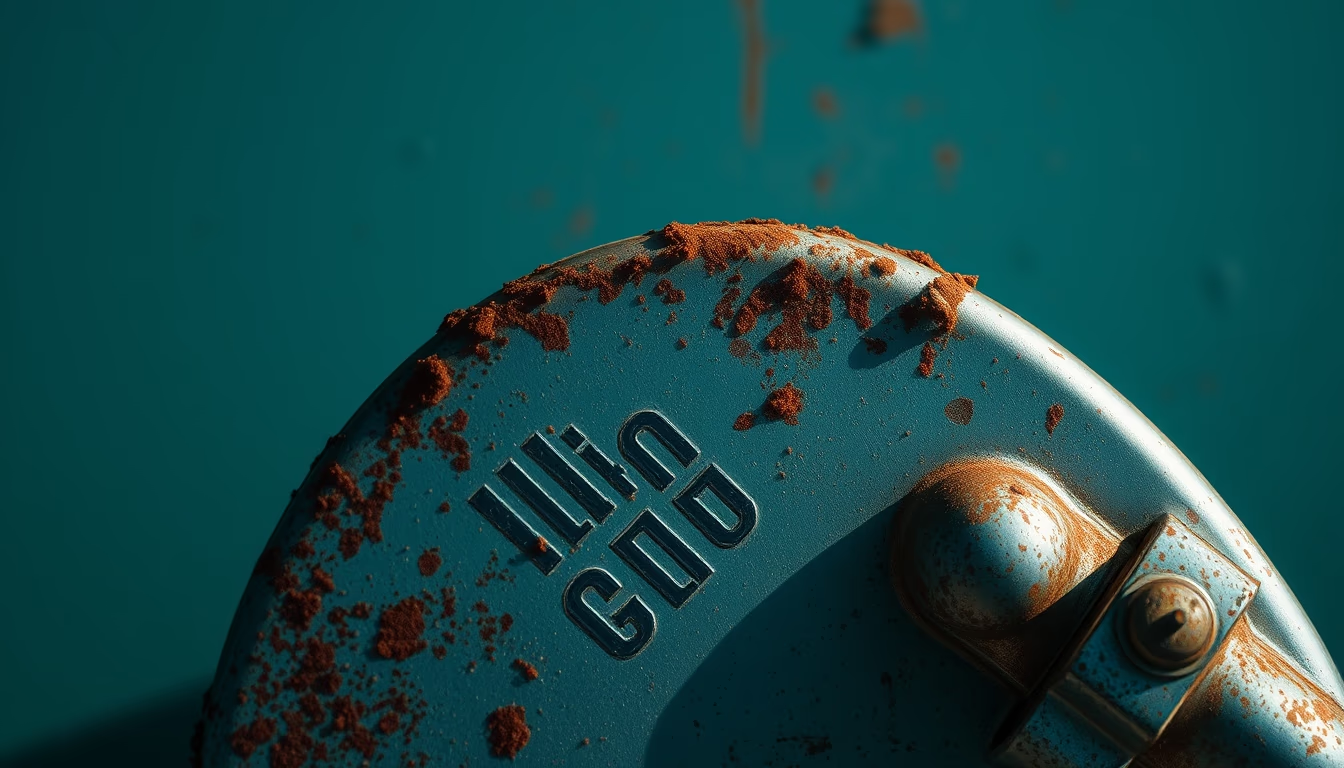
Metal patina is a surface layer that forms on metals exposed to the environment, resulting from oxidation or controlled corrosion.
About this subject
Metal patina is a natural or induced phenomenon that occurs when metals like copper, bronze, iron, or steel react with atmospheric agents. On copper and bronze, the blue-green patina is mainly composed of copper sulfate and carbonate, forming a protective barrier against further corrosion. Iconic examples include the Statue of Liberty in New York, whose characteristic green color results from over a century of exposure to sea air.
In historic structures, patina is valued for its aesthetic and protective qualities. Buildings with copper domes, such as St. Paul's Cathedral in London, exhibit a green patina that developed over decades. On iron, rust (iron oxide) does not protect the metal, but it can be artificially stabilized for decorative effects, as seen in Corten steel used in sculptures and contemporary architecture.
Culturally, patina is associated with durability and history, often preserved in art objects and monuments. In restoration, removing patina is controversial as it may compromise the original integrity of the piece. Artificial patination techniques are employed to reproduce these effects in modern works, blending science and art.
Interestingly, the rate of patina formation depends on factors such as humidity, pollution, and metal composition. In coastal regions, sea spray accelerates the process, while in dry environments patina can take centuries to fully develop.
Frequently Asked Questions
Does patina protect metal from corrosion?
Yes, on metals like copper and bronze, patina forms a stable layer that protects the underlying metal from further corrosion by acting as a barrier against atmospheric agents.
How can I accelerate patina formation on copper objects?
There are artisanal and chemical techniques, such as applying ammonia or vinegar with salt solutions, that speed up controlled oxidation. The natural process takes years, depending on the environment.
Why is the Statue of Liberty green?
The statue is copper-plated and, after decades of exposure to air and rain, a green patina composed of copper sulfate and carbonate formed, which protects the metal.
Direct URL
https://pub-c7d6a6ea828543ac903a74a341ccb2e1.r2.dev/imagens/metal-corrosion-patina-minimalist-composition-p3.avifHow to credit
Include a visible link back to UtilizAí. Copy one of the snippets below:
<a href="https://xn--utiliza-eza.com/en/midia/imagens/metal-corrosion-patina-minimalist-composition-p3">Metal corrosion patina</a> by <a href="https://xn--utiliza-eza.com">UtilizAí</a>, licensed under <a href="https://creativecommons.org/licenses/by/4.0/">CC BY 4.0</a>.
[Metal corrosion patina](https://xn--utiliza-eza.com/en/midia/imagens/metal-corrosion-patina-minimalist-composition-p3) by [UtilizAí](https://xn--utiliza-eza.com), CC BY 4.0
License: CC-BY-4.0