Medieval shield colors
1344×768 · AVIF · CC BY 4.0
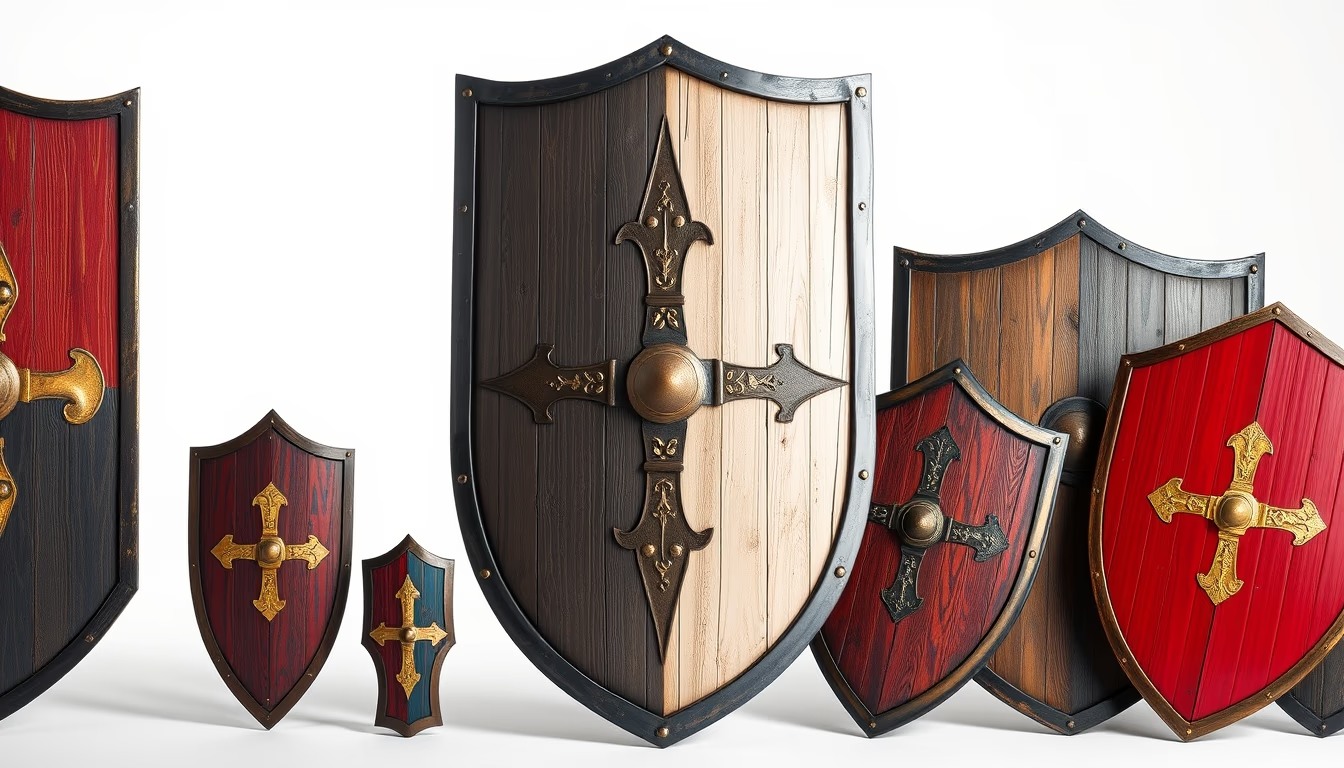
Medieval shields displayed vibrant colors that followed precise heraldic rules, with each hue carrying symbolic and functional meanings.
About this subject
Medieval shields were not merely defensive tools but canvases of identity and social status. The colors applied, known as tinctures in heraldry, followed a strict code: metals (gold and silver) contrasted with colors (red, blue, green, purple, and black). This system, formalized from the 12th century onward, avoided overlaying colors on colors or metals on metals to ensure high battlefield visibility. Red symbolized courage and nobility; blue, loyalty and truth; green, hope and liberty; black, wisdom and mourning. Gold (represented by yellow) indicated generosity, while silver (white) stood for peace and purity.
Color production relied on natural pigments such as cinnabar for red, lapis lazuli for blue, and copper carbonate for green. The high cost of certain pigments restricted rare colors to the upper classes, making the visual palette a marker of hierarchy. Beyond symbolism, colors served a practical purpose: during tournaments and crusades, chromatic combinations allowed distant identification of allies and enemies, especially when the coat of arms included symbols like lions, eagles, or crosses.
Over the centuries, shields evolved from Norman almond shapes to flatter heraldic forms. Colors were applied in tempera or oil on wood or leather, and coated with gesso for sheen. English and French heraldry established rules that influenced all of Europe, with each color having a specific name: "gules" for red, "azure" for blue, "vert" for green, "purpure" for purple, "sable" for black, "or" for gold, and "argent" for silver. This nomenclature is still used in modern blazon descriptions.
Interestingly, medieval color perception differed from today: blue, for instance, only became a royal color in the 12th century, previously linked to lower classes. Red, made from unstable pigments, often darkened or faded over time. Many original shields have lost their initial colors, leaving only wooden reliefs, but illuminated manuscripts preserve faithful examples of medieval polychromy. Studying these artifacts allows us to reconstruct not only craftsmanship techniques but also the visual psychology of an era where colors communicated as powerfully as words.
Frequently Asked Questions
What colors were most common on medieval shields?
The most common colors were red (gules), blue (azure), green (vert), black (sable), and purple (purpure), along with the metals gold (or) and silver (argent). The choice depended on the bearer's wealth and desired symbolism.
Were medieval shields always painted with heraldic meanings?
Most followed formal heraldic rules, but there were regional and temporal variations. Common soldiers' shields might have simple colors or no paint, while nobles' shields displayed complex coats of arms.
How were shield colors produced in the Middle Ages?
Natural pigments such as cinnabar (red), lapis lazuli (blue), and copper carbonate (green) were used, mixed with binders like egg (tempera) or oil. Rare colors were expensive and indicated high status.
Direct URL
https://pub-c7d6a6ea828543ac903a74a341ccb2e1.r2.dev/imagens/medieval-shield-colors-commercial-product-photography-p0.avifHow to credit
Include a visible link back to UtilizAí. Copy one of the snippets below:
<a href="https://xn--utiliza-eza.com/en/midia/imagens/medieval-shield-colors-commercial-product-photography-p0">Medieval shield colors</a> by <a href="https://xn--utiliza-eza.com">UtilizAí</a>, licensed under <a href="https://creativecommons.org/licenses/by/4.0/">CC BY 4.0</a>.
[Medieval shield colors](https://xn--utiliza-eza.com/en/midia/imagens/medieval-shield-colors-commercial-product-photography-p0) by [UtilizAí](https://xn--utiliza-eza.com), CC BY 4.0
License: CC-BY-4.0