Mechanical clock gears
1344×768 · AVIF · CC BY 4.0
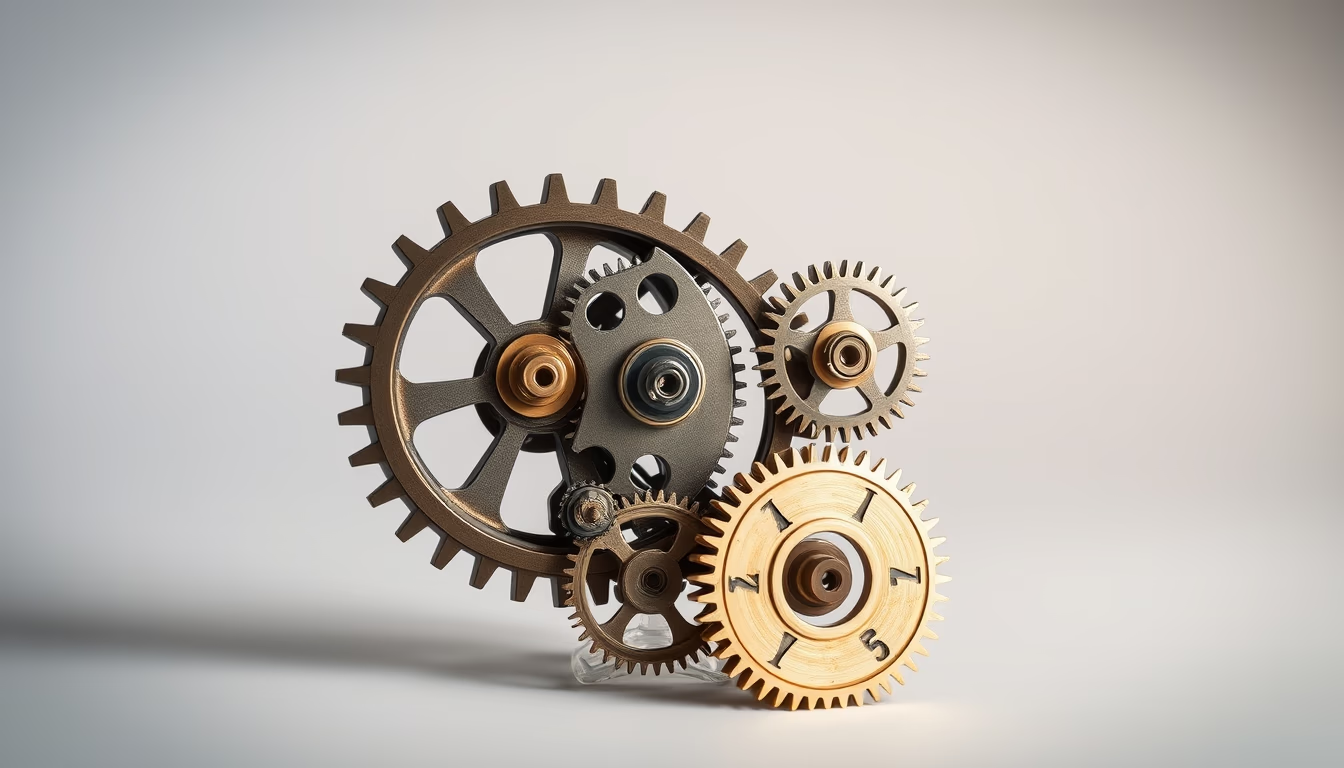
Mechanical clock gears embody centuries of artisanal precision, from medieval timepieces to intricate Swiss movements.
About this subject
Gears are the heart of any mechanical clock, transforming energy stored in a mainspring into regulated motion. The first mechanical clocks appeared in 13th-century Europe, installed in cathedral towers, where large iron cogwheels drove dials and bells. The gear train, composed of wheels and pinions, reduces the spring's speed so that the second hand advances precisely.
Manufacturing these gears requires high precision. Traditionally made of brass or steel, they are cut and hand-polished by master watchmakers. Each tooth must have exact angle and depth to avoid excessive friction or backlash. Antique clocks often used brass gears with steel arbors, while modern pieces may employ antimagnetic alloys. Lubrication with special oils is crucial for smooth operation.
The evolution of mechanical clocks led to ever-greater complications: perpetual calendars, chronographs, and minute repeaters depend on complex gear systems. In Switzerland, the watch industry refined these techniques over centuries, elevating the craft to art. Brands like Patek Philippe and Audemars Piguet produce movements with hundreds of tiny components.
Today, despite the dominance of quartz and digital watches, mechanical timepieces remain highly prized by collectors and enthusiasts. Gears displayed in open dials or museum pieces reveal complexity and human ingenuity. Each cogwheel tells a story of technical innovation and artisanal dedication.
Frequently Asked Questions
How do mechanical clock gears work?
Gears form a gear train that reduces the mainspring's speed. The spring's force is transmitted through wheels and pinions to the escapement, which releases energy at regular intervals, moving the hands.
Why are mechanical watches still valued today?
They are prized for precision engineering, craftsmanship, and tradition. Each piece is hand-assembled, and many have historical or artistic value. The absence of batteries and the need for winding create a tactile connection with time.
What materials are used in watch gears?
Traditionally, brass for wheels and steel for arbors. Modern watches may use nickel, beryllium, or silicon alloys to reduce friction and magnetic interference. Some luxury movements employ synthetic rubies as bearings to minimize wear.
Direct URL
https://pub-c7d6a6ea828543ac903a74a341ccb2e1.r2.dev/imagens/mechanical-clock-gears-studio-still-life-p4.avifHow to credit
Include a visible link back to UtilizAí. Copy one of the snippets below:
<a href="https://xn--utiliza-eza.com/en/midia/imagens/mechanical-clock-gears-studio-still-life-p4">Mechanical clock gears</a> by <a href="https://xn--utiliza-eza.com">UtilizAí</a>, licensed under <a href="https://creativecommons.org/licenses/by/4.0/">CC BY 4.0</a>.
[Mechanical clock gears](https://xn--utiliza-eza.com/en/midia/imagens/mechanical-clock-gears-studio-still-life-p4) by [UtilizAí](https://xn--utiliza-eza.com), CC BY 4.0
License: CC-BY-4.0