Lizard scales pattern
1344×768 · AVIF · CC BY 4.0
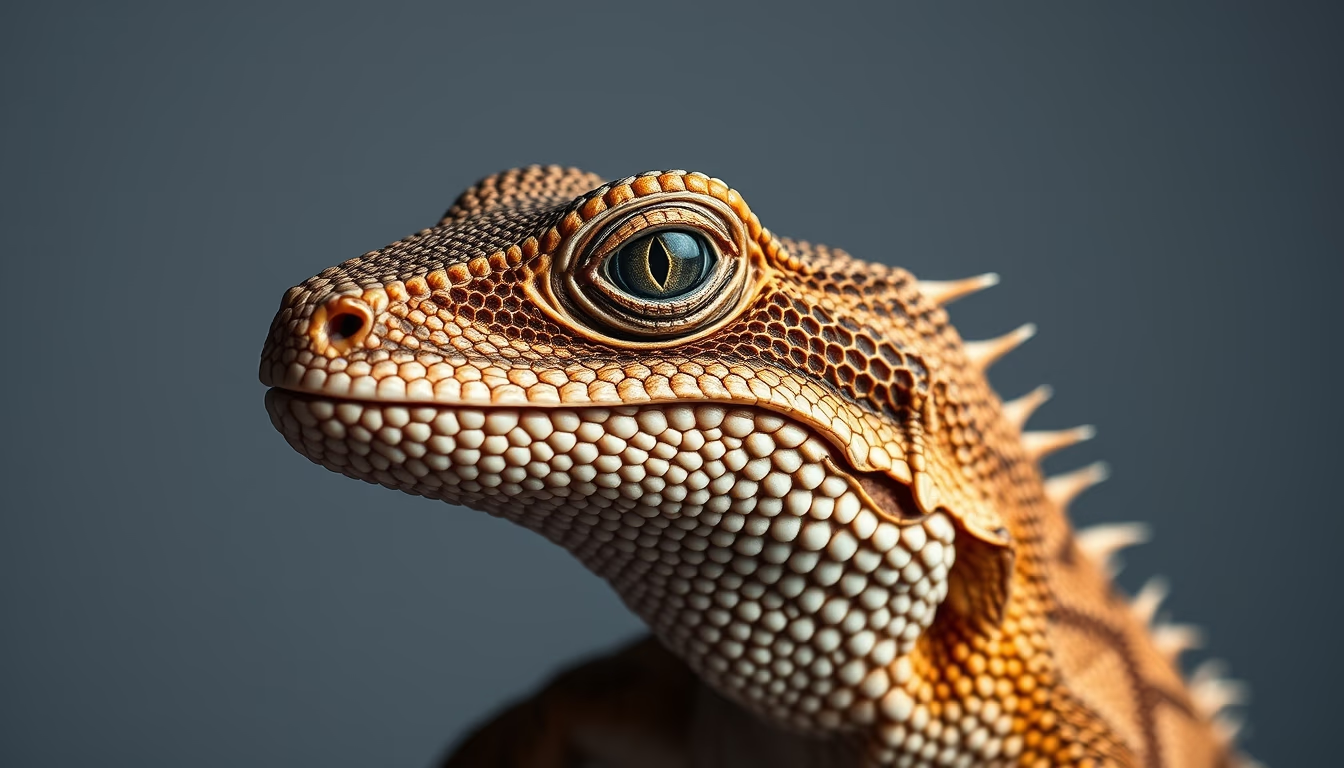
Lizard scale patterns reveal evolutionary adaptations for defense, thermoregulation, and locomotion, varying across species from Brazilian and global biomes.
About this subject
Lizard scales are keratinized epidermal structures forming a specialized covering that plays vital roles in survival. Unlike snakes, lizard scales can be overlapping, juxtaposed, or granular, depending on lineage and habitat. In Brazil, the tegu (Salvator merianae) features large, keeled scales that protect against predators and aid thermoregulation, while the house gecko (Hemidactylus mabouia) has small, smooth scales that enhance adhesion on vertical surfaces. Globally, desert lizards such as the bearded dragon (Pogona vitticeps) possess pointed scales that minimize water loss and reflect solar radiation.
Scale coloration and patterns result from pigment cells (chromatophores) arranged in layers, producing cryptic tones or vibrant hues for communication or camouflage. The leopard gecko (Eublepharis macularius) is noted for its spotted patterns that blend into rocky substrates. Studies show that scale microstructure can influence hydrophobicity, in some species, the scale surface efficiently repels water, preventing dirt and microbe buildup.
Shedding (ecdysis) occurs periodically, but unlike snakes, lizards usually lose skin in patches. This process is hormonally regulated and influenced by temperature and humidity. Interestingly, certain lizard species use scales as sensory organs: cephalic scales may contain thermoreceptors and mechanoreceptors that detect environmental changes. The diversity of scale forms and functions exemplifies the remarkable adaptive plasticity of lizards, making them significant subjects in evolutionary biology and biomimetics.
Frequently Asked Questions
What is the main function of lizard scales?
Lizard scales protect against predators and desiccation, aid thermoregulation, and can facilitate locomotion, camouflage, and sensory perception depending on the species.
How do lizard scales form?
Scales develop from the epidermis and are composed of keratin. Their formation is genetically controlled and influenced by environmental factors, resulting in unique patterns and textures for each species.
Are lizard scales different from fish scales?
Yes. Lizard scales are epidermal (derived from the skin) and keratinized, while fish scales are dermal (derived from the dermis) and usually made of bone or dentin, covered by a layer of enamel.
Direct URL
https://pub-c7d6a6ea828543ac903a74a341ccb2e1.r2.dev/imagens/lizard-scales-pattern-studio-editorial-portrait-p6.avifHow to credit
Include a visible link back to UtilizAí. Copy one of the snippets below:
<a href="https://xn--utiliza-eza.com/en/midia/imagens/lizard-scales-pattern-studio-editorial-portrait-p6">Lizard scales pattern</a> by <a href="https://xn--utiliza-eza.com">UtilizAí</a>, licensed under <a href="https://creativecommons.org/licenses/by/4.0/">CC BY 4.0</a>.
[Lizard scales pattern](https://xn--utiliza-eza.com/en/midia/imagens/lizard-scales-pattern-studio-editorial-portrait-p6) by [UtilizAí](https://xn--utiliza-eza.com), CC BY 4.0
License: CC-BY-4.0