Lizard scales pattern
1344×768 · AVIF · CC BY 4.0
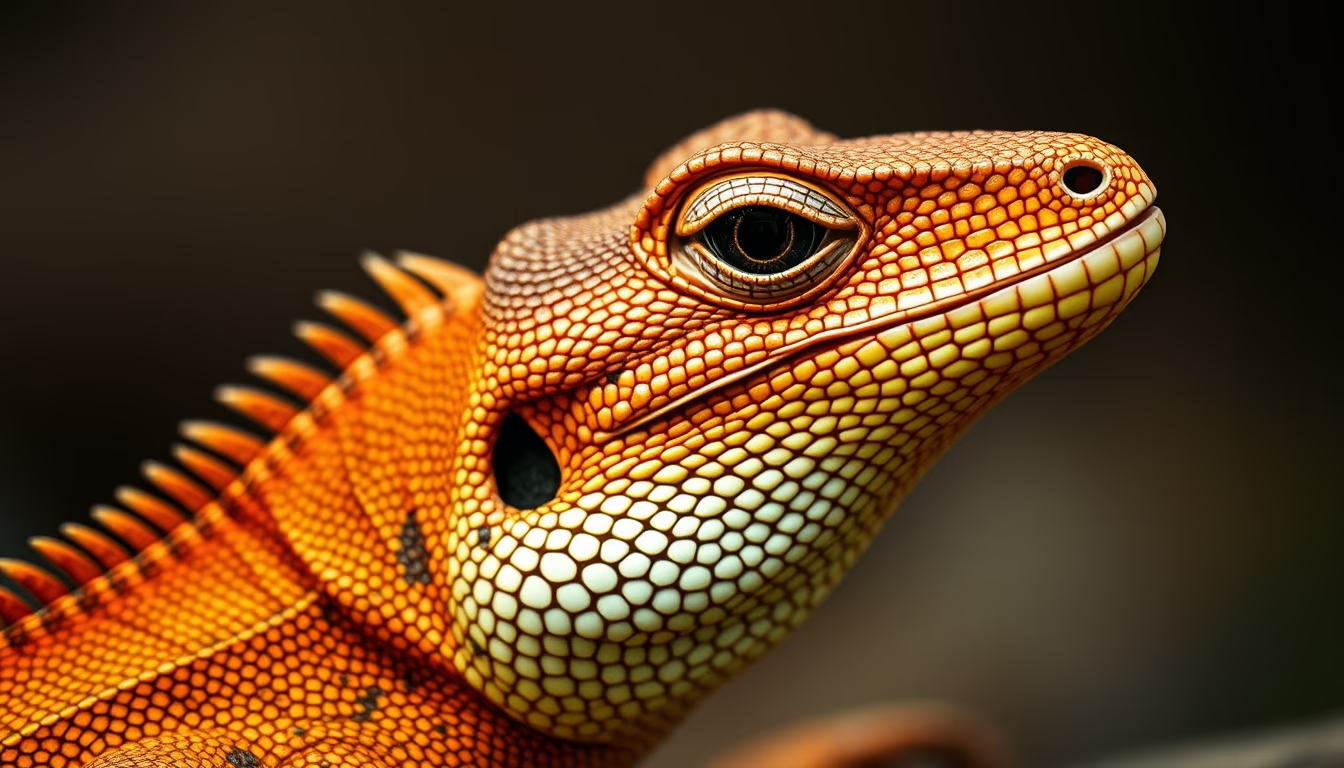
Lizard scales are keratin structures forming a unique geometric pattern, essential for protection and camouflage.
About this subject
Lizard scales are cutaneous coverings composed mainly of keratin, the same protein found in human hair and nails. Unlike fish scales, reptilian scales are thick and overlapping, forming a flexible armor that protects against predators and reduces water loss. There are several types of scales: cycloid, smooth and rounded; granular, small and separate; and keeled, which have a central ridge and provide a rough texture. Coloration and pattern result from pigments like melanin and carotenoids, as well as microscopic structures that refract light, creating iridescent hues.
The function of scales goes beyond protection. In species like the house gecko (Hemidactylus), modified scales form adhesive lamellae that enable climbing vertical surfaces. Geometric patterns often mimic the environment, horizontal stripes confuse predators amidst vegetation, while irregular blotches imitate ground shadows. During growth, lizards shed their skin periodically (ecdysis), renewing scales and removing parasites. This process is hormone-regulated and can occur in one piece or fragments.
Culturally, lizard scales are used in fashion and crafts, especially for bags and belts, though this raises ethical and conservation concerns. In macro photography, scale patterns are a classic subject to explore natural textures and symmetries. Each species has a unique arrangement, the green iguana (Iguana iguana) has large keeled scales on its head, while the bearded dragon (Pogona vitticeps) has spiny scales that flare in defense. The complexity of these patterns has even inspired biomimicry in non-slip surfaces and self-regulating coatings.
Frequently Asked Questions
Are lizard scales the same as fish scales?
No. Lizard scales are made of keratin, thick and overlapping, while fish scales are composed of dentin and enamel (in bony fish) or bony plates (in cartilaginous fish), with different structure and growth.
Why do lizards shed their skin?
Shedding, or ecdysis, allows growth and renewal of scales, removing parasites and damage. It is a hormonal process that occurs periodically throughout the lizard's life.
What is the function of colors and patterns on scales?
Colors and patterns mainly serve camouflage, communication (e.g., attracting mates or intimidating rivals), and thermoregulation (absorbing or reflecting light). Microscopic structures can also produce structural colors.
Direct URL
https://pub-c7d6a6ea828543ac903a74a341ccb2e1.r2.dev/imagens/lizard-scales-pattern-film-grain-authentic-p2.avifHow to credit
Include a visible link back to UtilizAí. Copy one of the snippets below:
<a href="https://xn--utiliza-eza.com/en/midia/imagens/lizard-scales-pattern-film-grain-authentic-p2">Lizard scales pattern</a> by <a href="https://xn--utiliza-eza.com">UtilizAí</a>, licensed under <a href="https://creativecommons.org/licenses/by/4.0/">CC BY 4.0</a>.
[Lizard scales pattern](https://xn--utiliza-eza.com/en/midia/imagens/lizard-scales-pattern-film-grain-authentic-p2) by [UtilizAí](https://xn--utiliza-eza.com), CC BY 4.0
License: CC-BY-4.0